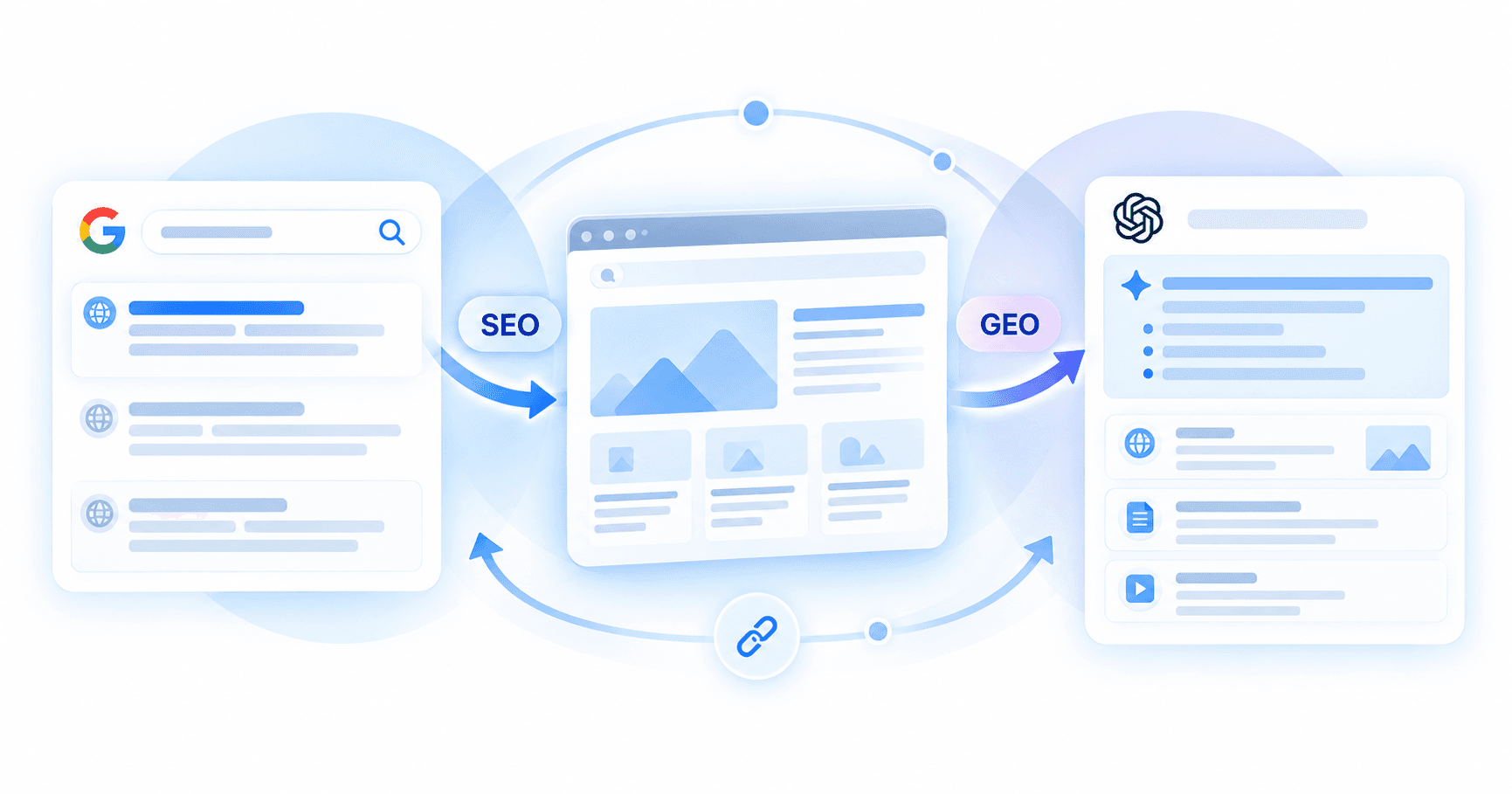
GEO stands for Generative Engine Optimization. It's the process of optimizing so that AI tools like ChatGPT, Claude, and Gemini mention your brand or reference your content when they answer.
For example, your brand shows up when someone asks, "Can you recommend a Notion template site?" It's a series of optimizations that let people discover you while looking for the information they need, even if they've never heard of your brand.
As AI adoption has grown quickly, GEO has drawn attention in the marketing industry just as quickly. But because it rose so fast, a range of methodologies and agency services have appeared, along with proposals whose results are hard to verify and suspected cases of harm.
In this post, drawing on what we've observed while providing SEO services, we'll walk through how GEO works and what to do first.
1. The relationship between SEO and GEO
This is something I want to address before anything else. We've been providing SEO services for quite a long time, and throughout that time we've worked on improving results for our clients. Among the companies that performed well, some saw their traffic grow several times over even when they were already receiving tens of thousands of visits.
When GEO first appeared on the market, we judged that it might be a different field from SEO, so we didn't offer it. Then we learned that AI finds the information it needs for its answers through web search. That led to a thought: a site that is easily found in search might also have an advantage when AI goes looking for references.
We had a considerable amount of research data, and when we checked our existing clients, the same pattern kept repeating. The companies that had performed well in SEO were also being mentioned by name in AI answers.
Example: Gongyeosadeul ranked 3rd for the keyword "Notion template" a year ago, and appears as a mention in response to "Can you recommend a Notion template site?"
Of course, this experience alone isn't enough to conclude that SEO is the direct cause of brand mentions. But seeing the same phenomenon across multiple companies led us to the judgment that websites and content improved through SEO can also be utilized in GEO. We dug into this point and began researching it more deeply, and we now believe there is a fairly meaningful correlation.
There are subtle differences in how search engines and AI select information. Even so, the basic conditions, such as whether crawler bots can access your site, whether the necessary information is there, and whether the content is easy to find and understand, turned out to be a common area that appears regardless of industry or sector.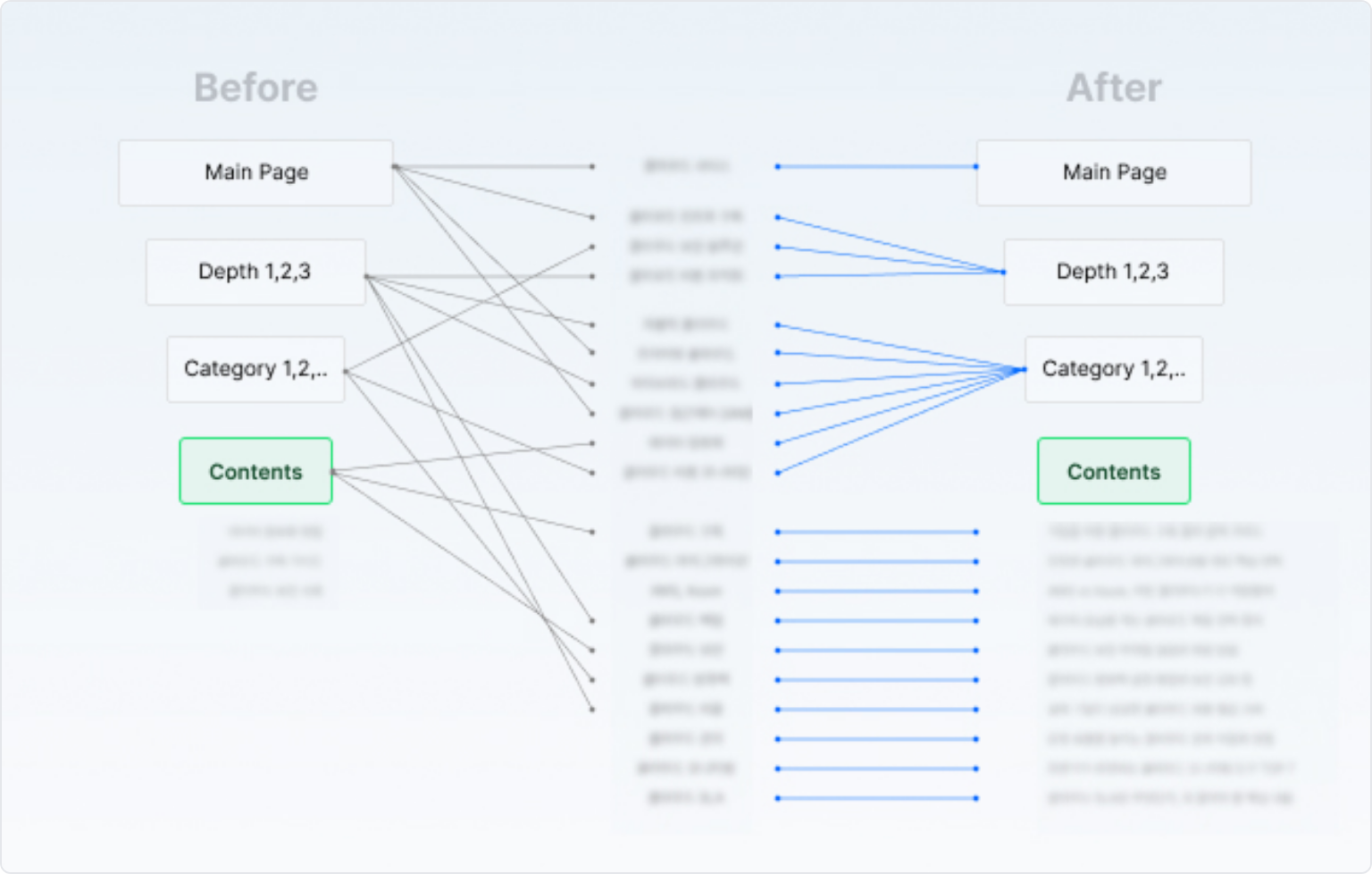
Source: Gongyeosadeul SEO Case Study
2. So how should GEO be done?
Recently, we've been telling clients that checking the technical state of the site is the baseline when starting GEO. You have to start by checking whether robots.txt is blocking access that's needed, whether pages are registered in search, and whether the main content is being read properly.
The frequently mentioned llms.txt is hard to regard as a required condition that applies across all AI services. Google Search explicitly states that it does not use that file. So adding one file is not enough to conclude that the GEO work has been done. Google's guide to AI search optimization
The next thing to examine in depth is which sources the AI referenced when it built its answer.
GEO tracking usually shows how many times a brand was mentioned. That number is necessary, but internally we got more insight from analyzing the referenced sources. Seeing which questions competitors appeared in, and which pages and information were used in those answers, shows you the actual work that needs to be done.
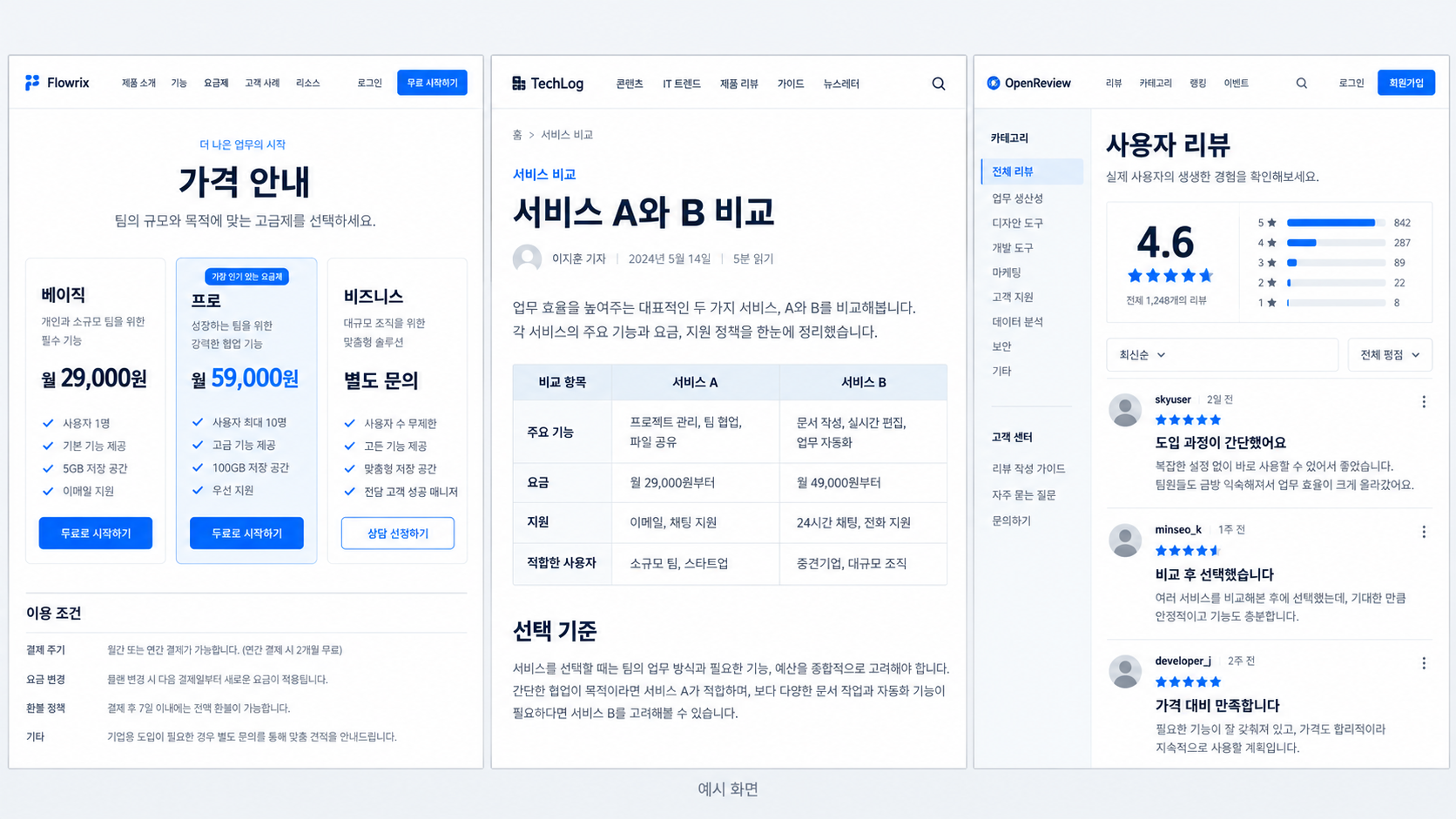
For example, if a competitor's pricing page was used to answer a question about price, you can check whether your own site explains pricing and terms of use thoroughly enough. If a particular review appeared in a service comparison question, you can look at what criteria that review uses to compare services.
Sometimes a question expands into several related searches. Most decisively, Google's official documentation emphasizes that SEO recommendations also matter for GEO. In particular, it explains that AI search features make use of this approach. So it's also worth looking at how a question expands into topics through the sources and search information the service provides. Google's guide to AI features in Search

Figure 2. Google explains that its existing SEO recommendations also apply to its AI search features.
3. Does publishing press articles help GEO?
Yes, it can help. Articles are also sources AI can reference. However, if GEO is the only goal, we don't consider it a high-priority task relative to its cost.
PR costs money for planning, production, and media placement. It's also hard to revise the content after publication. Whether a link to your website is included varies by outlet and placement terms. Even without a link, there's value in raising brand awareness, but if you also expect bots to recognize the connections and signals between sites, you need to think about how readers will find the detailed information.
If your own website doesn't have enough product descriptions, pricing, usage instructions, or real case studies, we recommend filling those in first. After that, if news outlets frequently appear among the sources for important customer questions, you can consider PR through those outlets as well.
4. So which media does AI use in its answers?
The short answer is that it depends on the question. Even for questions about the same product, what users want to know differs.
It's easy to understand if you imagine searching "iPhone 17 Pro," "iPhone 17 Pro specs," and "iPhone 17 Pro price" separately. Material that introduces the product overall, material that lays out the specifications, and material that explains purchase terms each play a different role.
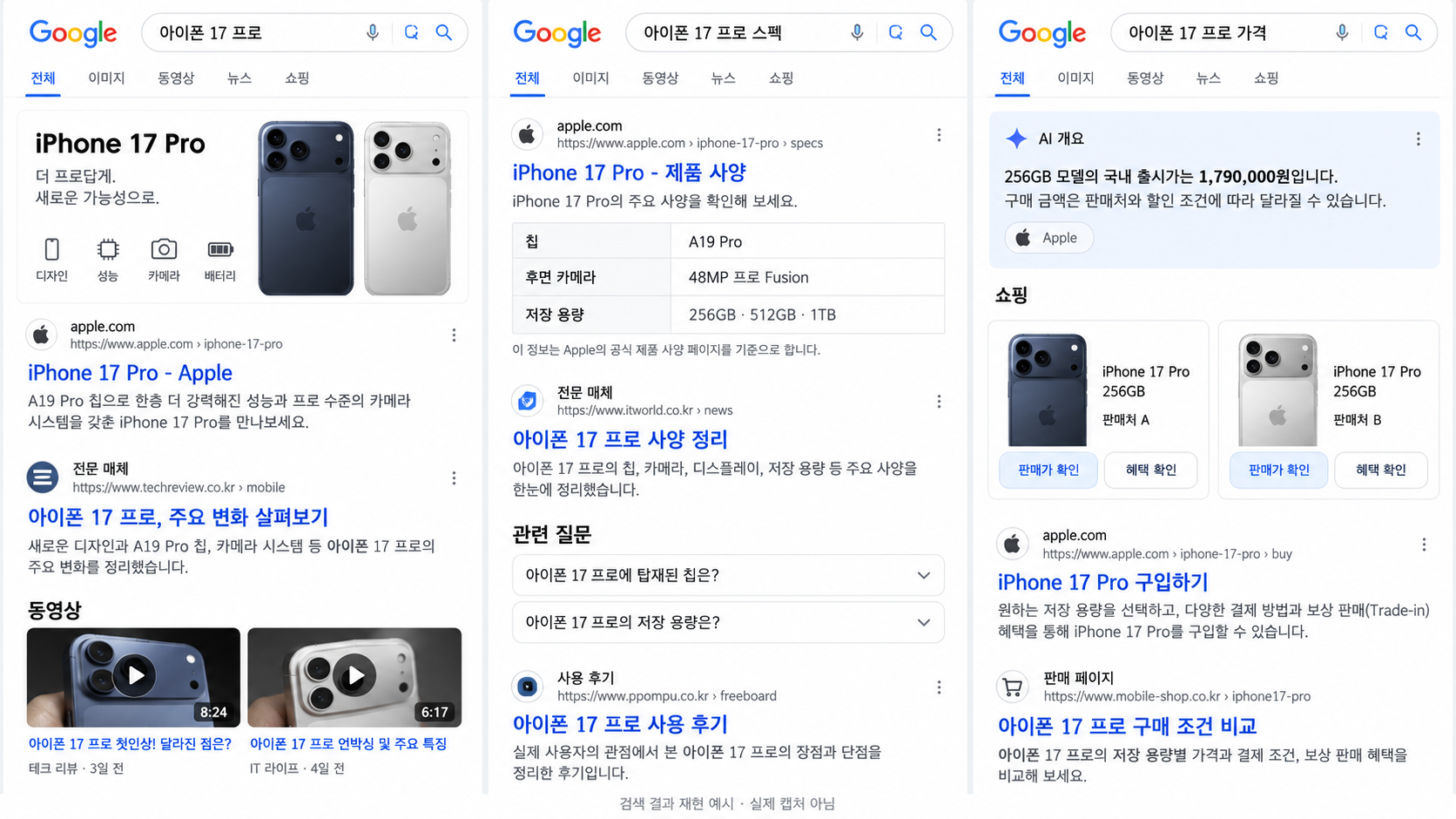
Depending on the question, AI may draw on different sources as well: official websites, sales pages, specialist media, reviews, and so on. Results can also change with the service, model, and search conditions used.
To be realistic, though, it's difficult for a single company to manage every external outlet across that entire range of questions. Expecting to appear in every question from the start isn't realistic, and it's better to scope things to the questions that matter most to your customers.
The asset you can use most actively in that process is your website, because you can publish and revise content about your own category directly. In other words, you turn a website that was only used for company introductions and promotion into a place where the information customers want to know accumulates.
Because the company can manage it directly, we consider the website a highly efficient asset for starting GEO.
5. How should GEO for ChatGPT be done?
AI answers can be broadly divided into two types: training-based answers and search-augmented answers. OpenAI itself separates OAI-SearchBot, used for search, from GPTBot, used for training. Depending on the question, the model either searches before answering or answers directly from the information it already holds.
If you can distinguish whether the AI answers your target question from pre-trained information or from web search, it becomes relatively clear whether you should aim for the "search surface" or target the "training surface" of the next model. Going a step further, if you identify the channels where training and search take place, you can claim a more favorable position. OpenAI crawler documentation
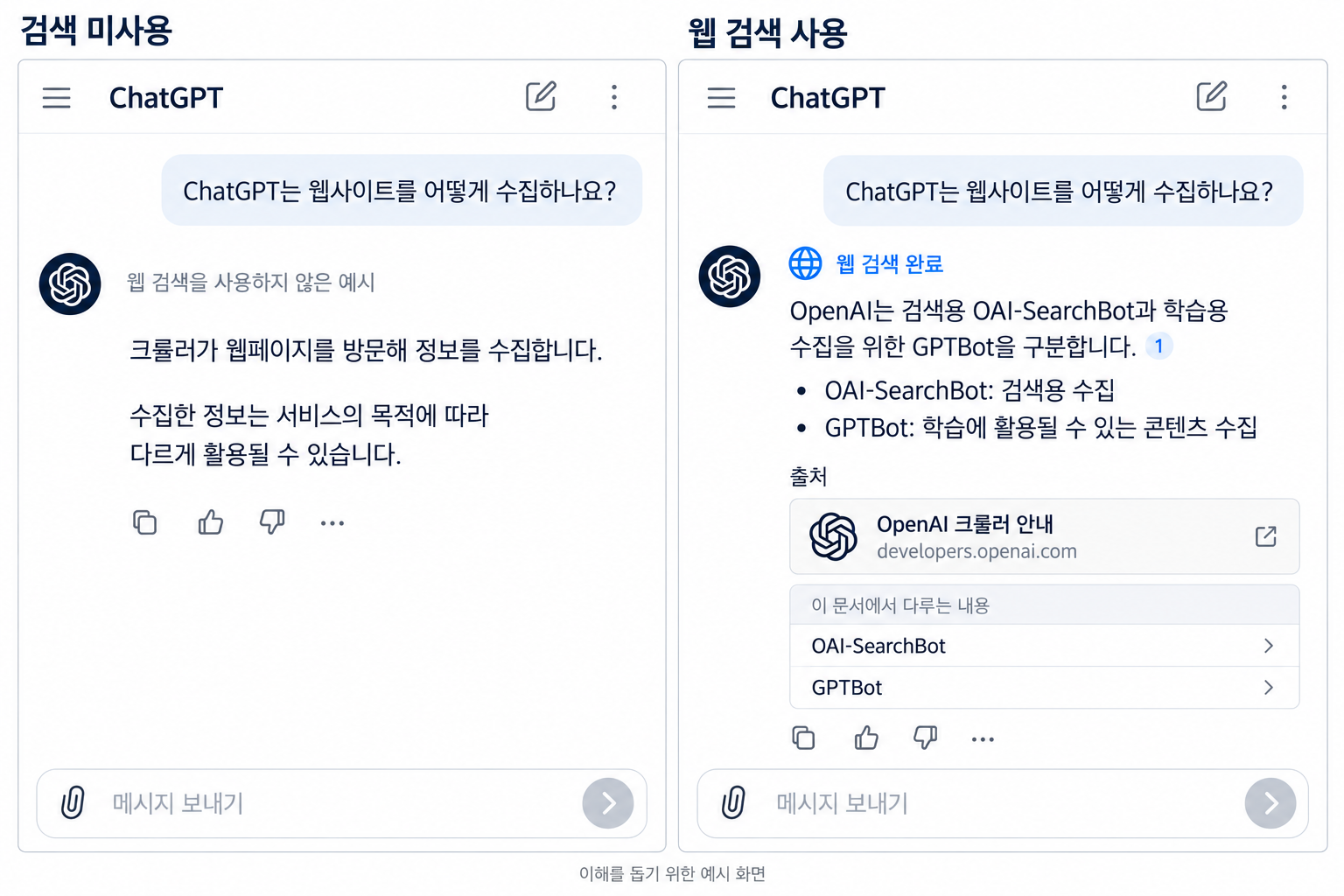
One more thing worth looking at is the source of training and answers. ChatGPT is publicly known to train on a mix of Microsoft's Bing search API and its own index. Because GPT uses the Bing search engine, if you decide to go beyond standard search engine optimization and strengthen your Bing index (for example, by deploying IndexNow pings), the likelihood of being included in the next model's training can rise faster than it would otherwise.
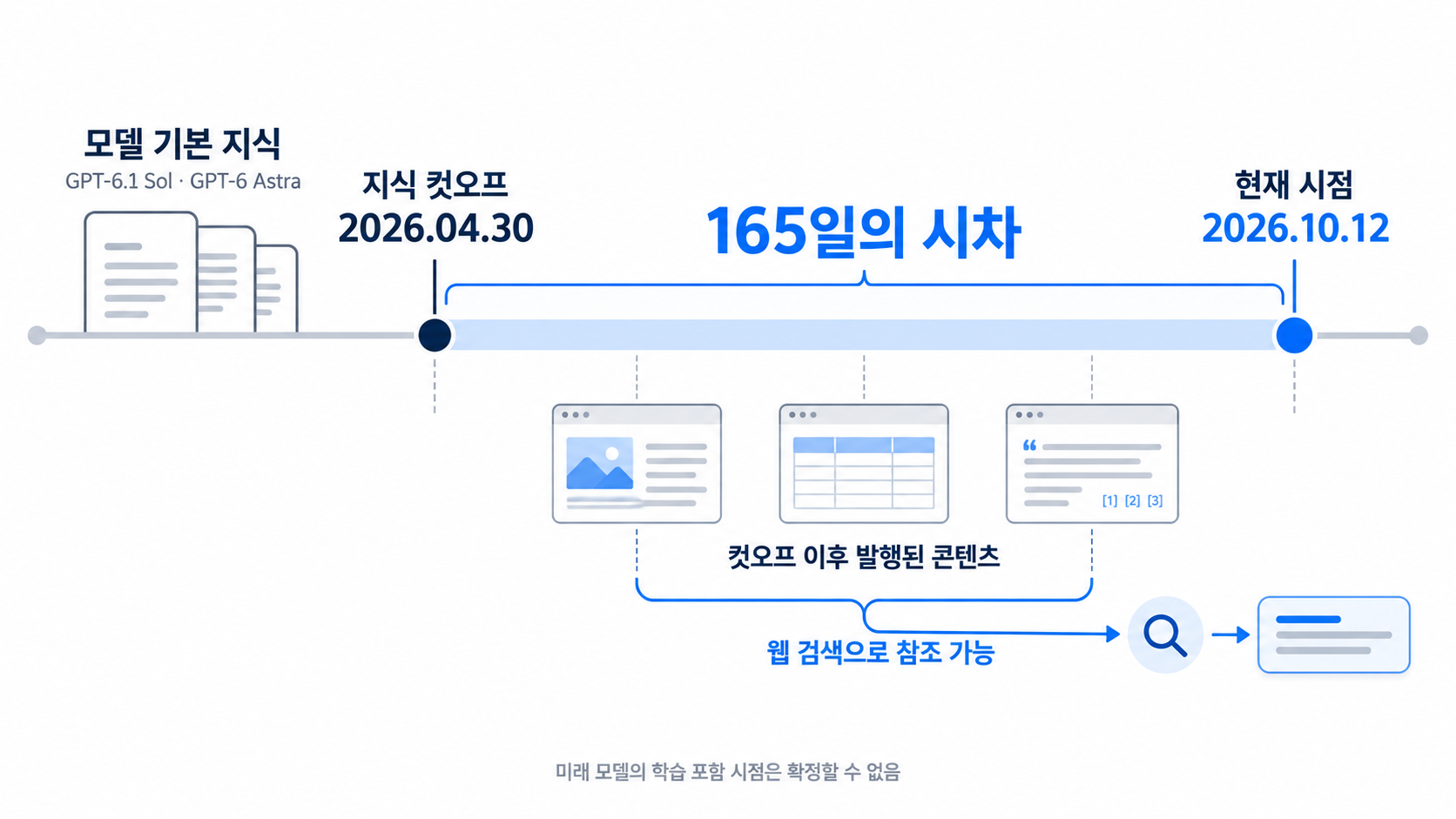
The last thing to check is the knowledge cutoff. The knowledge cutoff is the point at which training ended, and the official knowledge cutoff for the most recent model, GPT-6.1 Sol, is April 30, 2026. It shares the same cutoff as the flagship GPT-6 Astra model.
Given this, the realistic conclusion is that GEO improvements made this season should aim, at minimum, to be included in the training of the next model and the one after that. No matter how hard you try, it's technically impossible to be mentioned in a model whose training has already ended, so during periods like this, prioritizing optimization for search-augmented questions may be the faster decision.
In short, you shouldn't assume that improving your website means its content is immediately learned by the model. In practice, it can be more efficient to analyze these points carefully, set priorities, and then begin the implementation work. Above all, rather than being satisfied with a single appearance on screen, you need to check whether you're found repeatedly in the questions that matter.
6. How should GEO for Claude be done?
In Claude, too, you can examine the sources of answers that used web search. Anthropic is known to provide a web search tool that checks up-to-date web information and displays the sources it used. Likewise, with Claude, the first necessary step is to distinguish, question by question, whether the answer is search-augmented or training-based. Anthropic web search documentation
Next, you need to look at which sources it pulls in. Claude uses a somewhat unfamiliar search engine called Brave. Unfortunately, Brave Search does not provide webmaster tools the way Google, Bing, and Naver do, and it states that it crawls wherever "Googlebot" is able to crawl. For now, running it alongside Google search engine optimization looks like the most cost-effective approach.

Finally, Claude's knowledge cutoff also needs to be examined. It's important to look ahead at when this round of improvements will be reflected. According to the official documentation, the widely used Fable 5.1, Opus 5.5, and Sonnet 5.5 models all have a cutoff of June 2026, meaning they've been trained on relatively more recent information than GPT.
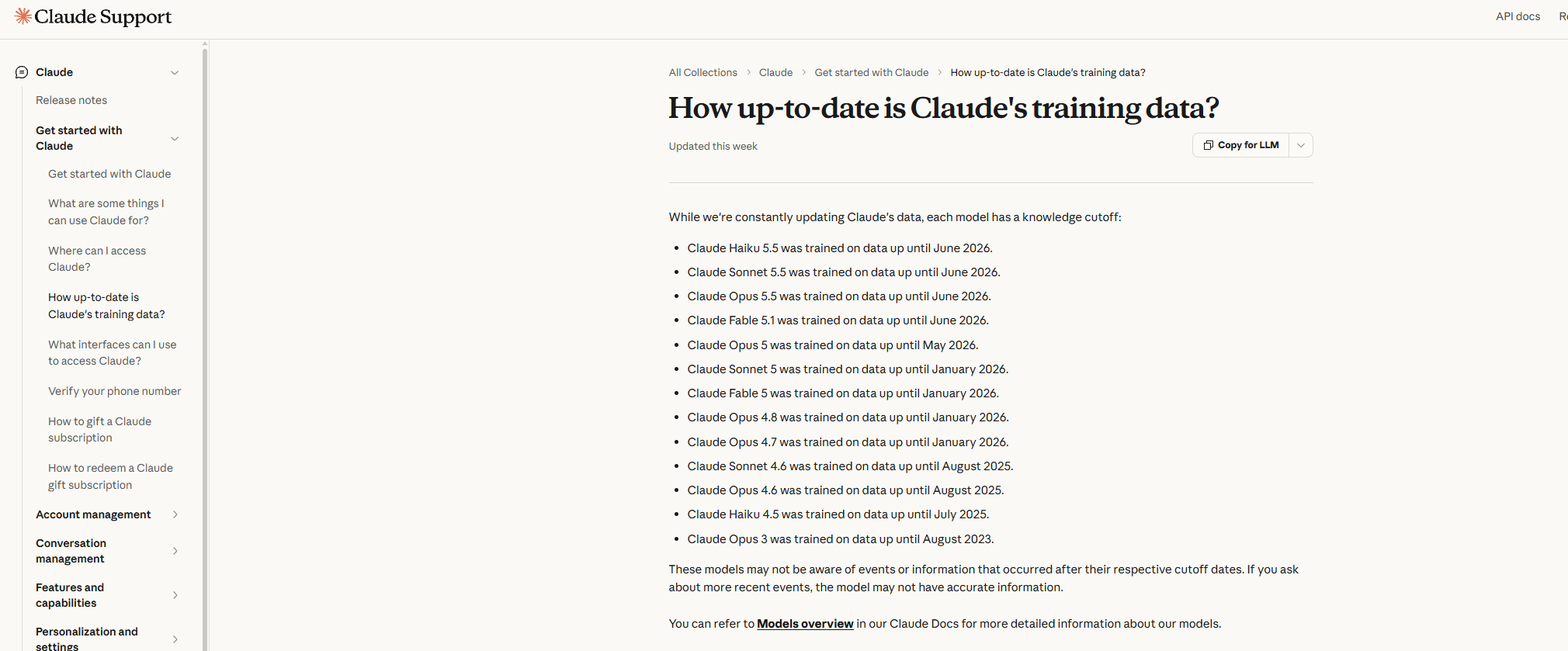
Figure 3. Web search and source citation features described in Claude's official documentation
7. How should GEO for Gemini be done?
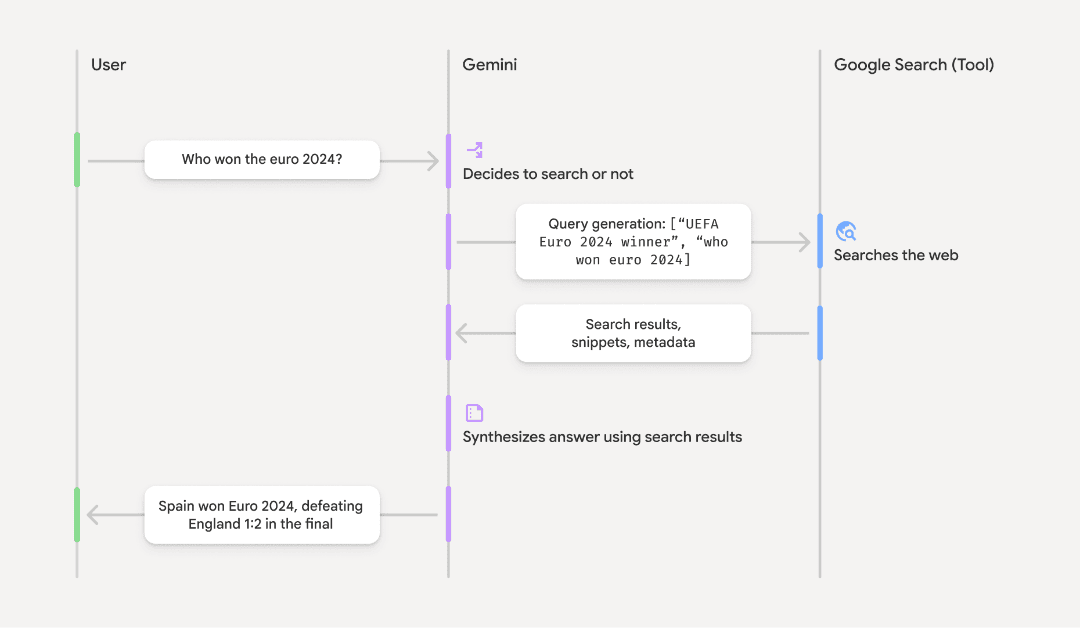
Google's Gemini is likewise divided into training-based answers and search-augmented answers. Since it's an AI LLM that originated from the search engine we all know as "Google," appearing on Google's search surface is the most basic element and the backbone of the whole thing. Gemini's Google Search grounding documentation
If you want your company to appear in Gemini, start by checking whether your pages are found in Google Search and whether they provide the information the question needs. You should also check whether details like product specifications, pricing, service scope, and terms of use are registered in Google's various knowledge graphs, and whether there's enough information the company can explain directly.
Gemini's knowledge cutoff, based on the most recent model, Gemini 3.7 Flash, is March 2026, which is relatively old among large LLMs. The 3.6 Flash model is also March 2026, and for 3.7 Flash the cutoff is limited to January 2025 in some domains. It tends to pick up recent information relatively late.
There's market anticipation that the upcoming Gemini Argon model will be based on more recently trained data. Because Gemini uses Google's search engine as its source, improving your site on the basis of Google search engine optimization is likely to produce good results over the medium to long term for both training-based and search-augmented answers.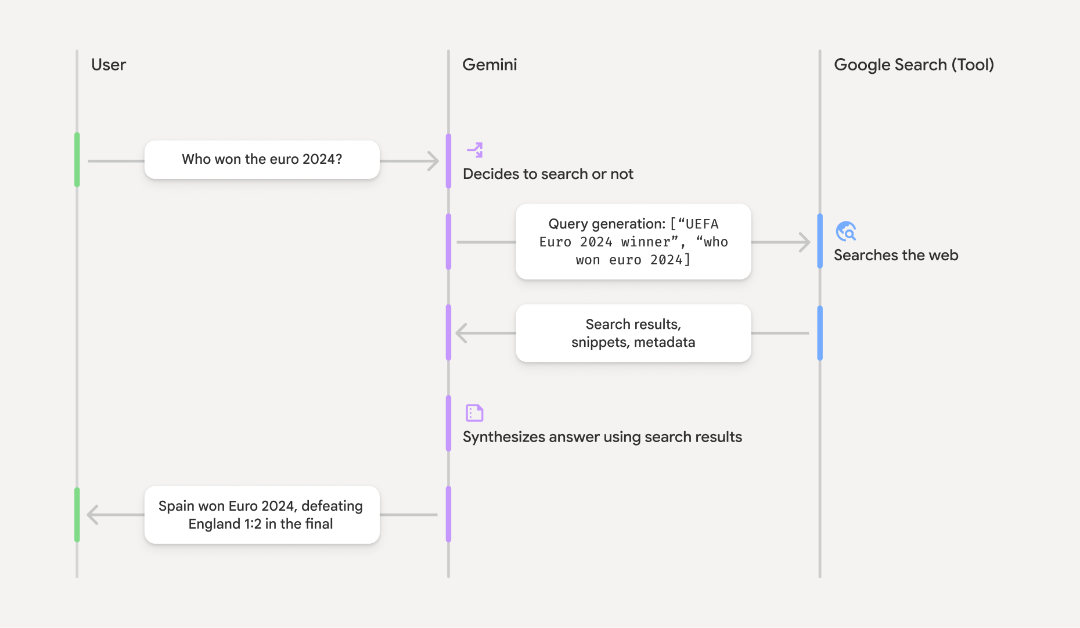
Figure 4. How Gemini decides whether a search is needed and uses search results to answer (Source: Google AI for Developers, captured October 12, 2026)
8. How should GEO results be measured?
Having your brand mentioned, having your website linked as a source, and having actual customers visit are each different outcomes.
| Metric | What to check |
|---|---|
| Brand mentions | Whether the brand name appeared in the answer |
| Source citations | Whether your website was linked as supporting evidence |
| Visits and conversions | Whether trackable visits and inquiries, sign-ups, or purchases occurred |
The Gongyeosadeul case mentioned earlier is a brand mention. That alone doesn't tell you the website was cited or that a purchase occurred.
The nature of the question also matters. "What kind of site is Gongyeosadeul?" is a question asked by someone who already knows the brand. "Can you recommend a Notion template site?" is a question that checks whether you're discoverable even by someone who doesn't know the brand.
If the goal of GEO is to be discovered by new customers, these category questions deserve the most attention. After that, it's best to measure repeatedly with the same questions and search conditions and check how mentions and citations change.
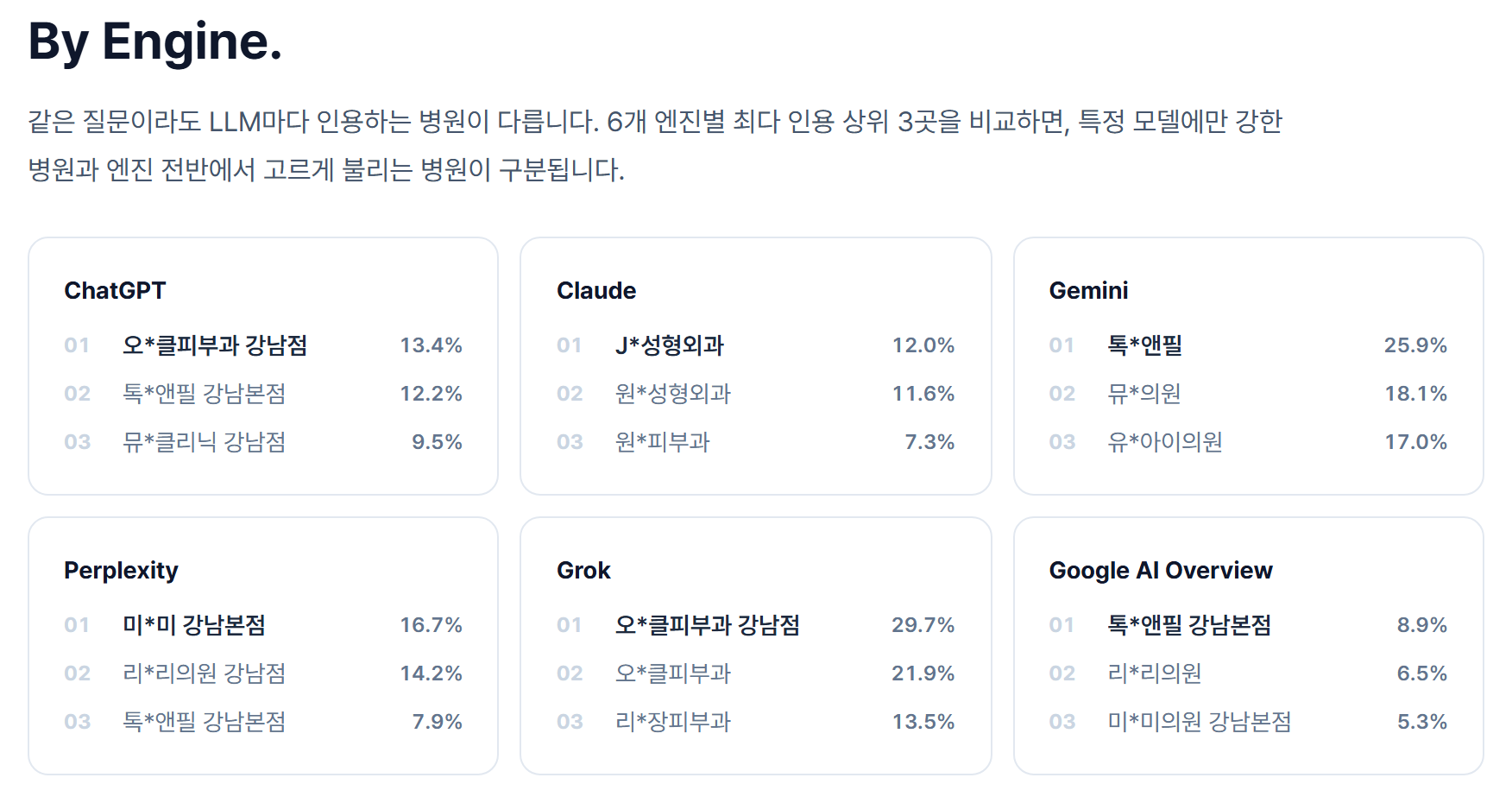
Figure 5. AI-by-AI comparison screen from a public 238LAB report. The citation rate in this report means the share of answers that mention the clinic.
9. What work should you outsource to a GEO agency?
Wherever possible, we recommend starting from SEO improvements to your website and building the content you need on the same domain.
If there are problems with accessing the site or reading its content, fix those first. Then strengthen existing content and write new content for the topics customers ask about that you haven't yet explained.
Building content on the same domain makes it easier to manage product and service descriptions together. Related pages can link to each other, and you can structure things so readers move on to an inquiry or purchase after reading. It also matters that the company can keep operating that content after the contract ends.
The scope of the engagement should be specific. You need to confirm which pages will be modified, how far existing content will be strengthened, and what new content will be written and where it will be published. If visibility is being measured, you also need to decide which questions and which AI services are the targets.
If you've received a diagnostic report, that diagnosis should lead to actual edits and publications. Evaluate proposals by what improvements remain on your website and content after you've paid.
10. How do you avoid GEO agency scams?
Suspected cases of harm from GEO agencies have been reported in Korea as well. The coverage dealt with sales tactics such as touting client results that are hard to verify, claiming to have "mastered the algorithm" while pressing for advance payment, and submitting a specific answer screen as if it were a result. Related report from The Korea Economic Daily
Because the service is still unfamiliar, a plausible-sounding explanation can be hard to judge. The concept entered the market so recently that even the criteria companies use to evaluate it aren't yet clear. So before signing a contract, it's worth confirming the following three things.
- The actual work: which pages will be modified, what content will be produced, and where it will be published
- The basis for results: the original questions and answers, the AI used, whether search was involved, and the measurement conditions
- Ownership after the contract: ownership and usage terms for the domain, the content, and the collected data
In particular, for any proposal that "guarantees AI visibility," ask what exactly is guaranteed and for which questions. Appearing in a question that includes the brand name directly means something very different from appearing in a general recommendation question.
Since GEO itself has only recently appeared on the market and there is still no clearly established methodology, I think it's important to "refrain as much as possible from trusting visual materials, and ask plenty of questions about the underlying principles."
As a simple example, the single question "In what environment do you run your mention and citation analysis?" is enough to tell whether an agency hesitates, or whether it clearly understands how caching and per-user memory work and runs its analysis in an environment that excludes them (API calls, grounding environment tests, and so on).
This also requires ongoing study by the in-house staff who commission the work. It's still a field where both clients and agencies need to keep learning.
Figure 6. July 2026 news coverage of suspected GEO agency harm (Source: The Korea Economic Daily, captured October 12, 2026)
11. Where should you start with GEO?
To begin, pick a few of the questions customers frequently ask before purchasing or booking a consultation. Ask the AI those questions and check with your own eyes, one by one, which sources the answers draw on most.
Alternatively, if you take the questions that come up repeatedly in sales or in customer service inquiries and turn them into assets on your website, you're already more than halfway there.
Keep asking AI the customer questions you gather along the way, keep checking which brands and sources appear, and keep checking whether your own site has the information to answer those questions. That process alone is enough to build a website that AI cites.
There's no need to collect every question or publish lots of content from the start. You can begin by deciding which questions matter to your customers and putting the information in place to answer them. Expanding the scope of work as you confirm changes is the realistic path.
12. Frequently asked questions before starting GEO
How long does it take to see results?
It depends on the state of the site, the work being done, and the AI services you're checking. If your website has been running for three years or more, it takes roughly three months to be cited. For a brand-new website, it can take up to about a year before AI mentions you for the first time. The point at which you modify a page and the point at which the AI's answers change can also differ. If you've been promised a specific timeframe, look closely at exactly what work will be completed and what results will be confirmed within that period.
Is publishing a lot of content an advantage?
It's meaningful if it lets you fully explain what customers want to know. But there's no need to keep churning out similar posts. Recently, broadly generated AI posts have been showing a "honeymoon" effect (ranking well briefly and then disappearing), and even programmatic SEO is running into efficiency issues due to crawl budget. So it's better to strengthen what can be explained on existing pages and add content when a new question needs answering.
Can I write content with AI?
You can use it for drafting and organizing material. However, product features, pricing, terms of use, and figures from case studies should be inserted as data the company can verify internally. Content becomes worth referencing for customers only when it includes the information your company holds and the experience gained in the field.
If I'm already doing SEO, what should I add?
Start by reviewing the scope of your existing SEO work. If the site and content are well established, you can expand into checking AI answers for each customer question and analyzing the referenced sources. Finding missing information through that process and strengthening existing content is far more efficient, and where gaps remain, filling them through guest blogging or listings on external platforms is an efficient way to proceed.

About the Author
Joshua: Lead SEO & GEO Consultant
- Built a zero-cost structure generating KRW 1.2 billion in annual revenue through SEO alone - Closed a KRW 700 billion deal through SEO alone - Low-cost, high-efficiency marketing specialist Former) Marketing Lead at a financial services firm Current) Runs SEO/GEO agency 238lab Track record) Led multiple SEO consulting projects, including Korea's No.1 AI community