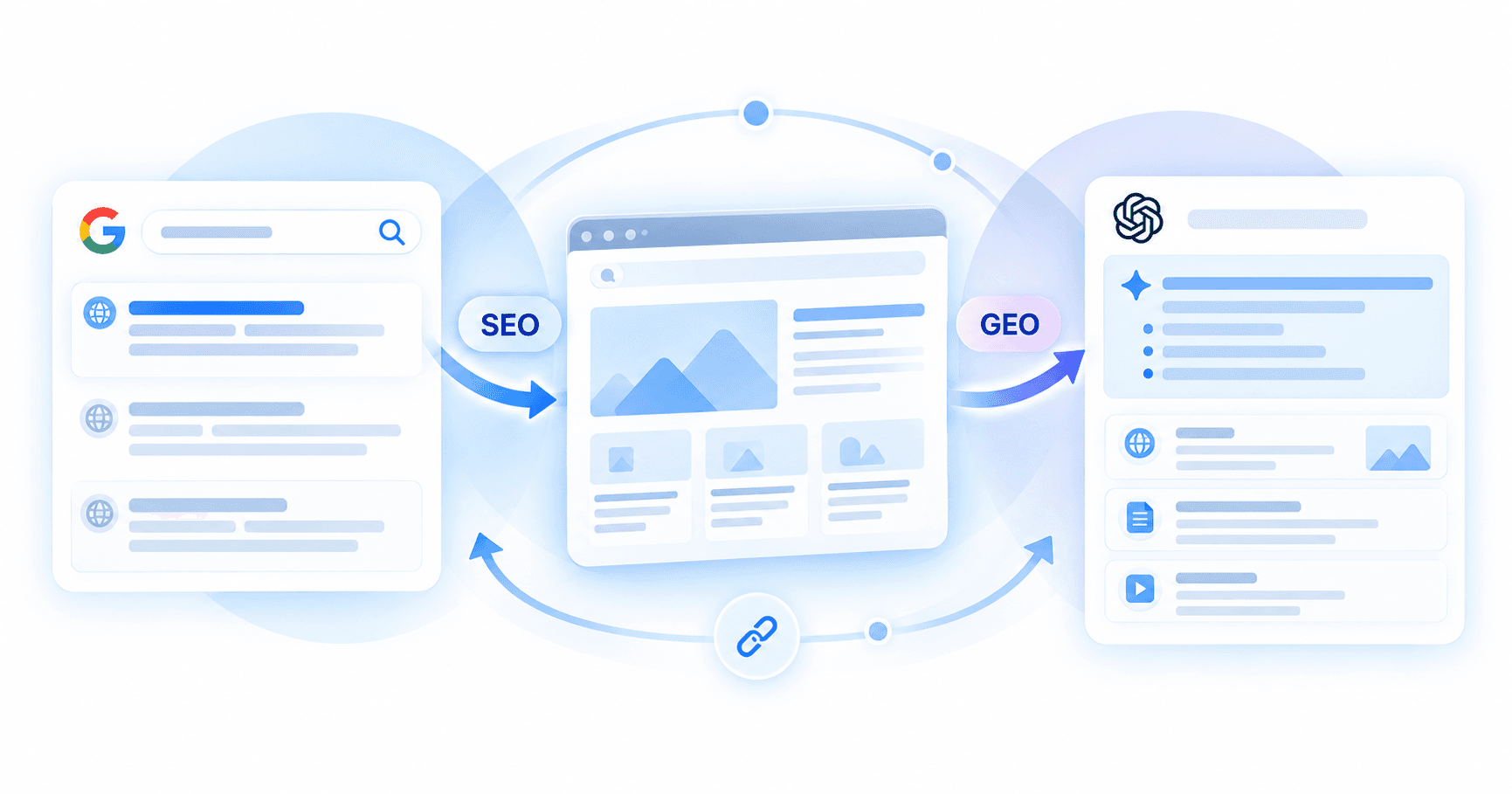
SEO and GEO are easier to explain when you keep them apart. Once you get into an actual project, though, the line between the two is far less clear than it looks.
It's hard to run GEO on its own while search engines can't read the site properly, and the reverse is also true: good SEO doesn't automatically get your brand mentioned in AI answers. That's why, at 238LAB, rather than treating the two separately, we look at how far they connect on the basis of a single website.
If GEO itself is new to you, you may want to start with our earlier post, What Is GEO?, which covers the concept and the basic approach.
In this post, I'll stay closer to the actual workflow than to definitions: what we check first when a project starts, how we group keywords, when we decide a new page is needed, and finally how we separate SEO results from GEO results.
1. Why we start with the state of the website
Whether it's SEO or GEO, the first thing we do when a project begins is look at the current site.
That holds even if the site was just relaunched or another agency has already done SEO work on it. Having a setting in place and having that setting actually work on the live site are two different things.
We begin with a baseline measurement so the current state can be compared later. Put simply, it's a record of how search engines see the site at the moment the project starts.
The baseline covers more than you might expect. We don't just check whether title and description tags exist. We also check which URLs Google is discovering, whether pages that should be indexed are blocked, whether canonical tags and sitemap URLs match, and whether internal links reach the pages that matter.
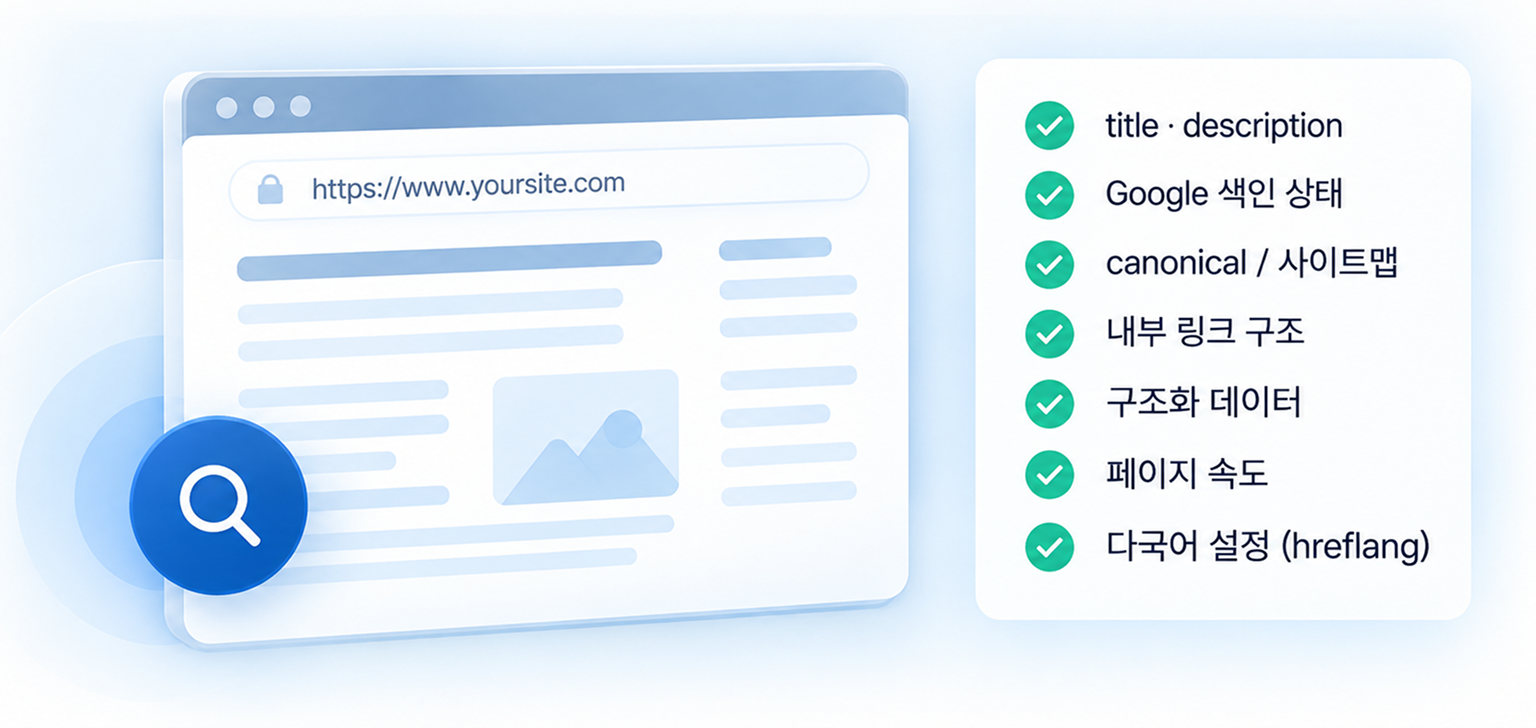
Depending on the site structure, we may also need to look at JavaScript rendering, structured data, whether key information exists only inside images, and server response and page speed.
Multilingual sites get a bit more complicated. We start by checking whether languages live on subdomains or subdirectories, then whether language-specific URLs, hreflang, and canonical tags conflict with one another.
For example, even if you have both Korean and Japanese pages, if the canonical signals are tangled or the language relationships aren't declared properly, simply adding more translated content won't get you the search visibility you want.
GEO isn't much different in this respect.
If you want to be mentioned more often in AI search, it's better to first confirm that the site holding your company's official information is being read properly by search systems, rather than immediately ramping up external blog posts or separate content output.
2. Once the technical audit is done, we look at search demand
If the site is being read correctly, the next question is which searches our pages should appear for.
The nature of the work shifts here. Interpreting keywords and actual search results takes up more of the effort than fixing technical settings.
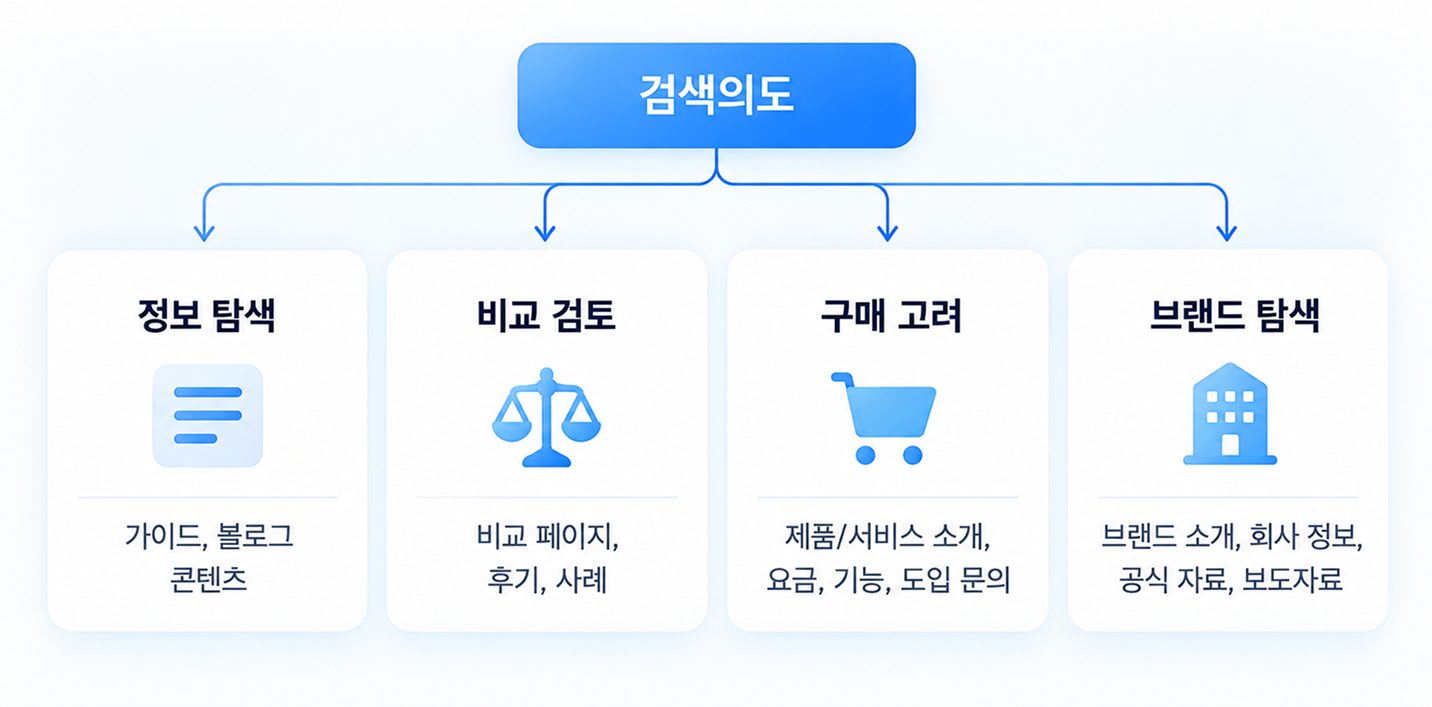
We start by grouping keywords in the target market by topic. But we don't group them by search volume alone. Even when people are looking for the same service, what they want to know varies quite a bit.
Some look at price first; others check effectiveness or side effects.
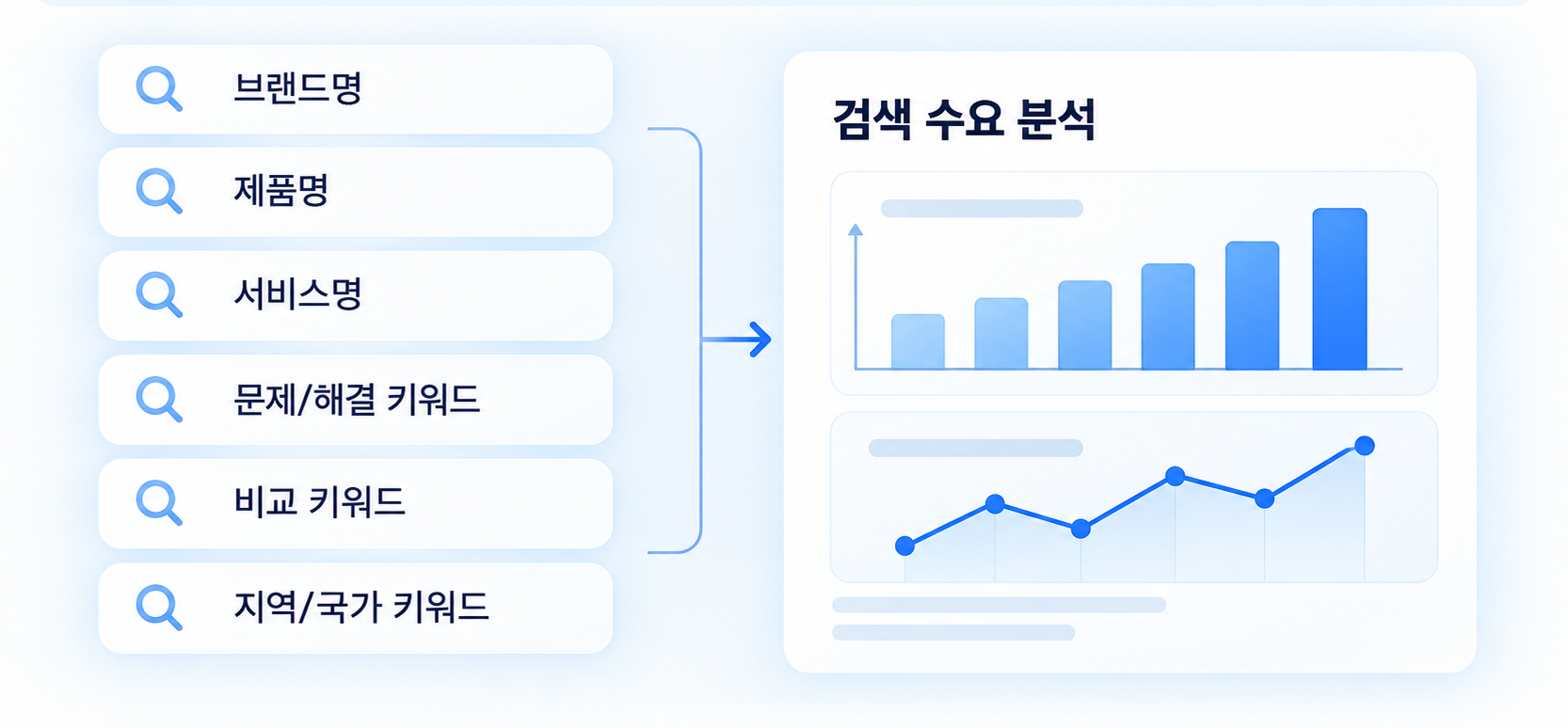
Some are looking for reviews, and some want to compare two services or figure out whether something is right for them. That's why so many different queries cluster around the same service name.
In practice, we often see companies try to cram all of these questions into a single existing service page.
But similar topics don't mean Google shows the same type of page for each.
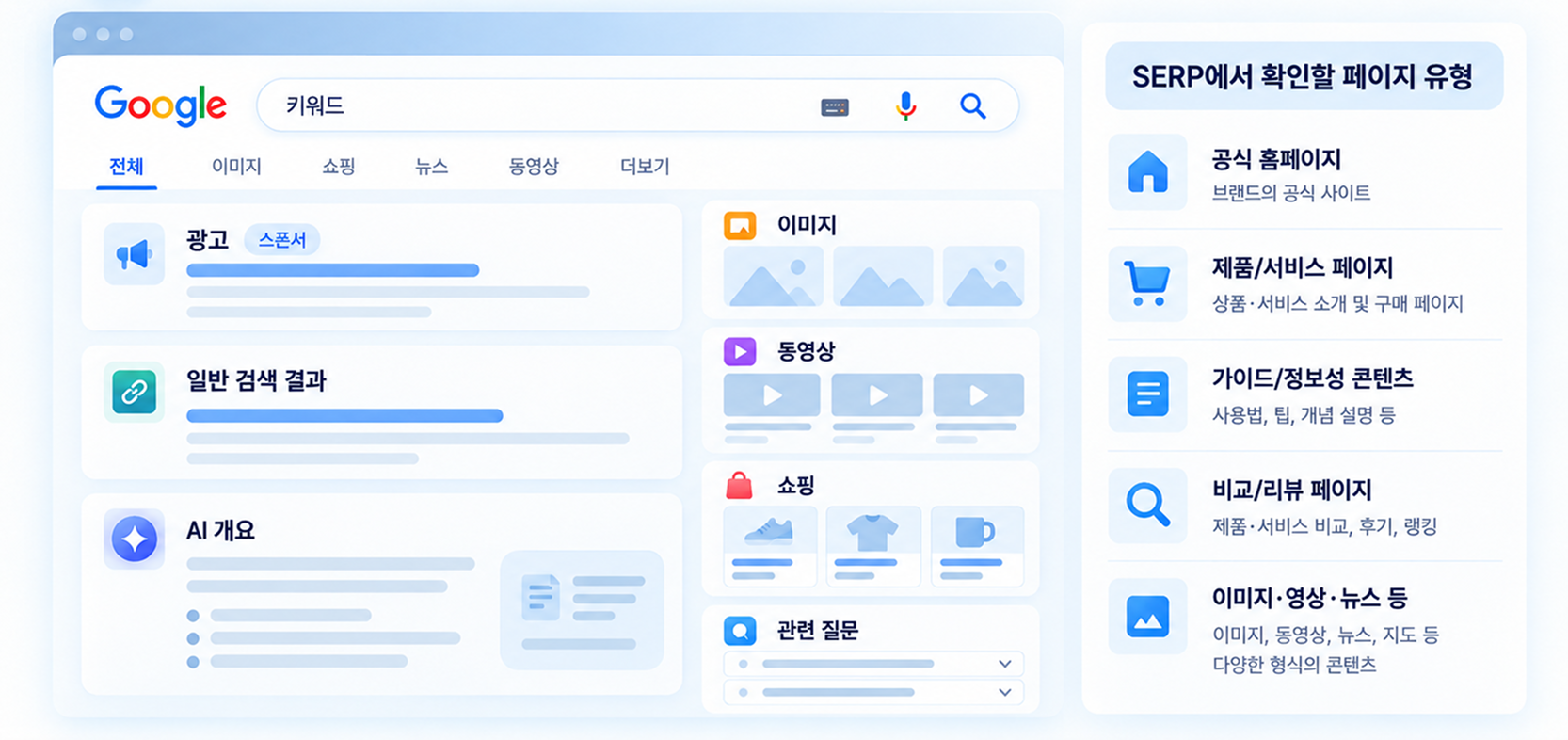
So once keywords are roughly grouped, we check the actual search results alongside them.
3. Sometimes the actual search results give you more hints
Take a single dermatology procedure as an example.
When you search only the procedure name, you may see many clinic procedure detail pages.
But add words like "price," "side effects," or "how long it lasts," and guides and informational content start to appear more often.
Searches for reviews or before-and-after cases bring yet another set of competing pages.
If you ignore these differences and pile every keyword onto one page, the page gets longer, but it becomes unclear which search it's supposed to answer.
Run the searches yourself and the differences become obvious fairly quickly. Some queries show service pages again and again; others are dominated by blogs and guides.
What matters here is also whether the site has a page that can play that role. If a suitable page already exists, strengthening it comes before building something new.
Conversely, if search demand is clear but there's no page to receive it, that's when we consider a new page or new content.
This is ultimately where the criteria for expanding pages in SEO come from.
4. When is a new page needed?
Search volume alone doesn't mean we automatically build a new page.
Some topics only need a bit more content added to the existing service page, while others, such as FAQs or case studies, take on a clearer role when split into a separate page. If comparison searches keep coming up, you may need a dedicated article explaining the comparison criteria.
When increasing the page count becomes the goal in itself, you end up with a growing pile of similar pages.
So we first define "what questions is the site currently failing to answer?" If an existing page can answer them well enough, we strengthen that page. We consider building something new when a distinct search intent keeps recurring and the search results show a different type of page.
Repeat this process and the site's content and keyword coverage expand naturally.
A site that started with nothing but a service introduction gradually gains information on pricing, who the service is for, case studies, FAQs, how the process works, and comparison criteria. Each piece of information goes where it's needed.
For SEO, that means more assets that can respond to searches. For GEO, it means the information about your company that AI can verify on the web becomes a little more concrete.
This is also why we don't look at SEO and GEO separately.
5. SEO and GEO connect naturally
That doesn't mean SEO and GEO are the same work.
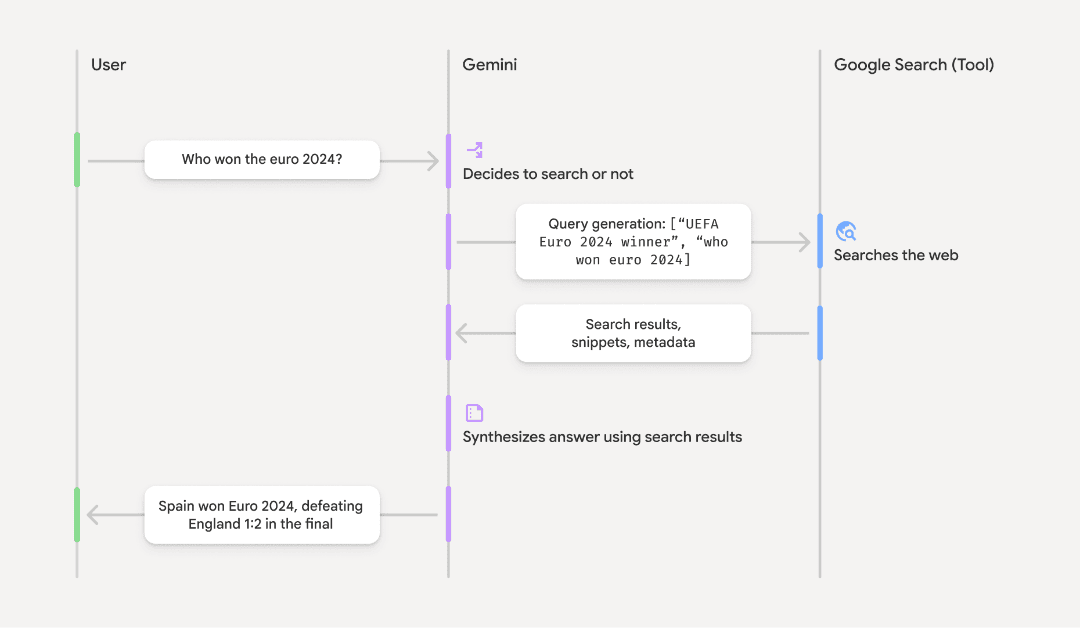
A page that ranks at the top of Google won't necessarily be mentioned the same way in ChatGPT or Gemini. Each service uses search and sources differently, and results for the same question can change depending on phrasing and timing.
Still, for AI to reference a company or service, there has to be information about it on the web first.
This is easy to understand when you compare real sites.
A site with only a service name and a short blurb, and a site whose official pages explain who the service is for, the price range, case studies, FAQs, and policies, differ from the start in the amount and context of information left on the web.
Strengthening these pages one by one as part of SEO isn't just about covering more queries. It also widens the scope of information the company is officially explaining.
So we don't see GEO as merely a separate content publishing project. We first check SEO and the website structure, and on top of that, we look further at what information is missing in AI search.
6. When should external content come in?
When GEO comes up, so does the suggestion to publish lots of brand content on external blogs, WordPress sites, and communities.
That isn't to say external content is unnecessary.
Press coverage and community discussion provide mentions and evaluations you can't create on your own site, and these external pages do often appear among the sources behind real AI answers.
What needs a closer look is the order in which things get done.
If content the company should be explaining itself, such as product descriptions, pricing, terms of use, and real case studies, is thin on your own site, expanding external content first can get the priorities backwards.
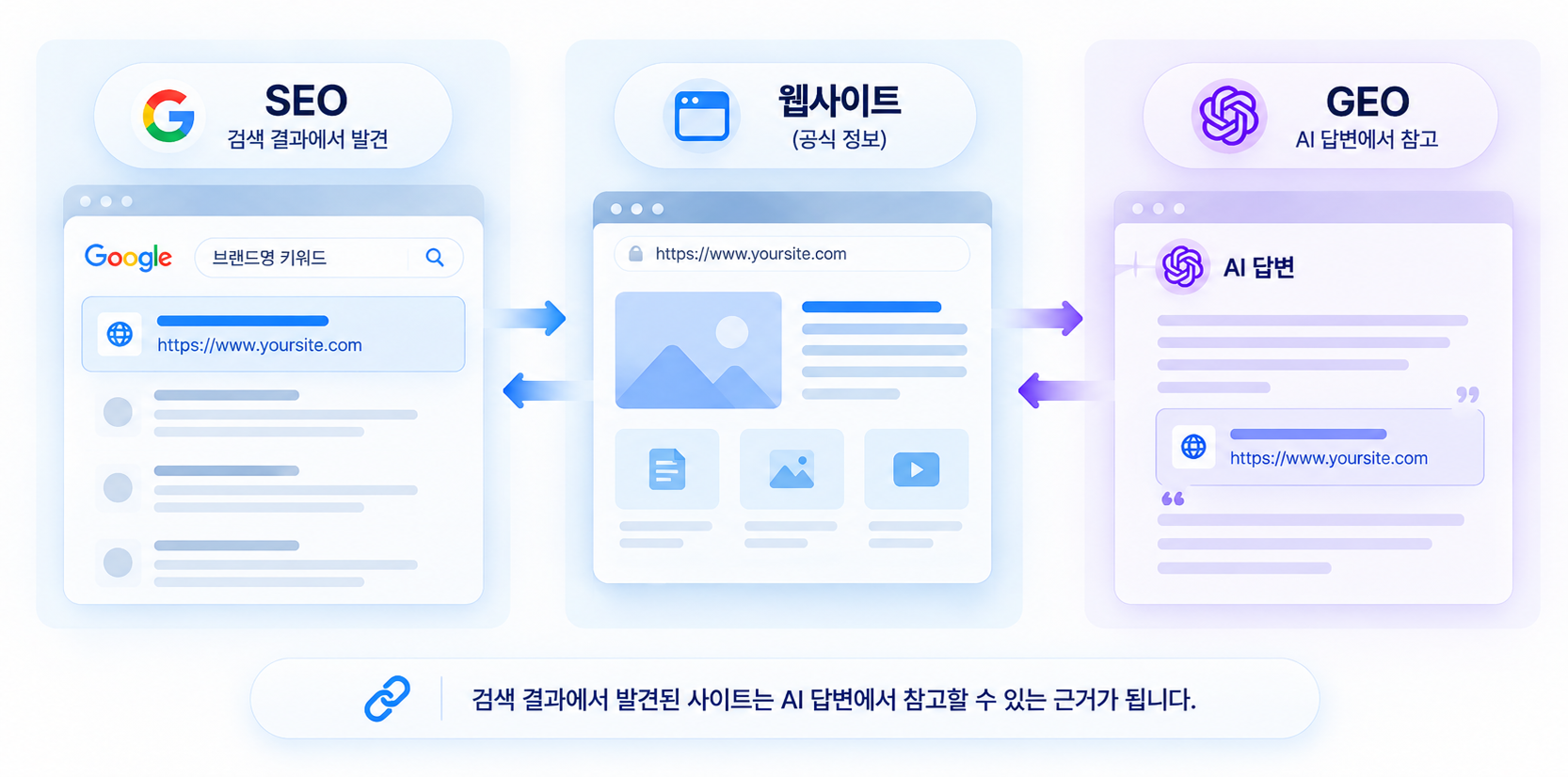
When the reference information lives on your own site, you can keep editing it, link it to other pages, and continue expanding it to match search demand.
Information that changes often, like pricing and policies, is also far easier to manage with the official website as the single source.
So our approach is to first fill the gaps in explanation on the company's own site, and then, if specific external channels show up as needed in actual AI answers or search results, review PR and external content together at that point.
7. How does global SEO expansion work?
For global projects, it's closer to the truth to say the same work has to be done one more time.
Translating keywords that perform well in Korea directly into English or Japanese doesn't create the same search demand in each market.
Each country uses different expressions, and users weigh different conditions. Even for the same service, the type of page that appears in search results often changes.
So when expanding globally, rather than starting with translation, we go back and look at keywords and actual search results for each market.
Based on that, we decide which pages are needed, and then align the technical structure: language-specific URLs, hreflang, and canonical tags.
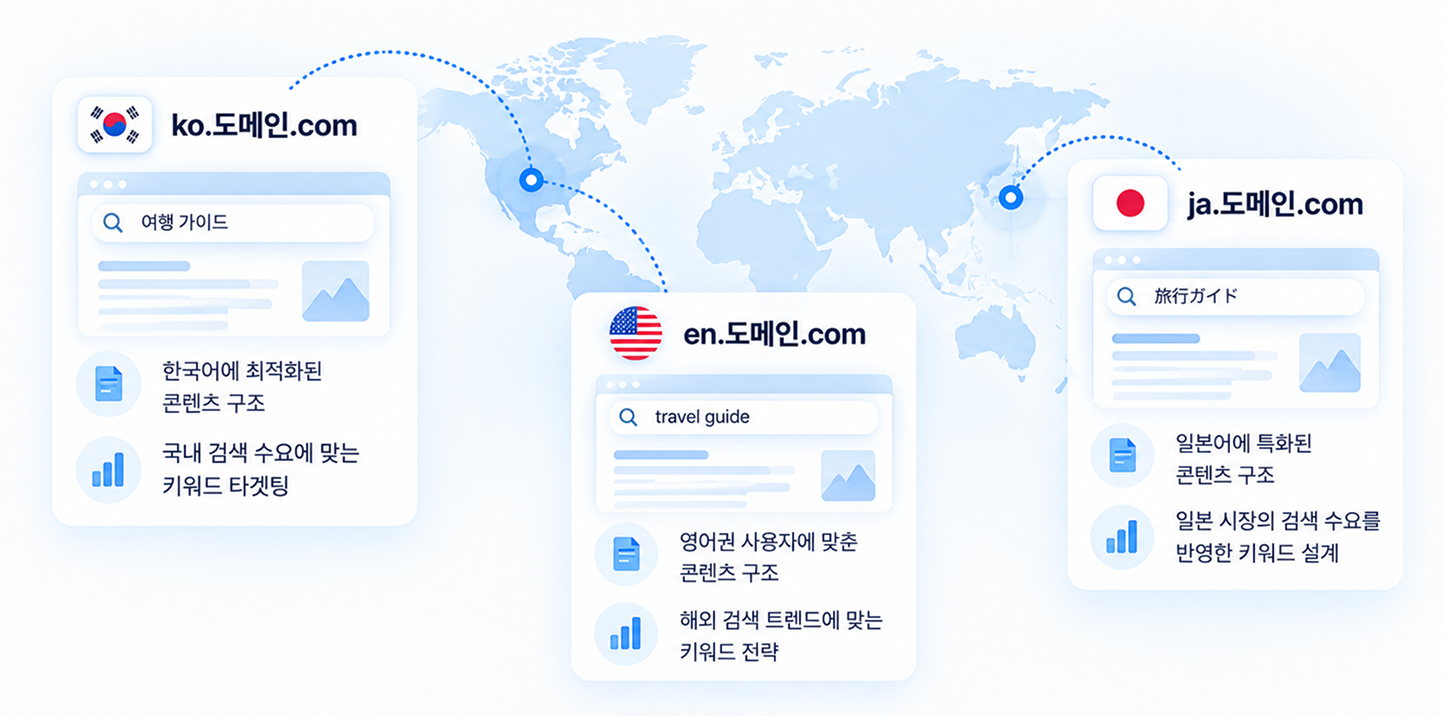
Building a single English site and showing it identically across multiple countries is a genuinely different approach from composing the content each country's search demand calls for.
GEO works similarly.
There has to be enough documentation describing the company and its services in that language before there's anything for AI search in that market to reference. That's why market-specific information matters more than simple translation.
8. We check SEO and GEO results separately
Running SEO and GEO as a single project doesn't mean we blend the performance metrics together.
For SEO, we look at indexing, impressions, clicks, and changes in search queries, with Search Console at the center.
We check whether newly created pages have entered the search results, whether existing pages are appearing for more queries, and whether impressions for the target queries are actually increasing.
With GA4 connected, we can also follow what users did after arriving through organic search.
GEO has to be judged a little differently from SEO. When the project starts, we define a query set based on the main services and question types, then check how the brand or service is mentioned in ChatGPT, Gemini, Claude, Perplexity, and others.
Measuring repeatedly against the same criteria lets you compare not only whether you're mentioned or cited, but also which competitors appear alongside you and which pages are used as sources.
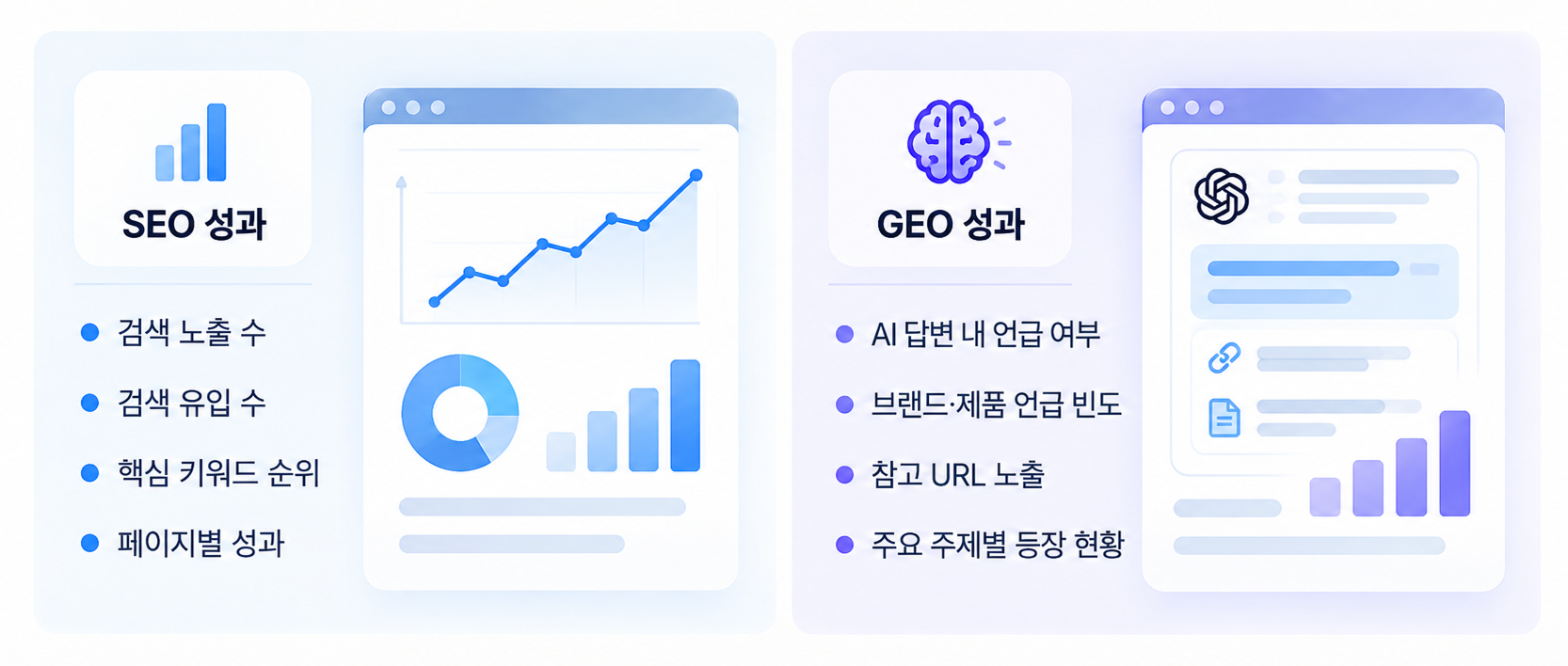
Even when the same website has been improved, changes in search results and changes in AI answers don't show up at the same pace.
SEO impressions may have grown while nothing has changed in AI yet, or brand mentions may have increased for certain questions while search traffic hasn't moved much. That's why it's more appropriate to look at the two sets of metrics separately.
9. What can you see after search traffic arrives?
Once a project has progressed to a certain point, the users arriving through search gradually become more varied.
From here, you can look beyond SEO and GEO themselves to how users who arrived through search connect to your subsequent marketing.
People looking for information, people comparing services, and people already considering a consultation or purchase have different levels of interest.
Looking at which page they landed on together with their search intent lets you segment users a bit more finely. Provided privacy and consent requirements are met, you can also consider connecting this to retargeting or CRM.
That said, this is less a core part of SEO or GEO itself than an extension area: connecting the traffic gained from search to the rest of the marketing funnel.
10. What it means to look at SEO and GEO together
Looking at SEO and GEO together doesn't mean blending the two into one job.
SEO requires search engine crawling, indexing, and page design that matches search intent. GEO requires separately checking how the brand and its information are mentioned in AI search and which sources are referenced.
But when you lay out the actual order of a project, the two overlap in many places.
First, confirm the site is being read properly. Then look at keywords and search results to find the search demand that still isn't being answered. After strengthening the pages that are needed, measure again how those changes show up in Google search and in AI answers respectively.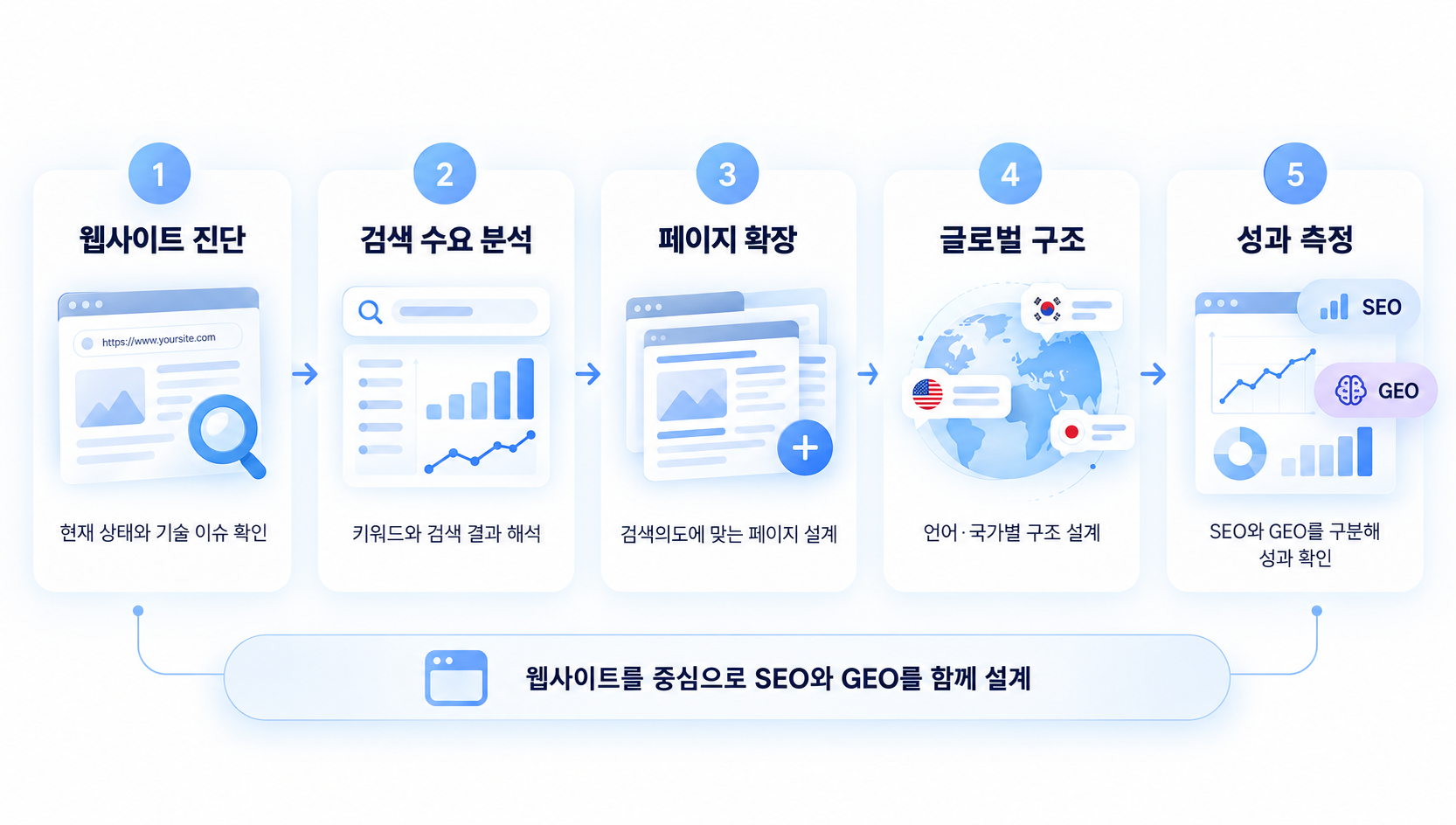
For a global site, repeat the same process for each market.
In the end, the connection between SEO and GEO as we see it isn't about producing a lot of separate GEO content. It's closer to a process of first looking at how thoroughly the company explains what customers want to know on its official website, filling the gaps one by one, and then checking the changes in search engines and in AI environments respectively.
FAQ: Applying SEO and GEO in Practice
Q. Do I need to do SEO first before I can do GEO?
SEO and GEO don't have to be done in strict sequence. However, it's best to first confirm that search engines can properly discover and index the site, and that your main services and information are well organized on your own website. Without that foundation, running GEO on its own can leave AI search with limited information to reference.
Q. If SEO is going well, will I naturally show up in AI search too?
Not necessarily. A page that performs well in Google search won't be mentioned the same way in ChatGPT or Gemini. That said, the more complete the information the company officially explains (service descriptions, price ranges, case studies, FAQs), the wider the range of your own information that AI search can reference.
Q. Do I need to produce a lot of separate content for GEO?
There's no need to mass-produce dedicated GEO content from the start. It's more appropriate to first check whether your existing service pages and informational content match actual search demand, see what information is showing up as missing in AI search, and then strengthen what's needed.

About the Author
Aiden: SEO & GEO Consultant / Marketing
From venture investment to M&A advisory, I design digital growth across the entire corporate lifecycle. As an SEO consultant at 238lab, I focus on building sustainable, data-driven traffic structures. Former Marketing Lead at a venture and startup management consulting firm Former Digital Strategy Team Lead at a corporate finance advisory firm Current Head of Digital Strategy at 238lab