

The Real SEO Challenges of Market Entry
Global SEO is not just about creating pages translated into the local language. It is the process of understanding the local search environment and building the structure, content, and technical foundation to match it. When you actually enter a foreign market, you face a range of problems: even with good translations, your site may not surface in search, or pages may disappear because of hreflang errors.
Common Problems in Global SEO
-
Good translation, but no visibility (keyword mismatch): This happens when literally translated phrases differ from the terms local users actually search. You end up using keywords that do not match search intent, so no traffic comes in.
-
Tangled hreflang and multilingual structures: Country-level and language-level pages conflict with each other, causing indexing gaps.
-
Difficulty proving ROI: Global SEO faces stiffer competition than the domestic market and takes longer to show results, making it hard to win over leadership.
-
The misconception that targeting Google is enough: Strategies that fail to account for a changing environment of AI search, GEO, and country-specific search engines.

How Is Global SEO Different from Domestic SEO?
Global SEO and domestic SEO share the same core principles, but they differ sharply in competitive difficulty and approach. If domestic SEO is a 'sprint' where you focus on Korean keywords and solid technical fundamentals, global SEO demands 'multidimensional optimization' that accounts for language, culture, and complex site structures.
Here is why simply translating Korean content makes it hard to rank in foreign search environments:
-
Fragmented search landscape: Google appears to hold the highest global market share, but in reality you cannot ignore local search engines with strong country-level share: Yahoo Japan in Japan, Baidu in China, and Yandex in Russia.
-
Cultural differences in search intent: Even for the same keyword, the information users expect (search intent) shifts completely depending on a country's culture, season, and trends. Without a localized content strategy, visibility is hard to achieve.
-
Greater technical complexity: Running a multilingual site rather than a single site introduces hreflang tag errors and duplicate content issues, with the risk of being dropped from search results.

Building a Site Structure Optimized for Foreign Search Engines
To build a site structure optimized for global SEO, first decide clearly on your 'URL structure (ccTLD, subdomain, subfolder)' and connect it consistently with hreflang so search engines can interpret it accurately. A precise structure ensures the right pages surface for users in each country and prevents common global SEO problems such as duplicate indexing and missing pages.
1. Domain Strategy
There are three main approaches to foreign site structure. Choose based on your budget and operational resources.
1) ccTLD (country-specific domains, e.g., amazon.co.jp, amazon.de)
- Pros: The strongest targeting effect for a specific country.
- Cons: You pay for domain acquisition and must build SEO authority (domain authority) from scratch for each one.
- Recommended for: Large enterprises with local subsidiaries and ample budget and time.
- Examples: .kr → Korea, .jp → Japan, .de → Germany, .fr → France, .uk → UK, .us → USA
2) Subdirectory (subfolder, e.g., apple.com/kr, apple.com/fr)
- Pros: All country pages share the authority of the main domain (.com), and it is the easiest to manage.
- Cons: Separating servers by country can be difficult.
- Recommended for: Most companies and startups (the most recommended approach).
3) Subdomain (e.g., kr.airbnb.com)
Recognized almost as a separate site, but less effective than a ccTLD. Mainly used when the technical environment (CMS) differs.

2. Setting Up Essential Hreflang Tags
Once your structure is in place, you must embed hreflang tags that tell Google 'this folder is for the US.' Without these tags, Google may mistake an English page (for the US) and an English page (for the UK) as 'duplicate content' and apply a penalty.
- Key point: Every page must carry a 'reciprocal link' pointing to one another, and you must also set up an x-default page for users whose language has not been selected.
+ Tip for handling each search engine: hreflang is an absolute standard for 'Google' and 'Yandex,' but it is not a master key.
- Bing: It relies less on hreflang, so be diligent about the <html lang="..."> attribute as well.
- Baidu: It does not support hreflang tags. If China is your target market, a physical server location (mainland) and a '.cn' domain are essential.
Building a Keyword Strategy in the Local Language: From Literal Translation to Localization
It is no exaggeration to say that over 80% of global SEO failures stem from a mismatch between 'dictionary translation' and the terms users actually search. For example, if you translate the common Korean term 'coupling' literally to 'Couple Ring' and target it, search volume abroad is nearly nonexistent, so SEO impact falls flat. In Western markets, people search for 'Promise Ring' or 'Matching Rings' depending on purpose.
'Coupling' is a Korean-style expression with low actual search volume abroad. So how do you build a localization keyword strategy that reflects local culture and context?
1. Review Literal-Translation Keywords
You need to check how your product or service is referred to in each country. Search your literally translated keywords in the target country's actual search engine and confirm that the search results match correctly.
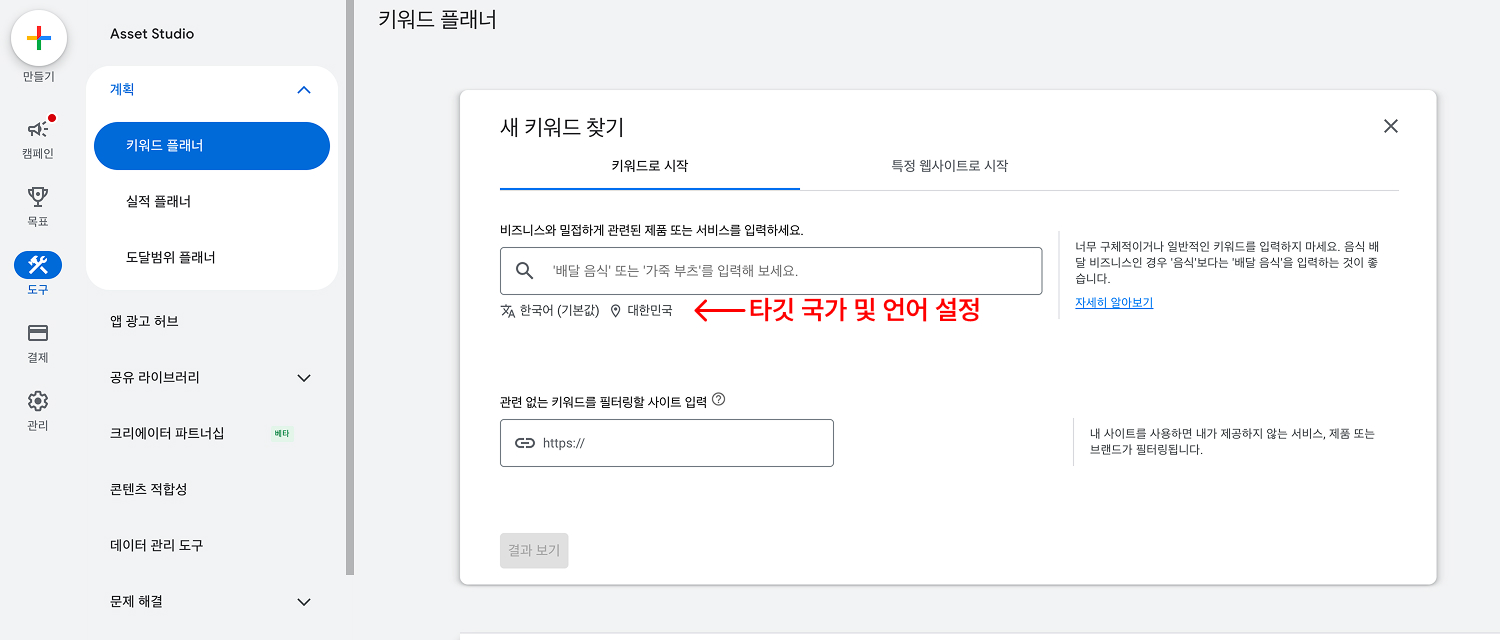
Also, use Google Keyword Planner to set the target country, then compare the search volume of your literally translated keywords against similar keywords found in the local search engine, and rebuild your strategy around higher-volume keywords.
Additionally, check which tags are actually used as keywords on social platforms like Reddit, Instagram, and Facebook, cross-referencing to uncover the local 'real search terms.'
2. Reference Competitor Keywords
Use the Keyword Gap feature in 'Semrush, Ahrefs' to identify and reference the keywords driving traffic to local competitors. Put the top 1-3 local competitor domains in your target country into an SEO tool (Semrush, Ahrefs, etc.) and run a 'Keyword Gap' analysis to see which keywords drive their traffic. This gives you a rough view of localized and industry keywords.
Reviewing the competitor's website page by page to see which keywords they use also speeds up keyword discovery.
The New Battleground of 2026: A GEO (Generative Engine Optimization) Strategy
As generative AI expands and search methods change rapidly, the goal of SEO is shifting beyond simple 'top rankings' toward being cited as a 'trustworthy source' when generative AI like Google AI Overviews, ChatGPT, and Perplexity generates answers. This is called GEO (Generative Engine Optimization), and in foreign markets it is becoming an essential search-share strategy even faster than in Korea.
Handling GEO in Global Markets
1) Improve AI's content comprehension with structured data (schema markup)
AI does not interpret literary expression the way humans do; it understands the relationships in the data within code. Especially for global sites where product information or service scope differs by country, structured data is what lets search engines and generative AI grasp a page's meaning clearly.
- Strategy: Go beyond simply dividing title and body. Actively use FAQPage, HowTo, and Product schema.
- Global GEO example: Specify the currency (USD, JPY) in product prices, and mark up shipping information (ShippingDetails) segmented by country. That way, AI recognizes 'this product can ship to the US' and surfaces it in answers.
+ To learn more about schema markup, see the column below.
Schema Markup Guide: A Structured Strategy to Boost SEO and GEO Performance
2) Strengthen Q&A-format content
Generative AI prioritizes a 'direct answer' to the user's question. Content that leads with the conclusion - a concise answer to the question stated first - performs better than long, vague writing.
- Strategy: Place clear question-form subheadings within your content, such as 'What is a long-tail keyword?', and define the key point in 2-3 brief sentences below it. This 'question-answer' structure is ideal for AI to cite in its summaries.
The Essence of Global SEO Is 'Localization'
The most important thing in global SEO is 'building a structure that fits the local user experience.' Only when technology, content, and brand all reflect the local context can a search engine surface your site correctly to users in that country.
Global SEO Frequently Asked Questions (FAQ)
Based on the key points above, we have compiled the questions that practitioners at companies entering foreign markets ask most.
Q1. If I translate my Korean site into English, will that count as global SEO?
Translation alone makes visibility hard, because local search terms differ from how people actually phrase things. To drive traffic through SEO, you need 'keyword and content localization' that reflects each country's culture and context.
Q2. When building a global site, which is better, a ccTLD or a subdirectory?
A ccTLD has a strong country-targeting effect but is heavy on cost and management, while a subdirectory shares domain authority and can be more practical for most companies. Choose according to your budget and operational resources.
Q3. What are the downsides of not setting up hreflang tags?
Without hreflang, country-level pages can be recognized as duplicates, causing visibility to misalign or pages to be dropped from the index.
Q4. What should I do to prepare for GEO?
The core of GEO readiness is applying structured data (schema) so AI can understand your content, and increasing clear, question-answer-based paragraph structures.

About the Author
Liv: SEO Consultant / Publisher
SEO specialist planner and designer responsible for SEO content strategy, website structure optimization, and search-engine-friendly UX/UI design. Former: UX/UI Design Team Lead Current: SEO Content Design Team Lead at 238lab