

Schema markup is structured data that helps search engines understand your web pages more accurately. Since 2025, generative AI search environments (ChatGPT, Claude, Grok, and others) have shown an increasingly clear pattern of generating answers by referencing the structured information that search engines have organized. In this environment, structured data not only improves how well search engines understand your content but also carries growing influence by providing a stable foundation that AI references when interpreting or citing information.
In other words, schema markup has moved beyond being just an SEO configuration element to becoming a core design approach that considers GEO at the same time. When structured data is set up properly, search engines understand page content not in terms of text units but as "semantic units," and generative AI can use this information as a trustworthy basis. In this column, we will examine the role and concept of schema markup, then walk through strategies and implementation methods you can apply directly in the field, step by step.
What is Schema Markup?
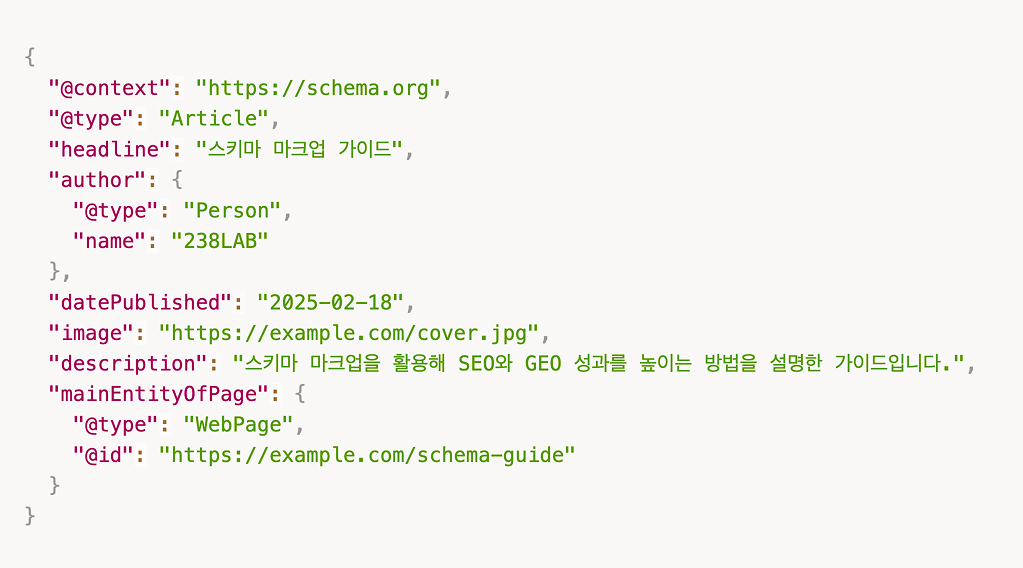
Schema markup is a method of structuring web page information using the standard schemas defined by Schema.org. The most widely used format is JSON-LD, written as structured data declared within a <script type="application/ld+json"> tag. For example, in the case of a simple article, information such as the title, author, publication date, modification date, and featured image is specified in a separate JSON structure to help search engines recognize the page as an "Article" entity.
The core of schema markup lies in its role of "explaining once more, so bots understand without misunderstanding, information that humans already grasp easily." Even if a page looks identical to the eye, the depth of information a search engine captures differs depending on whether structured data is present.
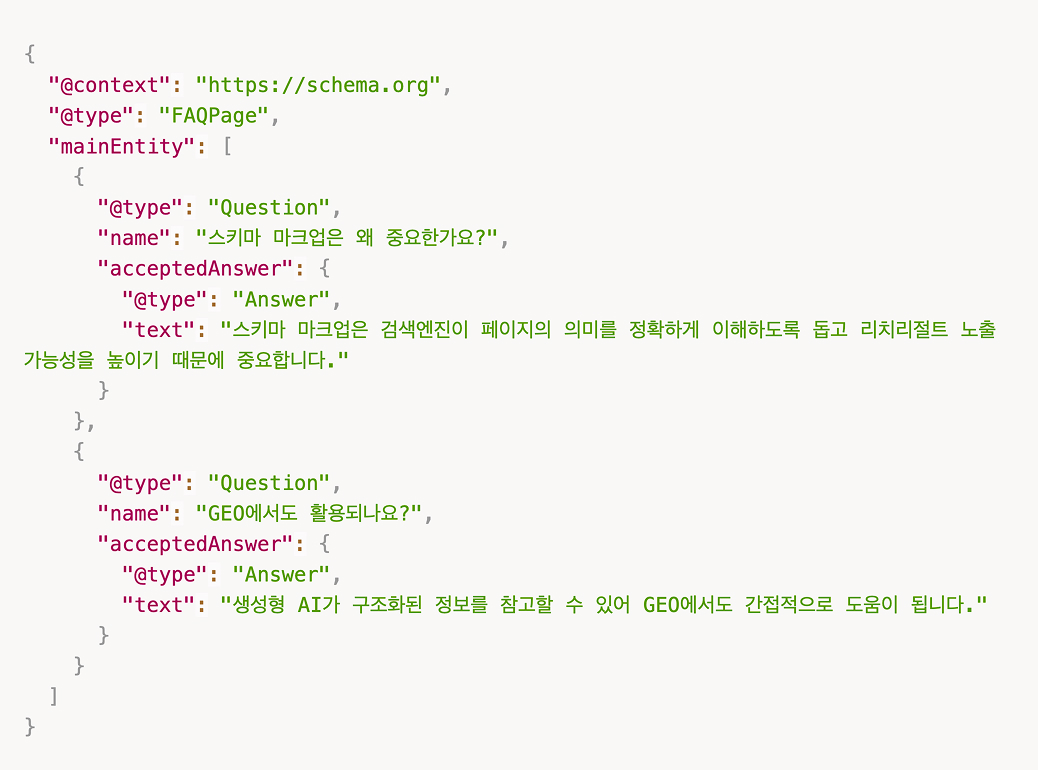
Below are example codes of JSON-LD-based schema markup most commonly used in practice. Once you understand how structured data is written, you can expand and apply it to suit various page types.
✔ Article Schema
✔ FAQPage Schema Example
✔ Product Schema Example
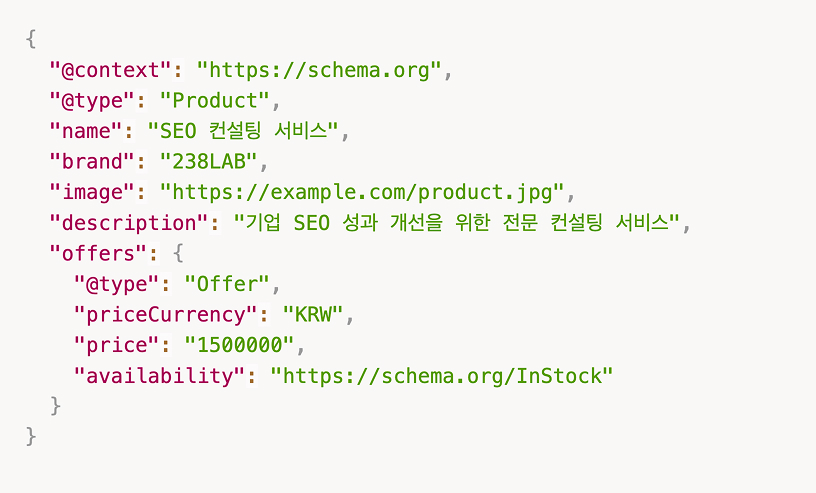
As shown, schema markup varies in structure and properties depending on the page's purpose, and writing it in JSON-LD format and inserting it into the <head> section is the most stable approach.
The Technical Reasons Search Engines Prefer Schema Markup
When search engines crawl a page, they parse the HTML, analyze the link structure, and interpret context through language models. However, natural language alone makes it difficult to perfectly distinguish the roles and relationships of various pieces of information such as the title, subtitle, body, reviews, FAQs, and prices. Schema markup is a mechanism that explicitly complements this.
Schema.org types and properties define the structure, such as "this page is an article," "this value is the product price," and "this text is a question, and this text is its answer." Based on this structure, search engines recognize entities and properties more clearly and then use them for indexing, ranking, and rich result generation. This is why Google specifies multiple rich result types that support structured data in its official documentation and continues to update its related guidelines.
*Rich Results refer to expanded search results in Google that include visual elements or additional information rather than appearing as plain text links. e.g., star ratings, price information, review counts, FAQ questions and answers, product images, event information, recipes (cooking time, ingredients, etc.), articles (thumbnails, publication dates, authors).
Example) Display of the 'Price' expansion element in Product rich results

The SEO Effects of Schema Markup
The most direct effect of schema markup is that it increases the likelihood of rich result exposure. For example, a page with FAQPage schema applied may have a question-and-answer block displayed alongside it in Google search results, and a Product schema page with reviews and ratings may display its star rating, review count, price information, and more. These rich elements act as visual cues that encourage user clicks and can have a positive impact on improving CTR.
Schema markup also helps with indexing stability. When a search engine secures a page's key information in structured form, it can more clearly classify which topics and entities the page covers. Of course, schema alone does not guarantee higher rankings, but for content of equal quality, it is true that a page with structured information is easier for a search engine to process.

The Strategic Meaning of Schema Markup in the GEO Era
GEO (Generative Engine Optimization) is a strategy to optimize your site so that it is selected as a source when generative AI creates answers. Here, generative AI particularly prefers trustworthy structured data, because structured data conveys the role, meaning, and relationships of information more clearly than unstructured text. In other words, it reduces the contextual ambiguity that AI might miss during interpretation and helps it quickly identify the 'precise attributes' needed to generate fact-based answers, making it far more stable to use. From this perspective, JSON-LD-based schema markup plays an important role.
Generative AI constructs answers by using both the text and structured data it collects from the web. A structure where questions, procedures, and results are clearly divided - as with FAQ or HowTo schemas - is in an excellent form for AI to reuse when generating answers. In addition, Organization, LocalBusiness, Product, and Article schemas provide stable entity information about brands, services, and products, making them reference points that AI relies on when citing or mentioning a particular brand or site.
To summarize, from a GEO perspective, schema markup is closer to "the work of organizing entities and structures so that AI trusts our site as a source." Structured data now goes beyond simply displaying rich results on the search results screen; it is the groundwork that raises your site's presence within the generative AI search flow.

Which Schema Should Be Applied to Which Page
Schema markup must be chosen to match the page's purpose and content structure, and it is important to use only the types that align with the information you actually provide. For pages centered on informational content, such as articles or blog columns, the Article or BlogPosting type is appropriate. By structuring the title, description, author, publication date, modification date, featured image, URL, and so on, you help search engines clearly recognize the page as informational content.
For pages where questions and answers are organized, the FAQPage type is advantageous. However, Google frequently adjusts its FAQ rich result display policy, so you must check Search Console and the official guidelines to assess both the actual exposure potential and any changes to the guidelines. For product detail pages, you can use Product schema to structure the name, brand, image, price, stock status, reviews, and more, and for company introduction or store information pages, the Organization or LocalBusiness type is generally required.
The key point here is that "the schema must match the actual page content." Putting nonexistent reviews into the schema only, or inserting Product schema into a page without product information, may constitute a policy violation and can actually harm your credibility.
Key Points for Applying Schema by CMS and Framework
CMS platforms allow code insertion at the theme or page level, so you can insert JSON-LD directly into the <head> section or apply various schemas such as Article, Product, and LocalBusiness stably through plugins. The common practice is to place shared elements (Organization, WebSite, Breadcrumb, etc.) in the site's common code, while configuring content-specific schemas such as Article, Product, and FAQ individually on each page.
For a CMS with restrictions on inserting structured data (e.g., Imweb), it is nearly impossible to apply schema markup individually. Therefore, if you need to actively leverage schema-based SEO, it is worth considering a CMS that supports JSON-LD insertion, such as WordPress, Wix, Webflow, or Shopify.
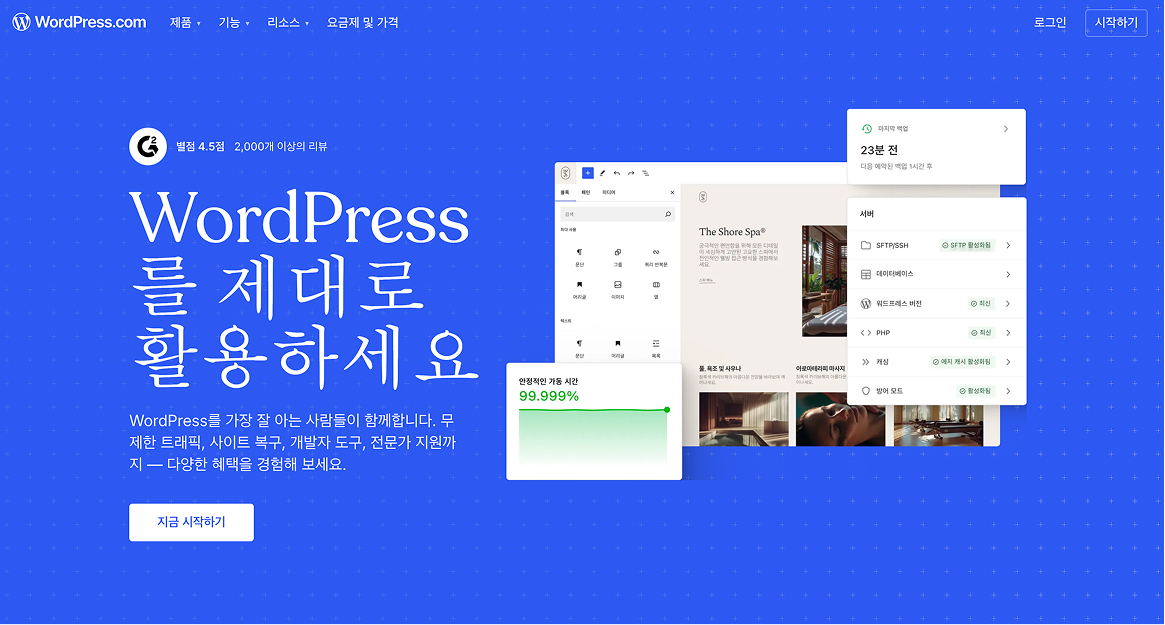
In a WordPress environment, using a dedicated plugin makes it relatively easy to set up schemas such as Article, Product, FAQ, and LocalBusiness. However, relying entirely on a plugin can cause the actual page content and the schema to diverge, so for important pages it is safer to review the JSON-LD directly or use custom fields to control it specifically.
For sites based on Next.js or React, the usual approach is to insert JSON-LD scripts into the head section during server-side rendering (SSR) or static generation (SSG). If you use client-side rendering (CSR) only, some search engines may not fully execute the script, so it is best to provide structured data through SSR or SSG whenever possible. Because the implementation method for this varies depending on the tech stack and deployment structure, it is necessary to discuss it with developers at the architecture level.
A Verification Process to Reduce Schema Markup Errors
In practice, syntax errors and missing properties frequently occur when applying schema for the first time. Google provides a structured data testing tool and a rich results testing tool, which let you check in advance whether your JSON-LD satisfies syntax, required properties, and recommended properties. If you build the habit of always verifying with these testing tools before deploying to your live service, you can significantly reduce the errors that accumulate in Search Console.
Google Rich Results Test site: https://search.google.com/test/rich-results

The errors commonly seen in Search Console include types such as "A required property is missing" and "Does not match the page content." These messages are a signal that you need to re-examine the type and properties of your structured data. While an error itself does not always have a fatal impact on search exposure, low schema quality can reduce the likelihood of rich result exposure, so it is best to consistently manage errors, focusing on your core pages.
How to Introduce Schema Markup by Setting Priorities
While setting up schema perfectly on every page is ideal, in reality it is more efficient to set priorities and introduce it in stages. Typically, it is best to start with the Organization, WebSite, and Breadcrumb schemas that establish brand credibility and site structure. Next, apply Article or BlogPosting schema to the core content with high search inflow to build the foundation for informational pages.
For an e-commerce site, a strategy of prioritizing Product schema on key product categories with high revenue contribution can be effective. For a site with high inflow from question-type searches, FAQPage or HowTo schema may move up the priority list. By organizing structured data starting with the pages that are important from a traffic, conversion, and brand perspective, you can create meaningful changes in both SEO and GEO even with limited resources.

A Schema Markup Checklist to Review in Practice
When applying schema markup in practice, you need to consistently check a few basic checklist items. First, organize what the key entities to define for each page are, and clearly distinguish which type each entity falls under, such as Article, Product, Organization, LocalBusiness, or FAQPage. Next, review the list of required and recommended properties in the official Schema.org documentation, then fill in as fully as possible the properties your page can provide.
It is also an important point whether basic information such as the brand name, URL, phone number, address, and logo image is used consistently across the entire site. If entity information is written differently from page to page, it may take more time for search engines to recognize it as the same entity. Finally, after introducing structured data, you need to monitor both Search Console's rich results report and the actual search results together, observing which types of rich results appear on which pages.
A Structured Strategy That Considers Both Search and Generative AI
Schema markup is establishing itself not simply as "an option for rich results," but as a core tool for designing how search engines and generative AI understand your site. A site with well-organized structured data can be understood easily and clearly by search engines, and it gains a structure that is well-suited for use as a basis for trustworthy answers in generative AI.
In the end, schema markup is foundational work that strengthens both SEO and GEO at the same time. Even if configuring structured data feels somewhat difficult at first, applying it step by step starting with your important pages can create a difference in inflow over the long term.
FAQ (GEO Optimized Summary)
Q1. How do you decide which pages should have schema markup applied first?
A. It is efficient to start with core pages that have high traffic or a large contribution to search inflow. It is best to set priorities according to the page's purpose, such as Organization and WebSite schemas for brand information, Article and BlogPosting schemas for informational content, and Product schema for product and service pages.
Q2. How does schema markup contribute to GEO?
A. Generative AI grasps structured information as "clear semantic units" and uses it as a trustworthy basis when generating answers. Therefore, schema markup makes AI quickly understand a page's role, entities, and properties, and provides the foundational structure that raises the likelihood of being cited within an answer.
Q3. What are the most common errors when writing JSON-LD schema directly?
A. The most frequent case is when the page content and the schema information do not match. In addition, missing required properties, incorrect type declarations, and nesting structure errors are problems that frequently arise in Search Console. It is safer to verify with the Google Rich Results Test before deployment.
Q4. What are the alternatives when using a CMS with limited schema insertion, such as Imweb?
A. Imweb makes it difficult to insert JSON-LD into the head section, so applying schema to individual pages is restricted. In this case, you can find alternatives by building core pages that make heavy use of structured data with a separate CMS (WordPress, Webflow, Next.js, etc.), or by constructing a schema-friendly environment on a subdomain.
Q5. Why doesn't search ranking improve immediately even after applying schema markup?
A. Schema markup is merely a tool that helps search engines understand a page more accurately; it is hard to view it as a factor that directly raises rankings. However, supplementary signals such as strengthened indexing stability, increased rich result potential, and a higher probability of AI citation can indirectly contribute to SEO performance.
Q6. From a GEO perspective, which schema types are especially important when leveraging schema?
A. "Schemas with a clear semantic structure," such as Article, FAQPage, HowTo, Product, and Organization, are advantageous for GEO. These schemas help generative AI clearly grasp the role and relationships of information, which can raise the probability of being included within an answer.

About the Author
Liv: SEO Consultant / Publisher
SEO specialist planner and designer responsible for SEO content strategy, website structure optimization, and search-engine-friendly UX/UI design. Former: UX/UI Design Team Lead Current: SEO Content Design Team Lead at 238lab