
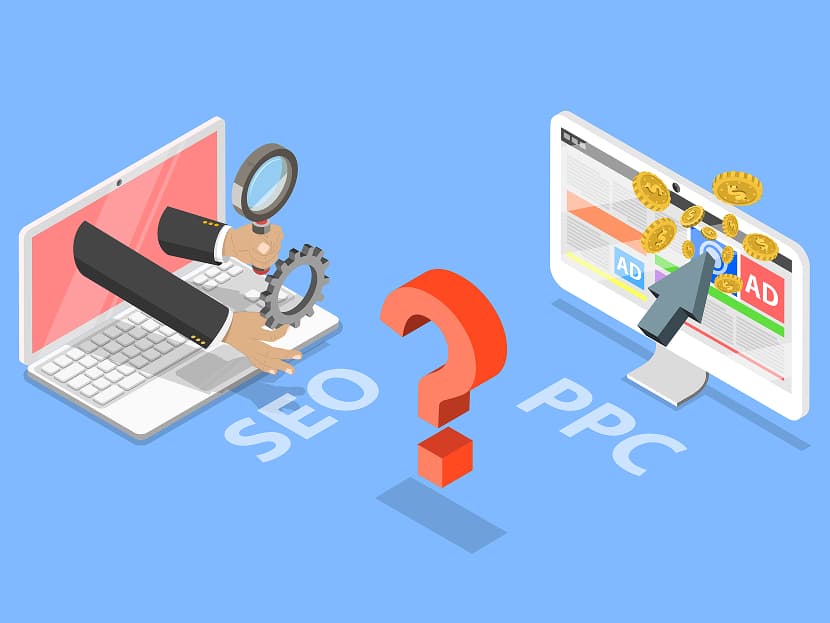
SEO and SEM are both search-driven strategies for attracting customers, but they differ clearly in how they work and what they aim to achieve. SEO improves your site structure and content so the search engine trusts and values your website, securing top placement in organic search results. SEM uses paid ad placements within the search engine to gain immediate exposure and traffic at a cost.
Rather than simply labeling SEO as 'free' and SEM as 'paid', the real determinant of success is this: how effectively you capture the exact moment search intent occurs. To grow beyond temporary traffic toward sustainable growth, brands must strategically combine SEO and SEM to design effective customer touchpoints.
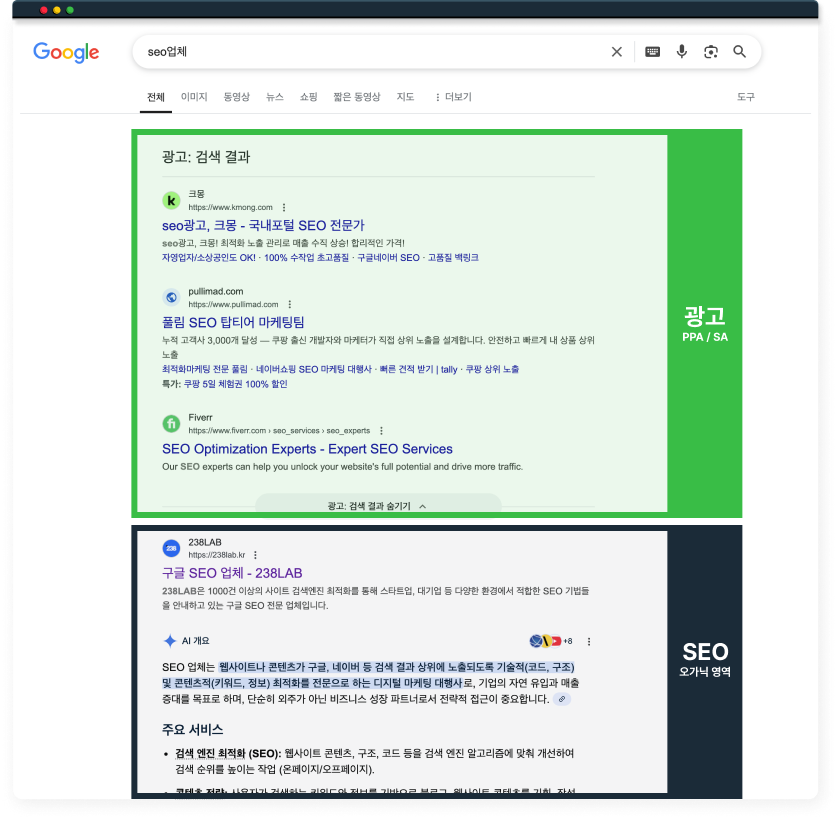
Note: in academic terms, SEM is the umbrella concept that includes both SEO and paid search ads (PC/SA). In practice, however, the difference in execution and performance metrics means SEM is commonly used to mean 'paid search advertising (PPC)'. This article follows that practical convention and treats SEO and SEM as distinct.
3 Core Differences Between SEO and SEM
The biggest differences between SEO and SEM lie in the nature of the cost, the speed of results, and sustainability.
Cost structure: SEM is a PPC (Pay-Per-Click) 'consumable cost' that you pay each time someone clicks, while SEO is an 'asset-building investment' you accumulate by optimizing content and site structure.
Speed to results: SEM can place you at the top of Google instantly based on budget as soon as the campaign goes live, while SEO follows a gradual upward curve because Google's algorithm needs time to evaluate the quality and trustworthiness of your website.
Sustainability: Unlike SEM, where traffic stops the moment the ad budget runs out, SEO generates steady traffic without ad spend once it gains momentum.
| Category | SEO (Search Engine Optimization) | SEM (Search Engine Marketing) |
|---|---|---|
| Cost | Long-term content investment (free per click) | Cost per click (PPC) |
| Speed | 3+ months to deliver results | Exposure immediately upon launch |
| Position | Search results (organic area) | Search results (ad area) |
| Sustainability | Maintains traffic long term | Stops immediately when ads pause |
SEO vs SEM: When Should You Choose Which?
You can decide the priority between the two strategies based on your current business stage and your target performance timeline. In situations where short-term traffic and market validation matter, such as a new product launch or a limited-time promotion, focusing on SEM for immediate exposure is effective. On the other hand, if you want to build brand trust, maximize marketing efficiency (ROAS), and achieve long-term profit, running SEO in parallel is the better choice.
In short, during the early stages of a business or launch, it is reasonable to secure speed and data with SEM, then expand SEO content based on that data as it accumulates. Conversely, when budget is limited, you can drive stable growth by first securing meaningful leads and building a revenue structure with SEO, then adding SEM in parallel to expand additional traffic channels.
How to Maximize Search Marketing Efficiency
To maximize search marketing efficiency, treat SEO and SEM not as separate areas but as complementary forces that share data. For example, once you identify keywords with proven conversion performance from SEM ads, you can produce SEO content around those keywords to also secure exposure and traffic in organic search. You can also combine the two strategies in the following ways.
-
Ad copy testing -> Apply to SEO elements: Take the high click-through-rate (CTR) headlines validated through SEM testing and apply them to your SEO content's title tags and meta descriptions to raise organic click-through rates.
-
Expand search results page coverage: For core keyword searches, appear in both paid ads and organic results simultaneously to strengthen brand trust and effectively block competitor entry.
-
Flexibly fill performance gaps: Use SEM when you need immediate traffic, such as a new product launch, and turn informational keywords into long-term assets through SEO, gradually reducing your dependence on ad spend.

2026 Search Market Survival Strategy: Beyond SEO and SEM to GEO
Ultimately, both SEO and SEM succeed only when they operate under Google's core philosophy of 'delivering valuable information to users'. Technical tricks or simply pouring money into ads cannot prepare you for smarter users, more sophisticated algorithms, and the era of generative AI.
Use SEM strategically for short-term results and data validation, but over the long term, build SEO assets unique to your brand that AI wants to cite on its own, preparing you for GEO as well. When you add the SEO/GEO capability to structure data and reinforce expertise in step with shifting search behavior, your business gains a competitive edge within the vast ecosystem of search engines.

About the Author
Liv: SEO Consultant / Publisher
SEO specialist planner and designer responsible for SEO content strategy, website structure optimization, and search-engine-friendly UX/UI design. Former: UX/UI Design Team Lead Current: SEO Content Design Team Lead at 238lab