
"We wrote a longer article than our competitor on the same keyword — so why are they ranking above us?" It's a common question in SEO consulting sessions. If you've included the keyword and the length is more than sufficient but rankings won't move, the problem may not be the volume of text but a mismatch between what the searcher wants and what the page delivers.
When search engines assemble results, they consider not only whether a keyword appears but also how well the page's content fits the information the user expects. The purpose a user is trying to fulfill through a search is called search intent. In this article, we'll look at how to check whether your pages are built around the search intent of your target keywords, and what to fix when they aren't.
What Is Search Intent?
So how does search intent differ from a keyword?
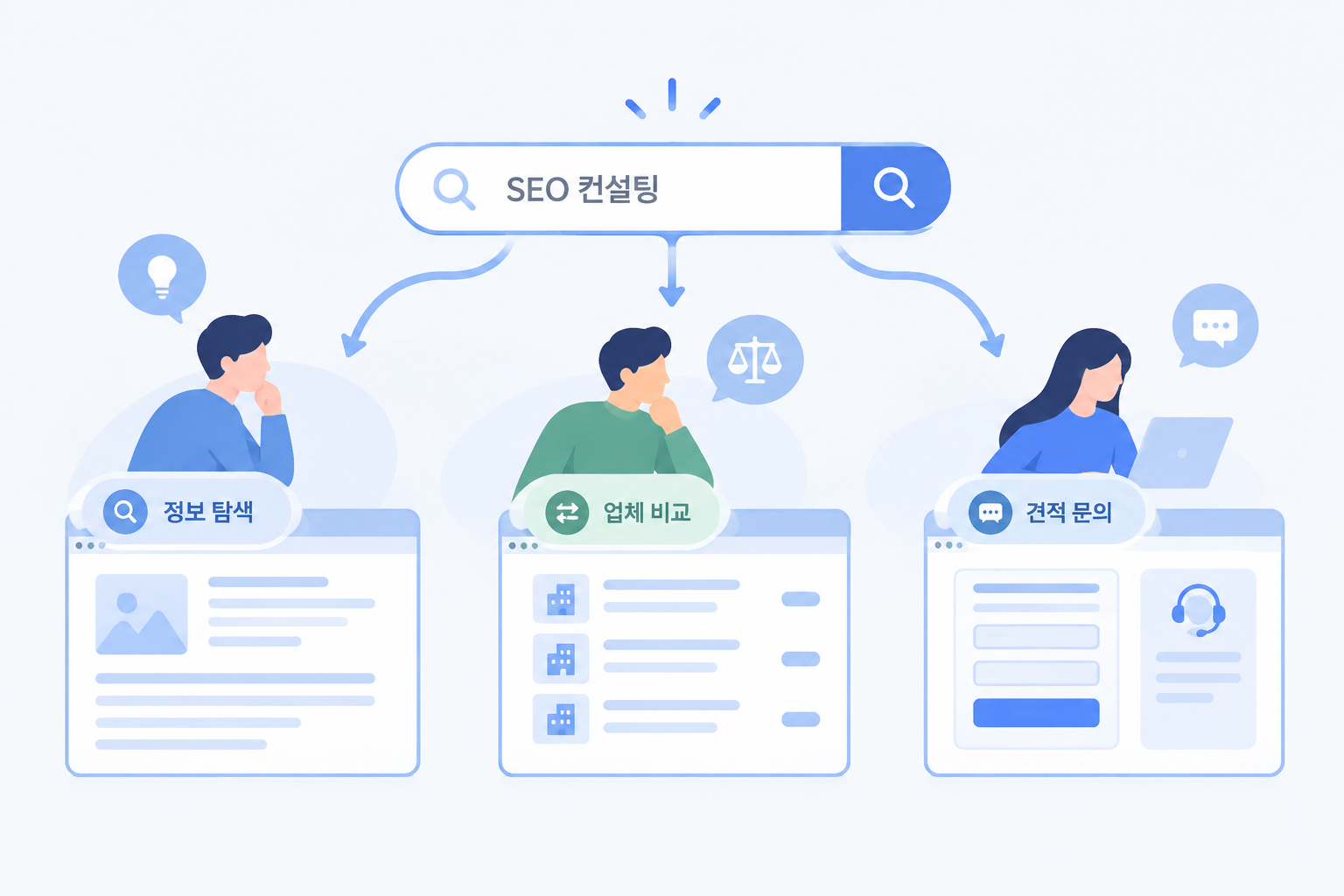
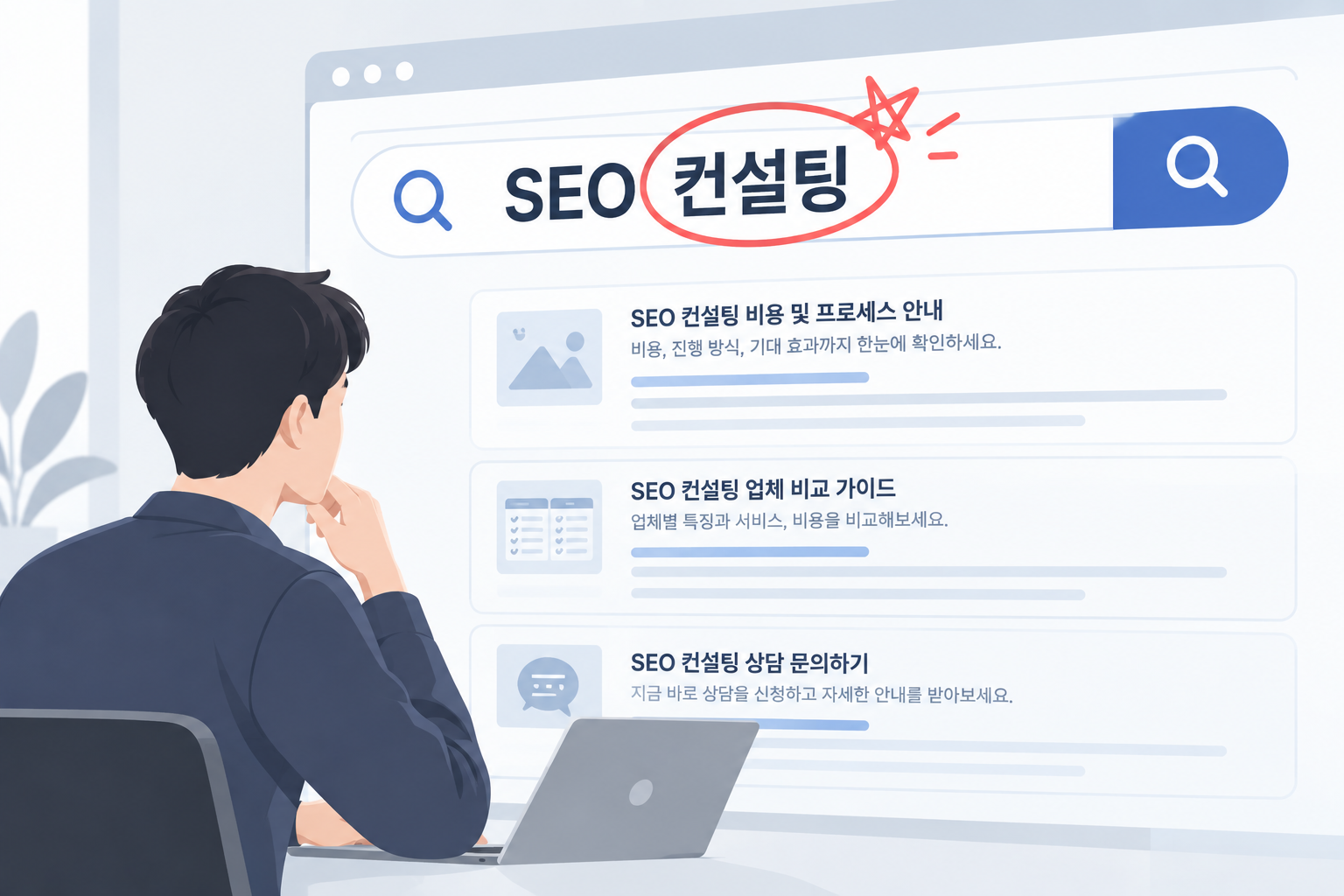
A keyword is the term a person types into the search box; search intent is the purpose behind typing it. Take the same keyword "SEO consulting": one person searches to learn what SEO consulting is, another to compare agencies, and another to request a quote. Even with an identical keyword, the information users want and the type of page that serves them can differ.
Search engines evaluate which pages suit a query based on many signals — the relevance between query and page, content type, and patterns that recur across search results. Rankings are therefore not decided by how many times a keyword appears in the body.
Why Do Rankings Differ for the Same Keyword?
The keyword is the same and the content is similar — so why do rankings diverge?
For a given keyword, search results often show the same type of page repeatedly. If your page's format and content differ sharply from that pattern, ranking highly can be difficult even when the content is thorough.
For example, search "SEO consulting cost" and most top-ranking sites are explanatory articles covering pricing and how fees are structured. But if your page has no cost or pricing explanation and only a "Contact us" button, the search engine reads it as a page that doesn't address that keyword, and ranking it highly becomes difficult.
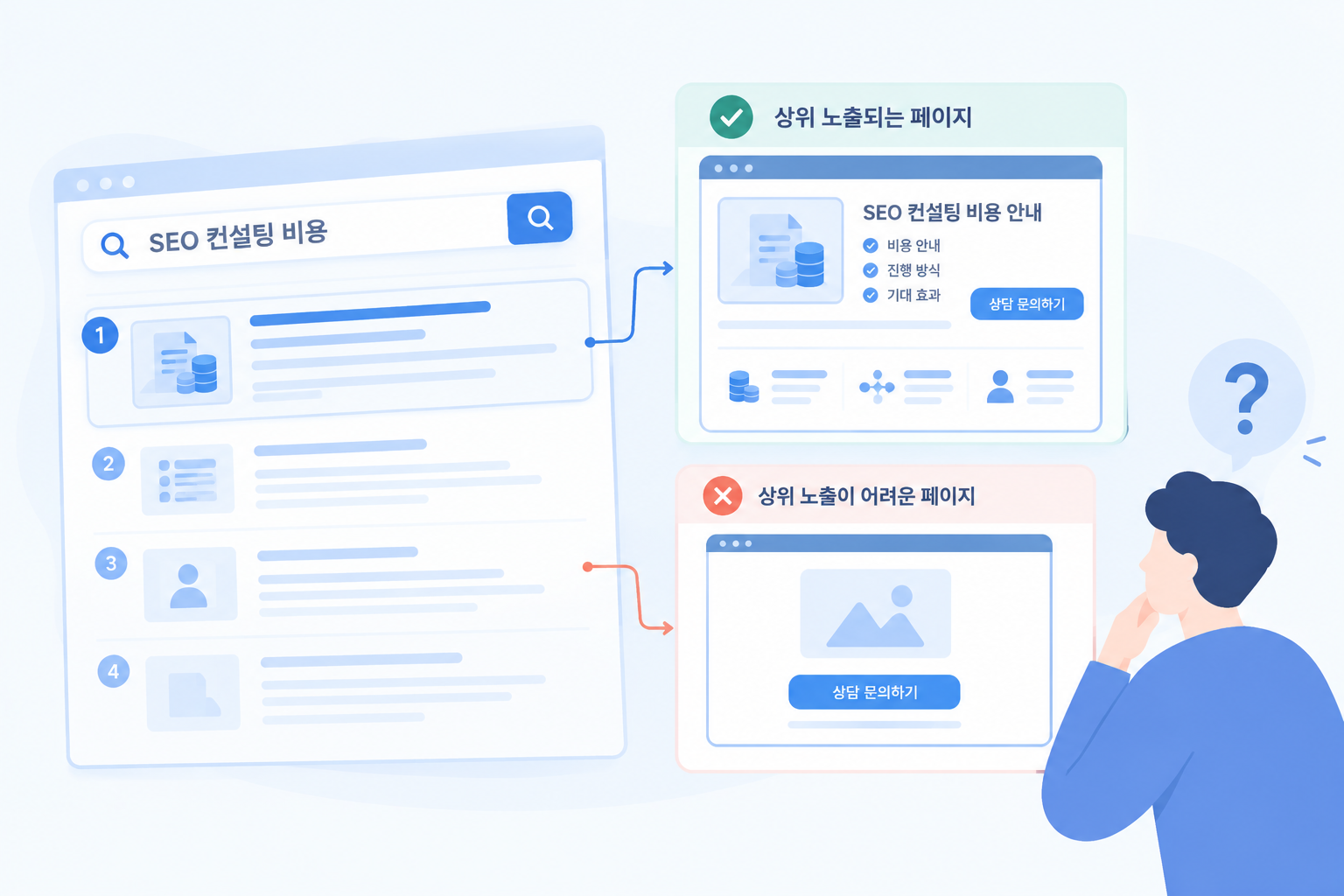
Reviewing search results shows you which page types tend to surface for each keyword. "What is SEO" typically surfaces concept explanations, while "best SEO agencies" surfaces comparison content. Mapping only a company-introduction page to an informational keyword is therefore likely to miss the search intent.
Search intent falls into four broad categories.
| Search intent | Why they search | Example keywords | Page types that rank |
|---|---|---|---|
| To learn something | To understand a concept or method | "what is SEO," "how to check backlinks" | Concept explanations, guides |
| To reach a specific site | To go to a brand or service they already know | "238LAB," "Google Search Console" | That brand's official pages |
| To compare and choose | To weigh options before purchasing or contracting | "best SEO agencies," "SEO consulting cost" | Comparisons, reviews, pricing pages |
| To act right now | To purchase, inquire, or download | "apply for SEO consulting," "download SEO checklist" | Service pages, application pages |
Sometimes multiple intents coexist within a single keyword. If the results show both concept explanations and agency comparisons, that keyword carries more than one intent. Which type appears more often is a useful clue to the dominant intent.
How Do You Identify Search Intent?
So where can you check the search intent behind a target keyword?
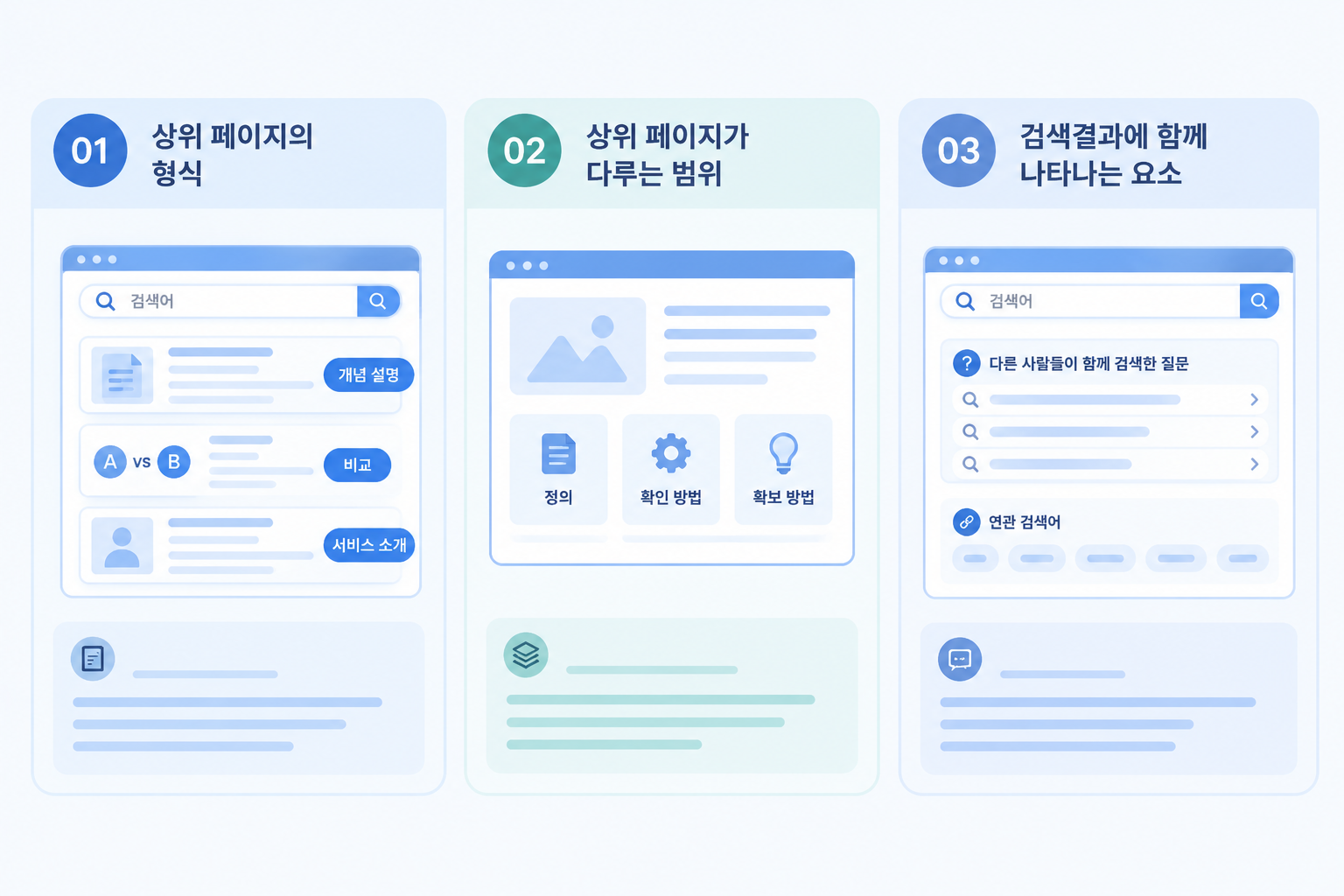
The first thing you can do is search the keyword yourself and look for what the top results have in common. The format and content of top-ranking pages help you understand which page types are currently favored for that query. Look at these three things.
The Format of Top Pages
Check whether the top 10 pages are concept explanations, comparisons, or service pages. When one format recurs, it signals the content type favored for that keyword. If your page's format differs substantially, review the page's role and format before reinforcing its content.
The Scope Top Pages Cover
Check what the top pages cover in common. If most top results for "backlinks" cover not just the definition but also how to check and how to earn them, a page explaining only the definition may fall short of the information scope users expect.
Elements That Appear Alongside the Results
If the results include "People also ask" or related searches, use them as a reference for the topics users are curious about alongside the main query. Check whether your page covers those related items adequately.
This approach gives you a rough read on a keyword's dominant intent. That said, when top-page types are mixed or you have dozens of target keywords, you need to weigh search intent alongside search volume, competition, and business priority to decide which page should address what.
Do My Pages Match Search Intent?
Are your site's key pages currently built around the search intent of their target keywords?
The most common problem is packing several different intents into one page. Putting concept explanations, agency comparisons, and application instructions all on a service page blurs what the page is for. For users still gathering information the service pitch is excessive, while for users ready to apply a long conceptual explanation gets in the way.
The opposite problem also occurs: having no page at all for a particular intent. If you only have service pages and no content explaining the concept, it's hard to earn visibility for informational searches like "what is SEO." Such searches may not convert to inquiries immediately, but they can be the first touchpoint where someone encounters your brand.
Start by picking one business-critical keyword, searching it yourself, and comparing the format of the top pages with your own. If the roles differ significantly, it's better to consider whether a separate page is needed than to force edits onto an existing one.
However, deciding which page should address which keyword — and identifying which existing pages are competing against each other for the same intent — requires viewing the site's keywords and pages together as a whole. The more keywords you have, the more this structure needs to be designed deliberately; for a systematic approach, see "Topic Cluster SEO Strategy."
Closing
Search intent is the purpose a user is trying to fulfill through a search. Even for the same keyword, performance in search results varies with how well the page type and information scope match that intent. Searching your target keyword and examining the format and shared content of the top pages helps you find what to improve on your own page.
But identifying the intent behind a single keyword and sorting an entire site's keywords by intent to assign them to the right pages are two different jobs. If it's hard to judge which keywords to prioritize, or which existing pages to reuse or split, you need to review the site's keywords and page structure together. 238LAB's SEO consulting analyzes the search intent of your target keywords alongside your current page structure, then maps out which pages should respond and in what order to improve them, aligned to your business priorities.

About the Author
Aiden: SEO & GEO Consultant / Marketing
From venture investment to M&A advisory, I design digital growth across the entire corporate lifecycle. As an SEO consultant at 238lab, I focus on building sustainable, data-driven traffic structures. Former Marketing Lead at a venture and startup management consulting firm Former Digital Strategy Team Lead at a corporate finance advisory firm Current Head of Digital Strategy at 238lab