
As the online advertising market has grown more active recently, the cost of various advertising channels has surged. To reduce these rising ad costs, marketers are leveraging a range of techniques such as LTV analysis, CRM, and funneling. Among these, the one that has drawn rapidly increasing attention is SEO (Search Engine Optimization).
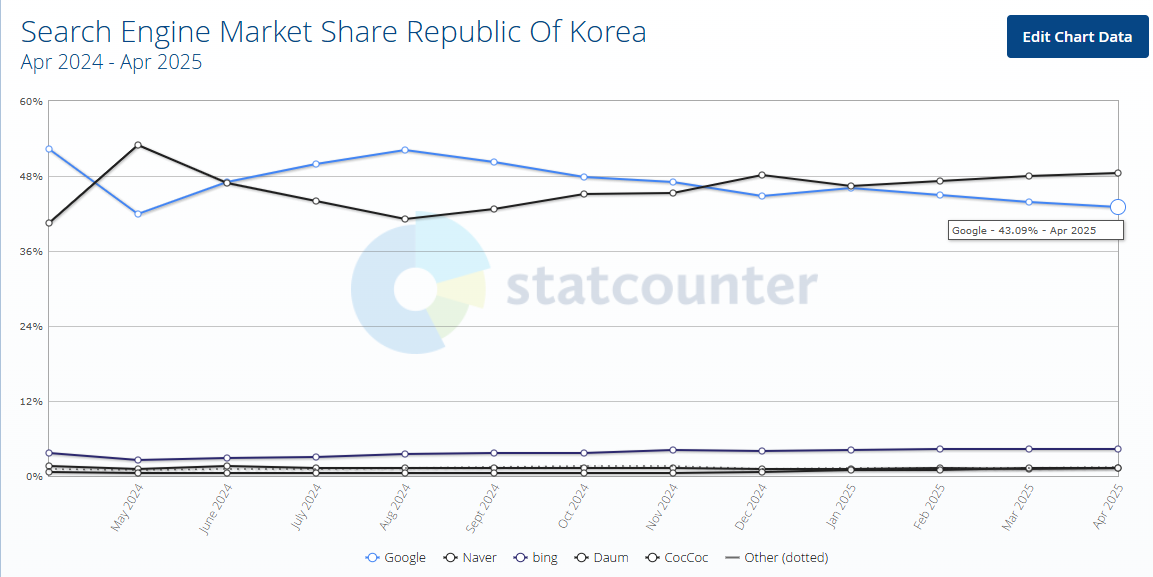
The most widely used search engines in Korea are Naver, Korea's dominant search engine, and Google. As of last year (2024), Naver held roughly 55% market share and Google roughly 40%. While Google has been climbing aggressively in recent years, Naver still holds the No. 1 position in Korea, making it a channel that cannot be ignored.
Accordingly, many people are interested in both Naver SEO and Google SEO. Today we will examine the differences in SEO between these two search engines, covering both the theoretical aspects and the practical differences we have experienced in the field.
The Structural Differences Between Naver and Google SEO
1) Naver and Google Differ from the Very Purpose of Search
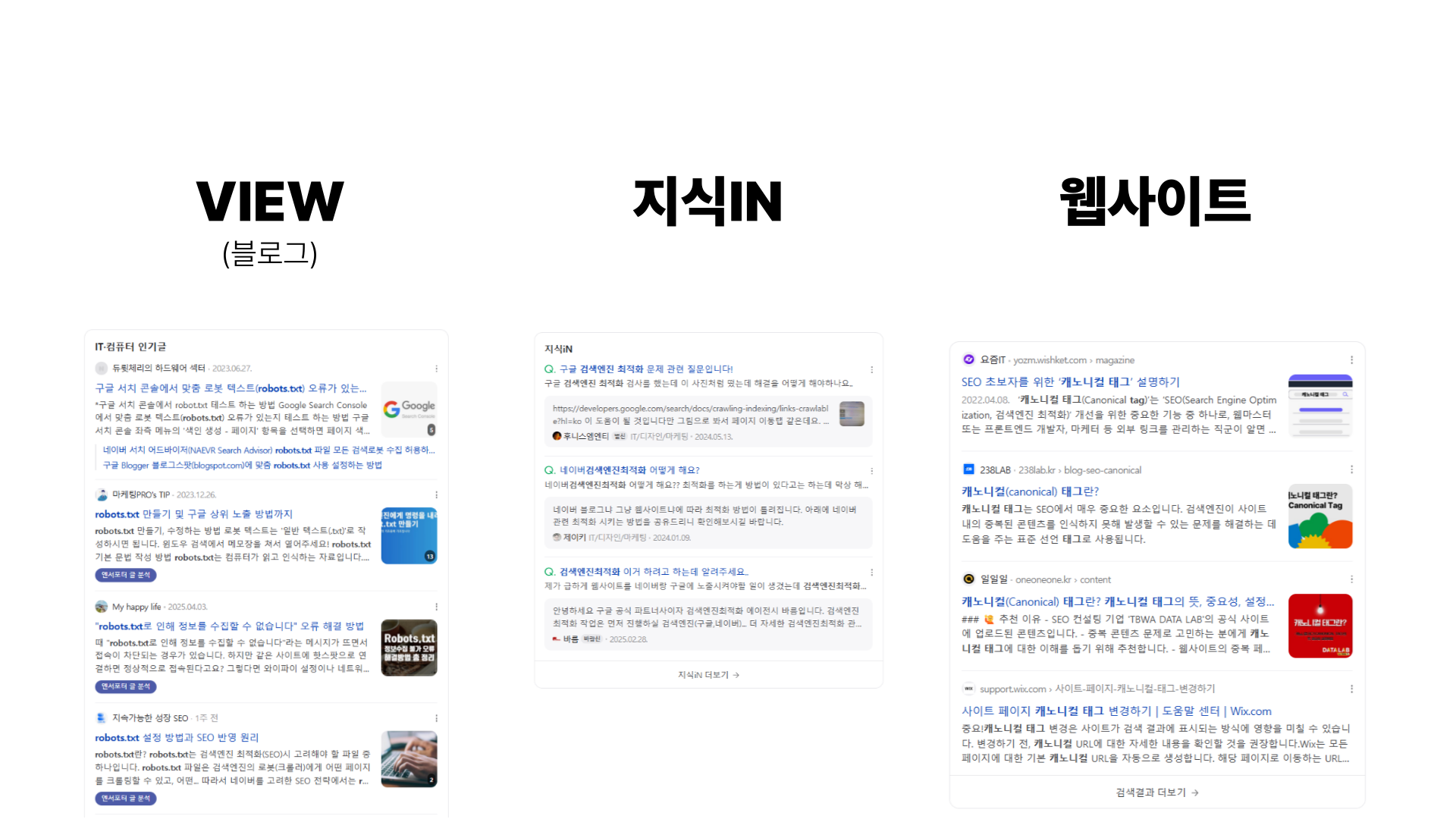
Naver has a strong tendency to deliver the information users want within its own services. For example, when someone searches for a product, Naver structures its on-SERP layout to show its internal services first - Shopping, Blog, Knowledge iN, Post, Cafe, and so on. Naver separates search results into sections within its integrated search.
- VIEW: Blog/Cafe posts
- Shopping: SmartStore, Naver Shopping
- Knowledge iN: Q&A
- Sites: External independent stores, corporate sites, etc.
Google, on the other hand, 'connects that information from websites around the world.' It selects and provides the most relevant information regardless of source - websites, blogs, news, YouTube, and more. While there are slight differences depending on the nature of the result (informational vs. commercial) and the snippet structure, whether you leave exposure open to 'each platform' or to 'the entire web' inevitably creates a major difference in information receptiveness.
This single difference dramatically changes the direction of your SEO strategy. For Naver, how well you appear within its internal services matters; for Google, how complete and trusted your own site is becomes the key factor.
2) Differences Are Also Visible in Crawling and Indexing
When you actually carry out optimization, differences in crawling and indexing also emerge. A representative example: with Naver, if you do not register your site and request indexing, it may not be crawled at all. Google, by contrast, generally discovers new pages automatically and attempts to index them. That said, submitting a sitemap.xml and configuring robots.txt still play important roles.
| Item | Naver | |
|---|---|---|
| Crawling scope | Limited (mainly registered sites) | Web-wide crawling (comprehensive) |
| Indexing method | Passive (mainly registration requests) | Automated (centered on natural discovery) |
| Rendering support | Limited (weak with JavaScript) | Strong rendering (handles SPA, JS) |
| Indexing registration | Centered on manual requests via Search Advisor | Automation via Search Console + parallel manual requests |
Beyond these differences, Naver's algorithm places great emphasis on how friendly content is to 'its own platform.' Also, the time it takes from credibility evaluation to a rise in exposure ranking tends to be longer than expected.
3) Evaluation Criteria Differ as Well
Google uses an evaluation algorithm based on content quality and links. A representative standard is E-E-A-T (Experience, Expertise, Authoritativeness, Trustworthiness). For example, it considers items like the following.
- Who wrote the content? (author information)
- How expert is it? (depth and accuracy of content)
- Has it been cited externally? (backlinks)
- What is the user response? (dwell time, click-through rate, etc.)
Naver, by contrast, is dominated by an author-centric evaluation model. Algorithms such as C-Rank and D.I.A are representative.
- How consistently has this blog published posts?
- Has it continuously covered the same topic?
- Is its communication with neighbors (likes, comments, etc.) active?
In other words, Naver places more importance on 'who wrote it' than on 'whether this content is useful.' Add to that its policy of favoring its own platform, and this tendency appears even more strongly in the VIEW area (Blog/Cafe). This is both an advantage that allows Naver to select good influencers and, at the same time, a weakness that makes it vulnerable to abuse.
To summarize: on Naver, 'targeting VIEW' and 'optimizing channels within each result section' are necessary, while on Google the core is the overall structural SEO of the website itself.
How Do You Actually Do Naver SEO?
If you want to increase search traffic in Korea, Naver appears to be the search engine to prioritize before Google. However, when many brands optimize their sites, they find Naver SEO opaque and feel their results fall short compared to the success stories they hear about.
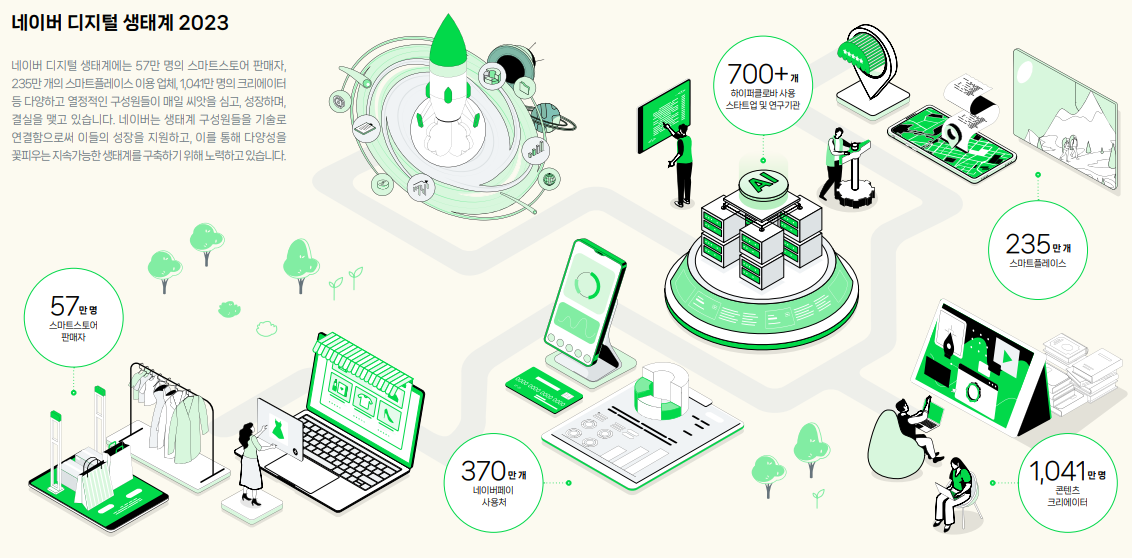
To put the conclusion first: to do SEO well on Naver, the first step is a perspective that understands 'the Naver platform itself' rather than a 'search engine.' Naver is not simply a search engine that collects external information - it is a portal platform that controls content distribution itself.
1) First Decide 'Where Will You Appear?'
Naver does not evaluate every page by the same standard the way Google does. Recently it has been making new attempts such as Smart Blocks, but there are five representative areas.
- VIEW: Naver Blog/Cafe/Post, etc.
- Shopping: SmartStore, affiliated external malls
- Knowledge iN: Q&A-format content platform
- Sites: Corporate homepages, external websites
- News/Video/Image: based on file format
To do SEO in each area, instead of simply aiming to "be No. 1," you must first decide "which section you will target for exposure." Then you need to design your content and site to fit the rules of that section.
2) Aiming for Content Exposure? The VIEW Tab
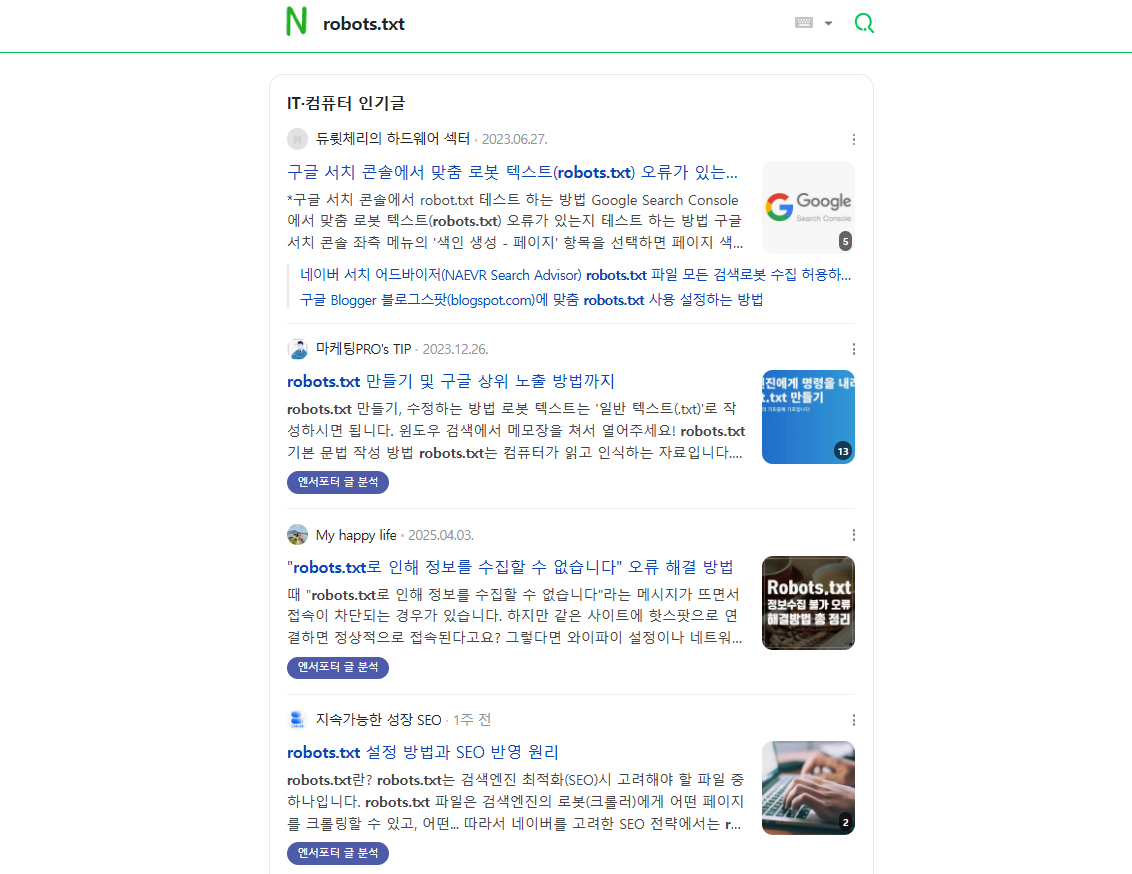
The so-called VIEW tab is the key battleground of Naver SEO. This area surfaces content centered especially on Naver Blog, and it remains the area that still generates the most traffic. If you are targeting exposure in the VIEW tab, the priority is to create and optimize a 'Naver Blog' rather than a website.
In fact, the post formats Naver prefers are essentially fixed. So if you publish from a blog with a high blog score, it tends to surface most of the time. Even so, if you are publishing from a blog with the same score, it is best to review and apply the following elements as you write.
| Element | Description |
|---|---|
| C-Rank | Author credibility metric (expertise, consistency, activity cycle) |
| D.I.A algorithm | Evaluates content usefulness, timeliness, and informational value |
| Neighbors/likes/comments | Blog community signals - contribute to strengthening credibility |
| Keyword placement | Natural repetition in the title, first paragraph, and body is essential |
| Posting frequency | Topic consistency + regular uploads strengthen recognition signals |
For example, if you want top exposure for the keyword 'recommended supplements for eye health,' content that appropriately blends medical evidence + personal experience + intake tips can earn a higher D.I.A evaluation than a simple review post.
Also, rather than stopping at one or two posts, building a series of topic-expanding content such as "eye health," "supplement comparison," "when to take them," and "precautions" can also raise the blog's own C-Rank.
3) Selling Products? Price Comparison SEO (formerly Shopping Search)
Unless you are targeting 'long-tail keywords' or 'keywords with low search volume,' it is wiser to pursue Naver Shopping Search SEO through SmartStore.
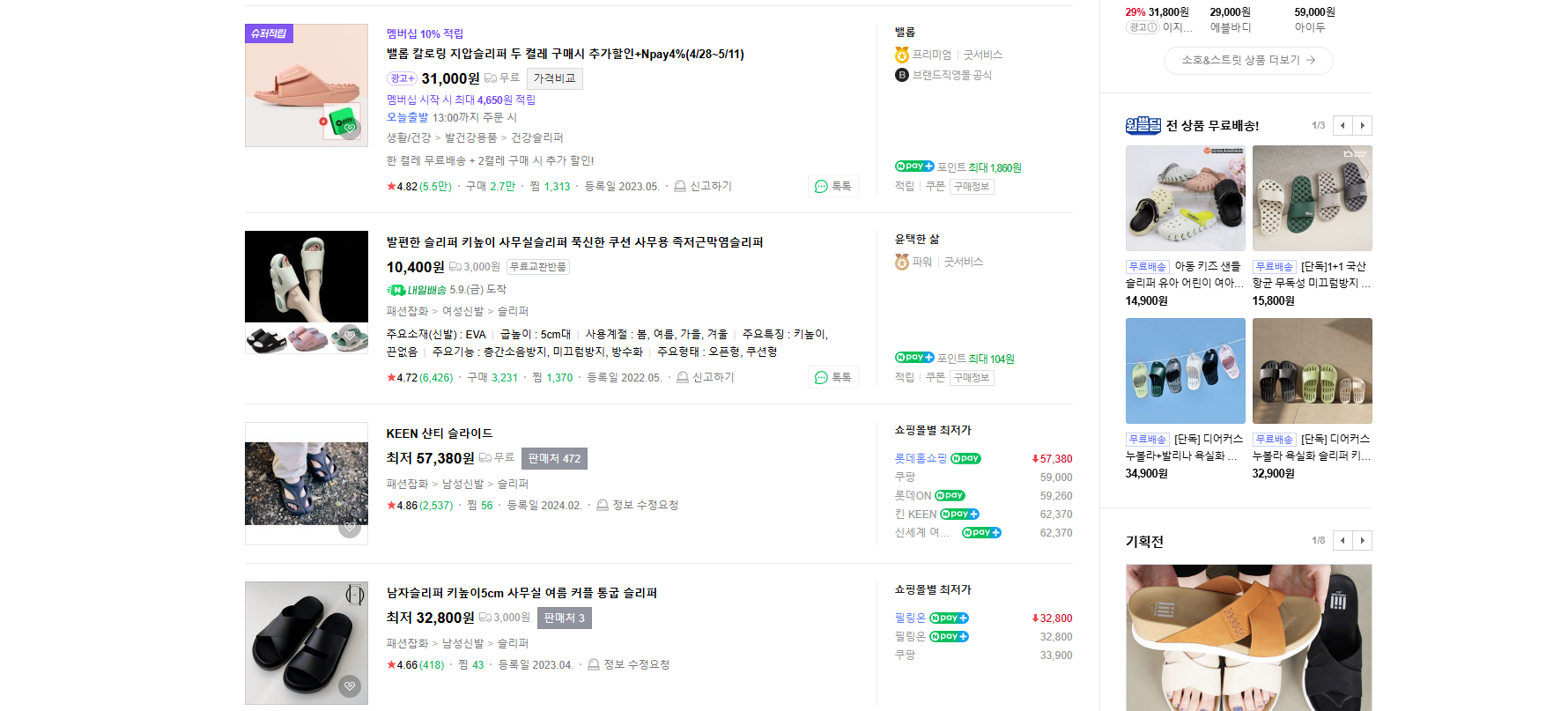
Many people struggle at this point. To survive in the already oversaturated SmartStore market you need SEO, but ironically, for SEO to work well, traffic and purchases must occur consistently. Nevertheless, setting aside abusive tactics, the elements to focus on when attempting Shopping Search SEO can be summarized as follows.
| Item | Details |
|---|---|
| Product name optimization | Accurately include core keywords - reduce unnecessary modifiers |
| Category accuracy | Category mismatch can limit search exposure |
| Review/rating management | Review count and rating act as 'popularity metrics' |
| Wishlist/clicks/purchases | Factors Naver's algorithm uses to judge popularity |
| Product detail page content | Strengthen informational value with FAQs, usage tips, post-purchase precautions, etc. |
| Shipping/return policy transparency | Can act as a factor that strengthens credibility standards |
This is already widely known information, but there is an example with a large real-world effect. A product that places the exact phrase 'eye supplement lutein' at the front of its product name and secures some review volume through reviews is said to achieve up to 3x the click-through rate and more than 2x the sales within the same category.
4) For External Independent Malls and Corporate Homepages
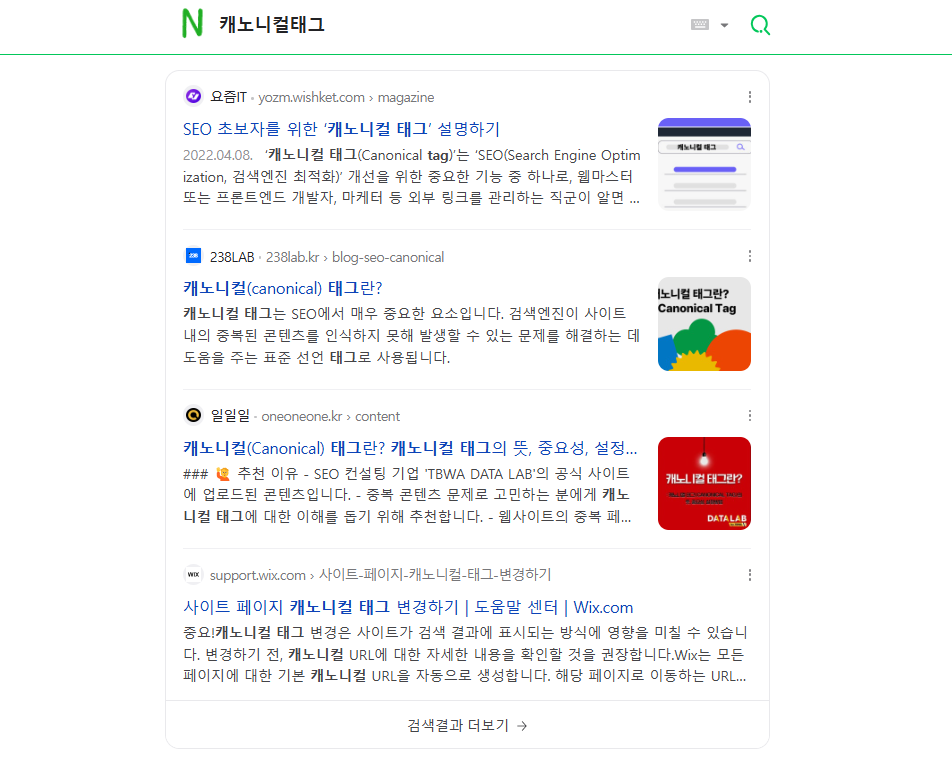
Because Naver structures its search results mainly around its own content, external independent malls and corporate sites can be at a disadvantage for exposure. However, there are occasions when the 'website area' appears first. In those cases, doing the following tasks well makes it entirely possible to secure exposure.
- Search Advisor registration: Submitting a sitemap and requesting indexing are essential
- Mobile/security optimization: Secure HTTPS and mobile-friendliness
- Static content structure: Avoid SPAs (single-page apps) and use an HTML-based structure
- Blog content linkage: Connect your own blog and homepage with internal links
- Knowledge Encyclopedia/Knowledge iN listings: Boost brand awareness and credibility
- Brand search response: Design exposure so that searching the company name surfaces the site, blog, reviews, etc.
It is somewhat insufficient to drive SEO results by using your website as a standalone channel the way you would on Google. Therefore, operating supporting channels together within the Naver ecosystem is the core strategy.
Simple on-page SEO of a website alone is not enough. Running a blog, accumulating reviews, designing a SmartStore, answering on Knowledge iN, registering on Place - and connecting all of it together. That is the real way to produce SEO results on Naver.
So How Do You Do Google SEO?
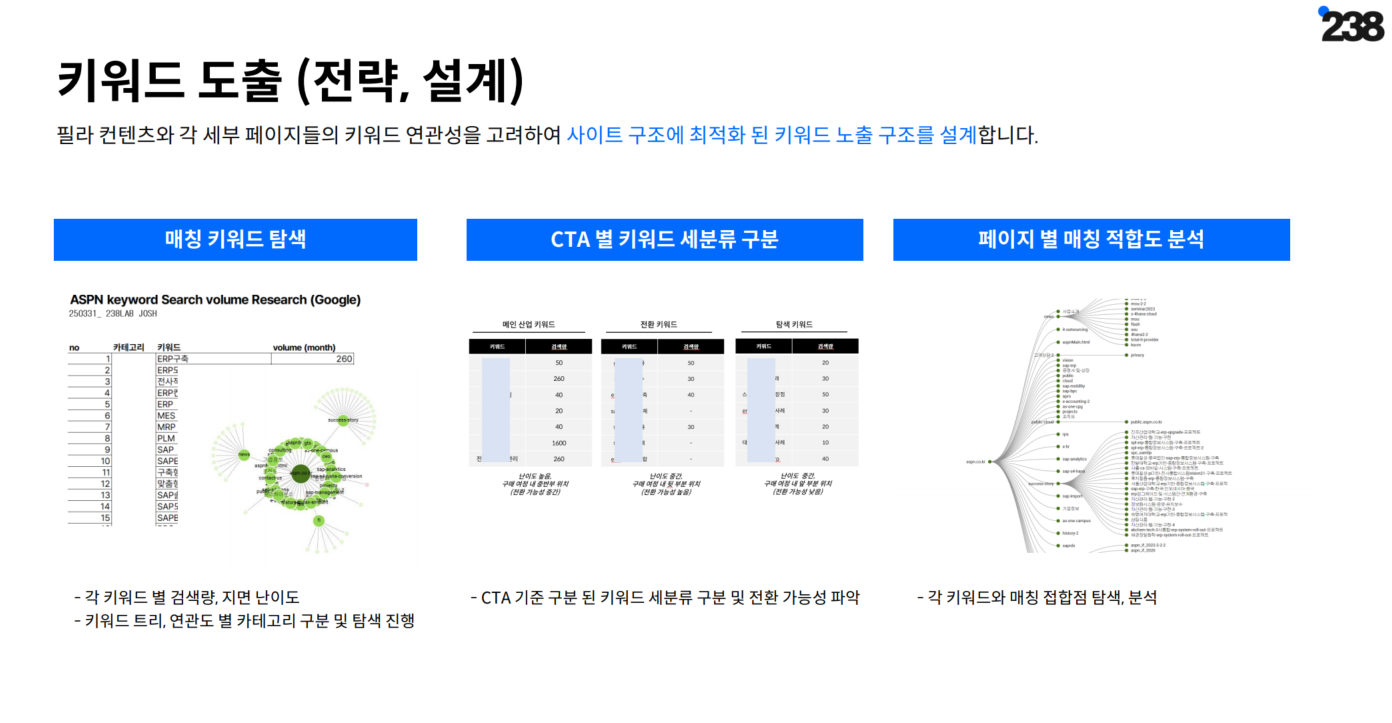
This piece is about 'Naver SEO.' To summarize Google SEO briefly, 'Google SEO is closer to designing a content business.'
Google evaluates the 'overall flow' of a website. It simultaneously assesses comprehensive factors such as content, site reviews, HTML optimization, and domain history. Therefore, the key is building a virtuous SEO cycle of 'consistent content publishing + improved user experience + securing external signals.'
In pure theory, Google may seem harder to do SEO for than Naver, but there is a consistent pattern. That pattern is essentially a message to make your site customer-friendly. Unlike Naver, which requires managing multiple channels in combination, Google can produce good results when you intensively manage a single website. So if you are pursuing SEO professionally, it can actually be wise to make Google your primary channel.
Google SEO can fill considerable length with detailed methodology alone, so we will cover it in depth at a later time.
Naver SEO vs Google SEO: A Complete Summary
The most important thing in SEO is to first decide "where you will appear," then optimize according to the factors that search engine considers important. The same content is ranked by completely different evaluation criteria on Naver and Google. Therefore, in the early stages of attempting SEO, carefully observing the 'search results layouts' of each engine - Naver and Google - will help you determine everything from content direction to the platform you should operate on.
It is also important to know exactly what to consider when doing SEO on each channel. To give you a reference you can apply directly in practice, we have organized the key factors for Naver and Google into a table.
| Item | Naver | |
|---|---|---|
| Site registration | Search Advisor registration + indexing request | Search Console registration + sitemap submission |
| Platform leverage | ✅ SmartStore, Blog, Post, Knowledge iN, etc. | ❌ No influence from external platforms |
| Content evaluation criteria | C-Rank, D.I.A (author-based credibility) | E-E-A-T (Experience, Expertise, Authoritativeness, Trustworthiness) |
| Mobile optimization | ⚪ Experience-oriented | ✅ Mobile-first Indexing applied |
| Speed/performance metrics | ❌ No explicit weighting | ✅ Core Web Vitals officially reflected |
| Keyword matching | ✅ Emphasis on keyword match in title/sentences | ⚪ Meaning-based natural language processing (includes synonyms) |
| User response (reviews/likes, etc.) | ✅ Directly reflected in ranking (wishlists, reviews, likes, etc.) | ⚪ Indirect influence (CTR, dwell time) |
| Backlinks | ❌ Minimal influence | ✅ Very important (link source, domain authority reflected) |
| Structured data (Schema) | ⚪ Partial support (FAQ, reviews, etc.) | ✅ Broad support (FAQ, Product, HowTo, etc.) |
| Rich snippet exposure | ⚪ Centered on knowledge snippets | ✅ Directly affects click-through rate |
| Content length/expertise | ⚪ Relatively short, concise posts are also viable | ✅ Prefers long-form, in-depth content |
SEO is not simply 'let's create good content.' And it is certainly not simply 'let's raise the site's score.' It becomes a true strategy only when you properly understand 'which engine will read this content and what signals that engine responds to,' and learn how to communicate with the search engine.
With the same keyword and the same content, the result changes 180 degrees depending on what you optimize for and how you structure it.
If you need a guide on your first steps into SEO, why not get one? Based on an execution track record approaching an 81% project success rate, 238lab designs content structures and traffic strategies optimized for search engines. We shorten our partners' time and deliver results.

About the Author
Joshua: Lead SEO Consultant
- Built a zero-cost structure generating KRW 1.2 billion in annual revenue through SEO alone - Closed a KRW 700 billion deal through SEO alone - Low-cost, high-efficiency marketing specialist Former) Marketing Lead at a financial services firm Current) Runs SEO/GEO agency 238lab Track record) Led multiple SEO consulting projects, including Korea's No.1 AI community