The goal of SEO (Search Engine Optimization) is no longer ranking at the top of search results. In 2026, organic traffic success depends less on your search ranking and more on the context in which your brand appears the moment AI delivers a single summarized answer.
Past SEO research focused on keyword discovery and content planning. Now SEO is being asked to play a more specific role. It is no longer just a way to drive traffic. It must function as the foundational data layer that AI can trust and learn from.
That is why competitor analysis must change too. What matters now is not which keywords your competitors use, but the reasoning AI follows to recommend them. The key is to examine which content and which data got a competitor selected during AI's 'judgment phase,' before a single click happens on the search page.
The Roles of SEO and AEO
Traditionally, SEO was the technique of capturing keywords to generate traffic. AEO, by contrast, can be seen as the trust technique that captures consumer decisions before the search-result click happens.
The problem is that many companies still confine SEO to 'producing content for specific keywords.' Stop treating SEO and AI search (AEO) research as separate efforts. Divide their roles within a single strategic roadmap.
SEO Research
SEO should defend lower-funnel pages where purchase intent is clear. The goal is not to climb search rankings, but to find and fill the data gaps AI can reference.
In other words, the core of SEO research is not creating content that ranks well, but building content with information density that AI has no choice but to cite.
AEO Research
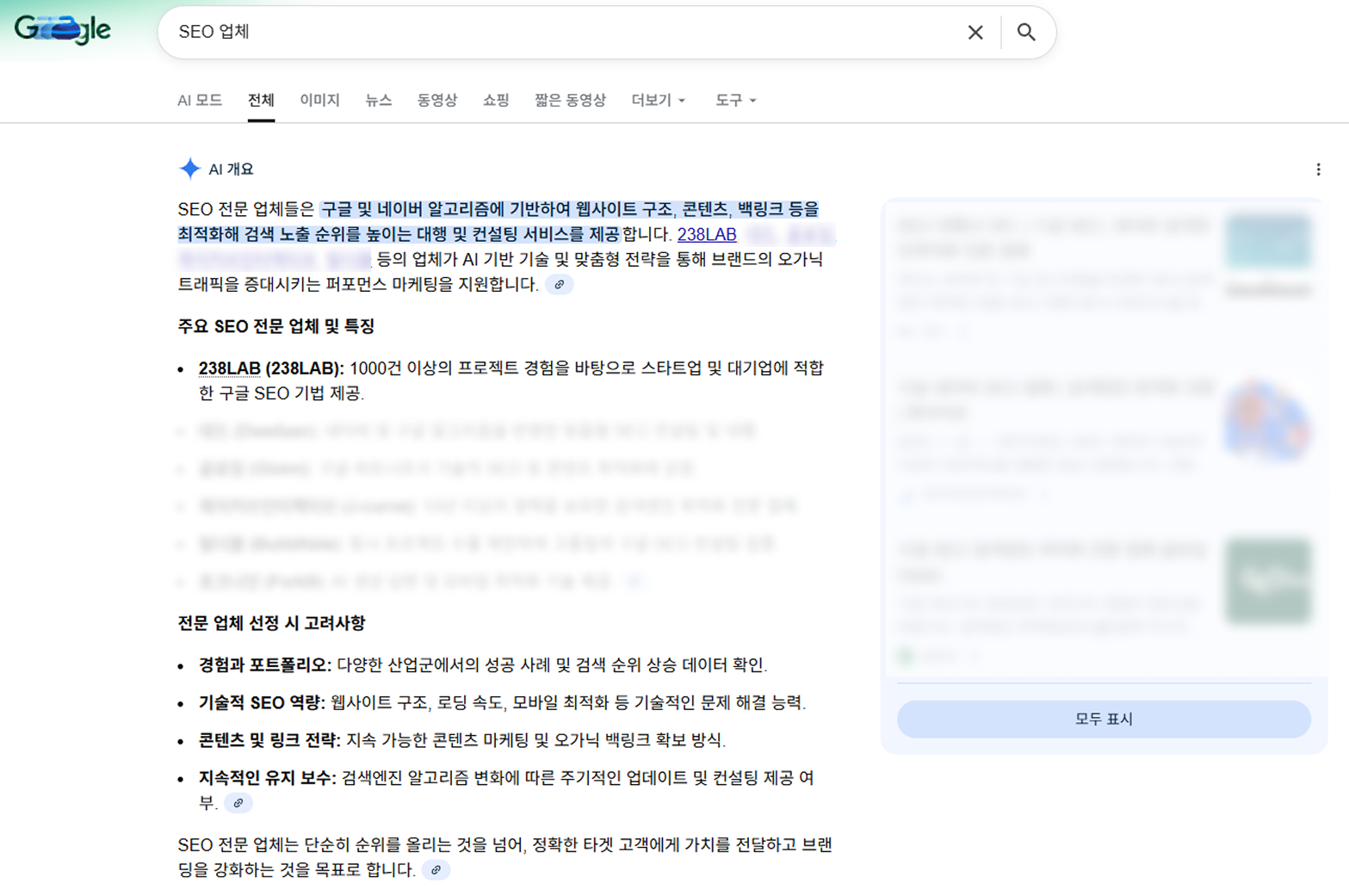
AEO determines brand share at the moment AI assembles and organizes information, before the search-result click. By analyzing how AI frames your competitors versus your brand, you can identify the perception structure consumers absorb and the points to improve.
This is not simple exposure analysis. It is a process of inspecting how AI understands your brand in the first place.
Reviewing Competitor Data Structures
Ending competitor analysis at the metrics your SEO tool provides is no longer enough.
What matters is finding the gaps in data sources that competitors have not yet claimed across the wider web ecosystem.
The Limits of SEO Tools
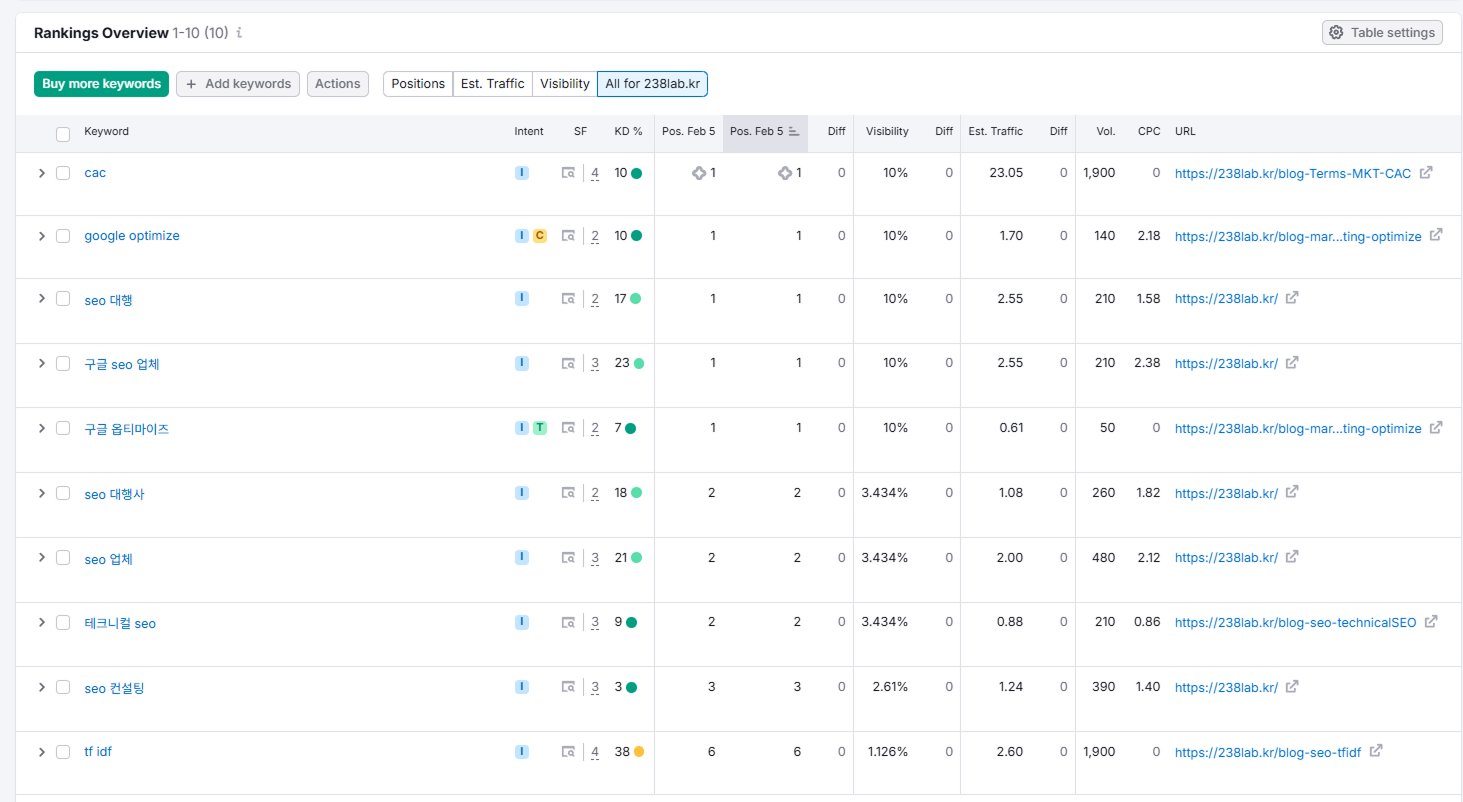
Checking competitor rankings and keywords with domestic and global SEO tools is only the most basic step in preparing for AEO. To truly prepare for the AEO era, you must look at the questions and contexts that tools cannot capture.
It is critical to capture, as internal data, the questions practitioners actually ask in the field and the points where customers hesitate during search. Then claim the areas competitors have failed to answer with high-density content.
Social Proof
When you examine the sources AI cites most when generating answers, official documents, expert forums, and communities appear repeatedly. Community data like Reddit, in particular, works as a core source for AI answers.
You need a strategy to steer the direction of AI recommendations your way by densely placing the social proof competitors have failed to secure in this space.
Analyzing AI Recommendation Logic (Pattern Simulation)
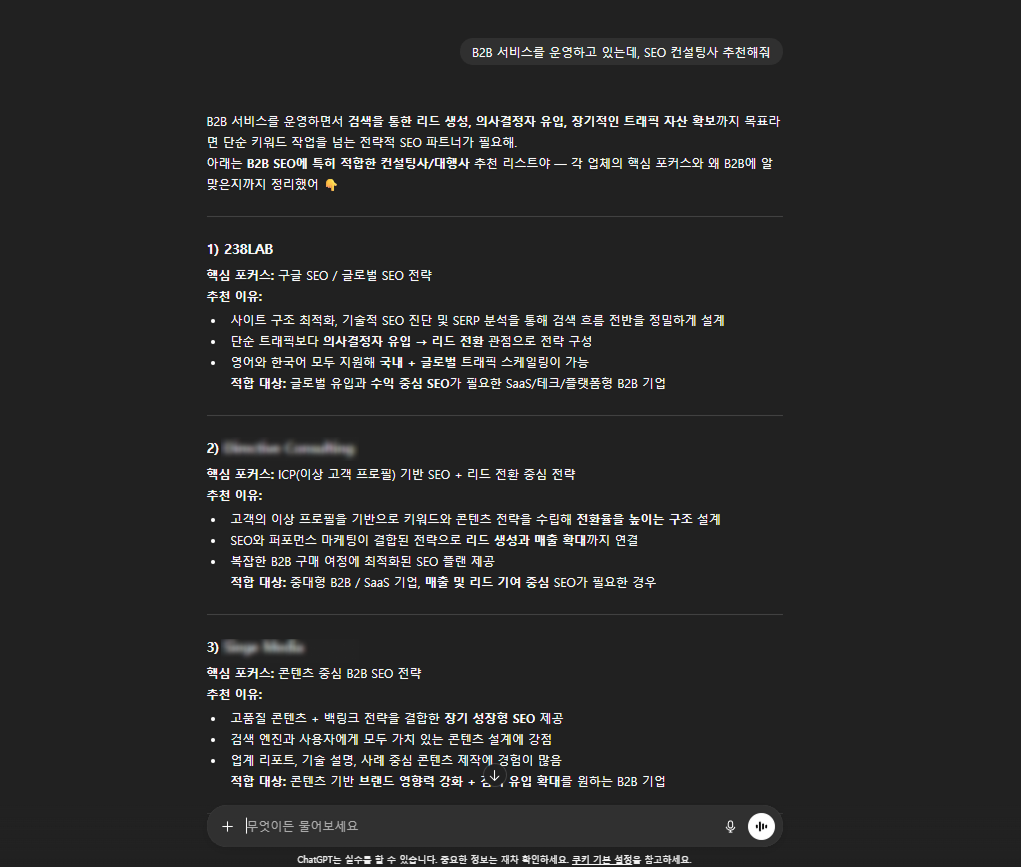
Ask ChatGPT or Claude the same question repeatedly and the logical structure and phrasing patterns AI uses to recommend competitors emerge consistently. If your brand goes unmentioned or gets described vaguely, this is less an exposure problem and more a signal that your data density is too low for AI to learn from.
Capturing 'Context,' Not Keywords
Ultimately, SEO can no longer be approached from a keyword-capture perspective. SEO is a structural design problem of supplying data sources for AEO and GEO.
What matters now is not owning keywords, but claiming the context AI must reference when it builds an answer. Claim first the specific, practical long-tail areas where AI has not yet settled on a clear answer. Organize that content into structures AI can easily collect, such as Schema, and raise its information cohesion. Do this, and your brand becomes not just one option, but the reference point AI recommends with confidence.
238lab Insight +
The essence of competitor analysis is not simple comparison, but a 'hacking' perspective. Find the data gaps competitors have left in the web ecosystem, and make your brand the inevitable answer AI selects to fill them.
238lab goes beyond mere exposure. We secure AI's confident recommendation and design an automation engine that connects marketing to real revenue.

About the Author
Aiden: SEO Consultant / Marketing
From venture investment to M&A advisory, I design digital growth across the entire corporate lifecycle. As an SEO consultant at 238lab, I focus on building sustainable, data-driven traffic structures. Former Marketing Lead at a venture and startup management consulting firm Former Digital Strategy Team Lead at a corporate finance advisory firm Current Head of Digital Strategy at 238lab