
The Chronic Affliction and Vicious Cycle of Early-Stage Startup Marketing
▶️ Lack of customer/brand awareness
▶️ Marketing needed, marketing executed
▶️ Budget burned, low-efficiency marketing felt firsthand
▶️ Searching for marketing methods/agencies
▶️ Insufficient marketing budget
▶️ Running zero-cost marketing like blog marketing
▶️ Exposure fails
▶️ Back to researching information
▶️ Repeat
Did you find this article somewhere in that cycle? If so, welcome. I went into a startup as a marketer myself, went through every trial imaginable, and read countless articles on my way to growing a startup 17x. Today I work as a SEO specialist agency, consulting for startup founders and companies to solve their problems.
Early-Stage Startups That Haven't Found Their Marketing Channel
Like any business, not just startups, the early build-up phase is hard. There are many reasons, but among them I believe the biggest cause is that early-stage startups have not yet found the optimal marketing channel for their specific service or product. A product or service has to meet customers first to get feedback, make adjustments, and deliver a better service.
So in this article, I want to share the marketing strategy that grew an interior design platform (Company W) inquiries by 2,500% and an investment advisory firm (Company M) customer inquiries by 1,684%.
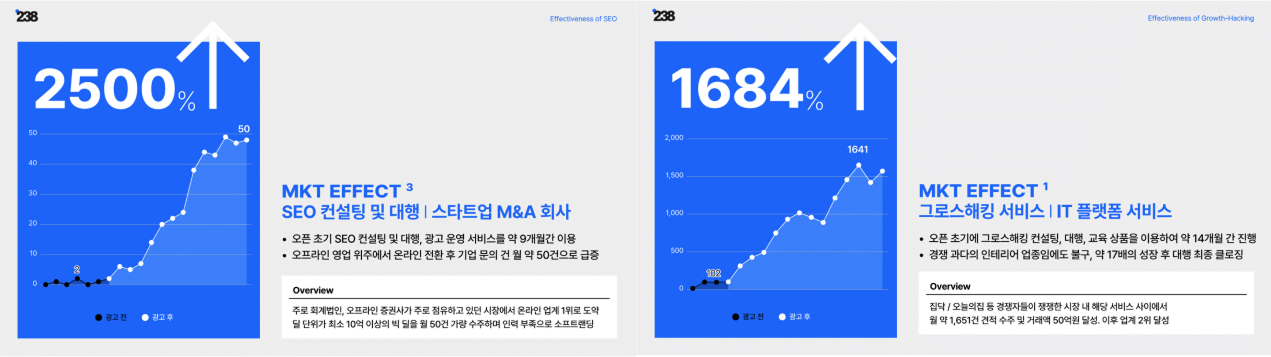
Working as a marketer inside a startup, bringing in customers somehow on a small budget was critical. At the same time, the real challenge was attracting 'warm visitors' - people who land on the company website and respond to CTA buttons like purchase or inquiry, meaning visitors who already have some interest in and information about the company's service or product.
In short, the marketing goal and channel criteria suited to a startup are as follows:
Dominate a channel that delivers high efficiency at low budget.
First Criterion: Finding Low-Budget Channels
To identify which channels qualify as low-budget, you first need a sense of how marketing channel budgets are generated and how to read efficiency. Let me give an example.
I'll use the Search Ads (SA) area (paid search) of Naver (Korea's dominant search engine, ~58% market share) and Google as an example. Cost-per-click (CPC) advertising varies by industry, but to appear at the top, each click costs an average of at least KRW 3,000 and as much as KRW 10,000 or more.
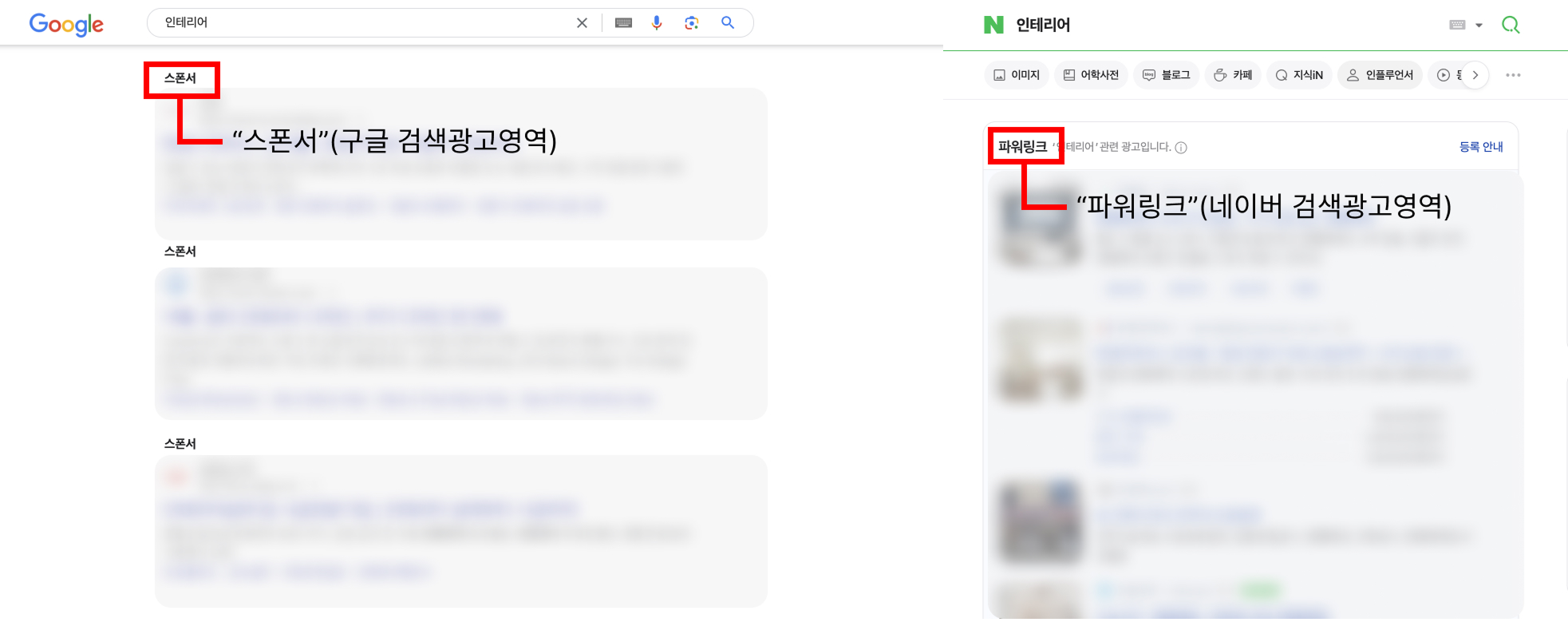
Even with just 20 clicks a day, that's KRW 60,000-200,000 per day, an average of KRW 1.8M-6M per month. That is, a single channel like Naver or Google alone runs about KRW 2.5M per month in marketing cost, and running two or more channels such as Daum, Google, and Kakao (Korea's leading messenger and content platform) pushes monthly search ad cost past an average of KRW 6M.
But do you know the 'customer conversion rate' for people who click a search ad, enter the website, and leave an inquiry or buy a product? At positions 1-3 in Search Ads, the average click-through rate (CTR) is around 2%, and the conversion rate (CVR) for purchases and inquiries from search ad traffic averages 1.8%.
Example) Channel N Search Ads
Click-Through Rate (CTR): 2%
Inquiry and Purchase Conversion Rate (CVR): 1.8%
Marketing Cost per Customer: KRW 2.5M

In other words, an ad must reach 30,000 people for 600 to land on the website, of whom 10 buy or leave an inquiry, and of those 10 inquiries, only 1-2 on average reach a final purchase decision after consultation.
(**The final purchase conversion rate through consultation varies with the agent's skill, service quality, and other factors.)
So Search Ads can be seen as spending KRW 2.5M to bring in just 1-2 final customers on average. This is exactly the figure that corresponds to the second criterion: efficiency.
In the end, the costly paid ad space can be a heavy burden for startups. Meta Ads (Facebook and Instagram ads) and other ad spaces are similar. Depending on the industry, ad spaces that rely on incidental clicks, like Meta Ads, can be even less cost-efficient.
What About Writing Naver Blog Posts or Creating YouTube Content at Zero Cost?
Naver blog marketing is already widely known, and even non-business owners try it at least once. Many start easily, expecting marketing results from nothing but time and effort, then end up looking for blog outsourcing services. The reason is simple. Securing top exposure on Naver through a blog is harder than it seems. Mastering both blog authority and content takes far more time and specialized skill than expected.
So I recommend treating Naver blogs as something to run alongside other marketing channels, with patience. It is too much to rely on as an early-stage startup's main marketing channel.
YouTube content is the same. For content to surface in the YouTube algorithm and lead to a service purchase, you need a clear message or advertising intent; without it, the efficiency relative to time and effort invested is poor. The YouTube channel works well as a brand promotion tool once the business has grown to a certain point.

Google: The Optimal Channel for Startup Marketing
So where is the low-cost, high-efficiency channel that matters most in startup marketing? It's Google.
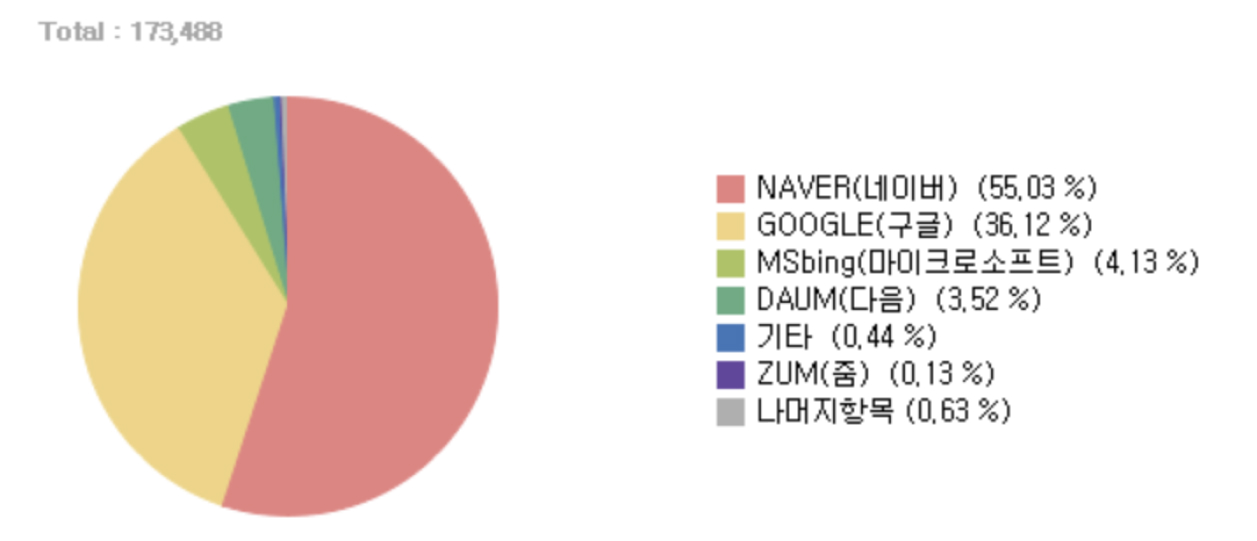
2024 Korean Search Engine Market Share (Source: Internet Trend)
Among all search engines worldwide, Google holds over 90% share. In Korea, Google holds 34% share and is steadily expanding its domestic share.
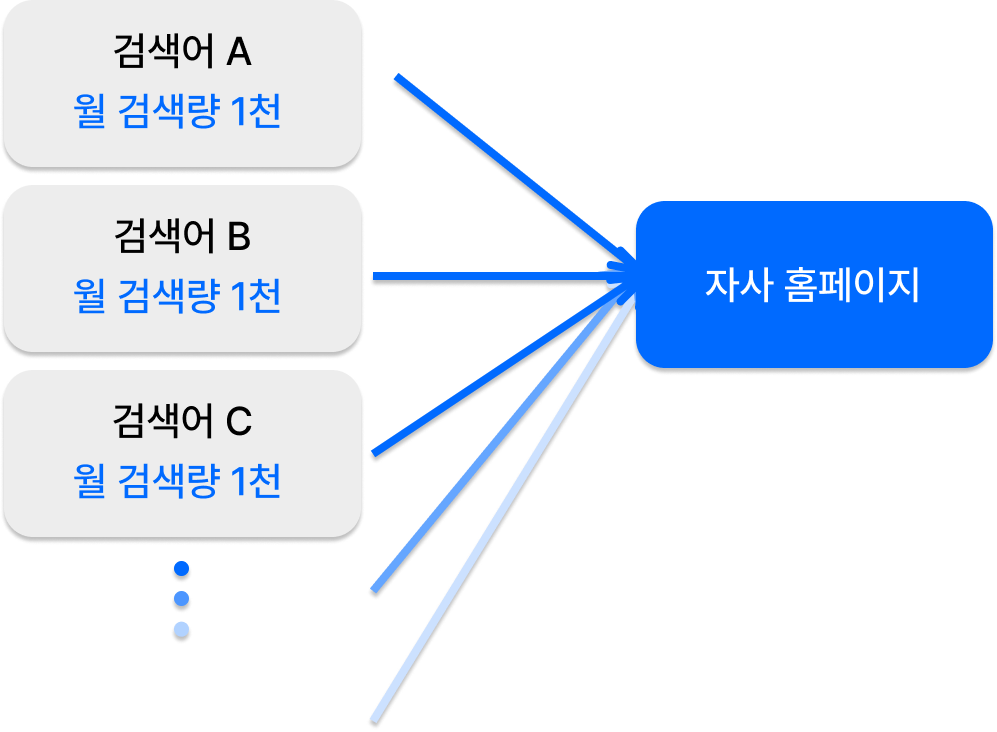
Why is marketing cost low on the Google search engine channel? Marketing through Google search works on the same principle as Naver blogs. People search by keyword and enter the website or site that ranks at the top. Sit at the top of the search engine results page (SERP), and you can pull in traffic from everyone searching that term.
Google Search Engine Optimization, SEO: Not Optional but Essential for Startups
The work of placing a website at the top of Google's search results page is called SEO, search engine optimization. It is not a cost-per-click area, nor an ad area. It is a technical discipline that optimizes a website to earn a high score from the search engine (Google), so that Google shows it first to the people searching.
Unlike Naver, content ranking does not shift easily, and once you secure a top spot, a virtuous cycle keeps you steadily at the top. In other words, it is a marketing strategy that continuously brings in organic traffic at no additional cost.
Because visitors arrive by searching a specific keyword directly, website visitors are 'warm visitors' who are likely to convert into purchases and inquiries once exposed to your product or service. Google SEO drives organic traffic from voluntary searches based on customer needs. Unlike 'cold consumers' with no interest in your product or service, it is a high-efficiency marketing strategy that increases inflow of 'warm visitors' who already have interest in your product and service and a willingness to pay.
For a startup that must bring in customers and generate revenue at low cost, this is the optimal marketing strategy. And if you scale up with SEO first and then run it alongside other paid ad spaces, it becomes the channel that delivers the best efficiency.
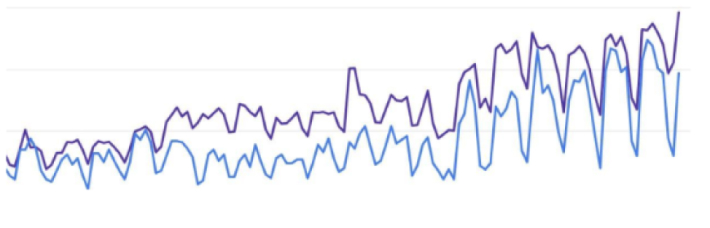
238lab Google Search Console, 16 months of data

About the Author
Joshua: Lead SEO Consultant
- Built a zero-cost structure generating KRW 1.2 billion in annual revenue through SEO alone - Closed a KRW 700 billion deal through SEO alone - Low-cost, high-efficiency marketing specialist Former) Marketing Lead at a financial services firm Current) Runs SEO/GEO agency 238lab Track record) Led multiple SEO consulting projects, including Korea's No.1 AI community