When most services first start marketing, the concern they have is something like this:
'I wish my business had more customers.'
Then, after marketing hard and stabilizing the business within the market to some degree, the concern gradually shifts:
to 'I wish new customers, returning customers, and purchasing customers would stabilize.'
Marketing techniques continue to evolve to fill these needs. Because marketing is a company's system for communicating with customers, it is a field that inevitably keeps advancing as more suppliers enter the same industry. And suppliers continue to increase even now.
In this era of growing new markets and suppliers, many companies are fighting an all-out battle. It is about clearly understanding everything from how to acquire your first customer to customer revisits and the repurchase journey of existing buyers, and then building that framework.
Let's tackle this marketing funnel that you'll wish you had known from the very start of your marketing efforts, from concept to practice, all at once.
A marketing funnel is a theory for understanding customers
A marketing funnel is a methodology that reconstructs the behavior of consumers using a service from the company's perspective. When examined based on the Customer Journey, the shape is most often that of a funnel, which is why it got the name Marketing Funnel.
Because a marketing funnel is the purchase journey drawn in reverse, the exact same diagram does not come out for every company.
In some cases, the top is thick like a funnel because ad exposure volume is secured through advertising; in other cases, purchases come from word of mouth rather than ads (as with companies like LG), producing a shape that is thick in the middle.
Today, among these, we'll take a detailed look at the 3 models that are most widely used and well known in practice.
The representative marketing funnels known in Korea are AIDA, AARRR, and TOFU-MOFU-BOFU, three in total. AIDA was the first to become known as a traditional marketing funnel, but because it has recently become difficult to reflect the increasingly complex marketing environment, it was subdivided into AARRR, and there is also the TOFU-MOFU-BOFU model, which is a more simplified version of this.
Marketing funnel: AIDA
The AIDA model is the earliest marketing funnel to appear, analyzing the customer journey by structuring the funnel into 4 stages: Attention, Interest, Desire, and Action.
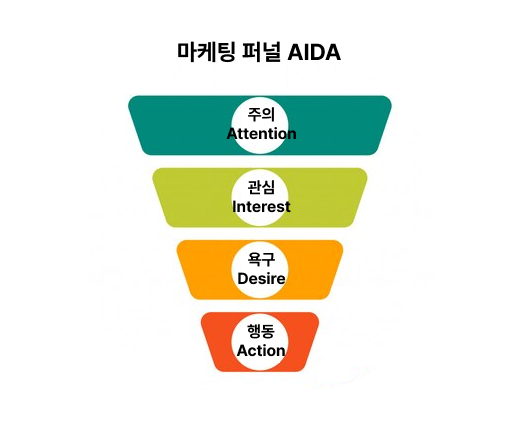
Though it is a traditional funnel, it is worth considering because in industries with relatively little service supply and slow digitalization (architecture, legal, hospitals/clinics, etc.), the structure is short yet delivers powerful effects. Let's take a closer look.
Attention
The first stage is the process of grabbing the customer's attention. You may catch their eye with Search Ads (SA) or image ad creatives, and in industries where persuasion through information is strong, you may occupy information the customer is likely curious about through blog content or SEO.
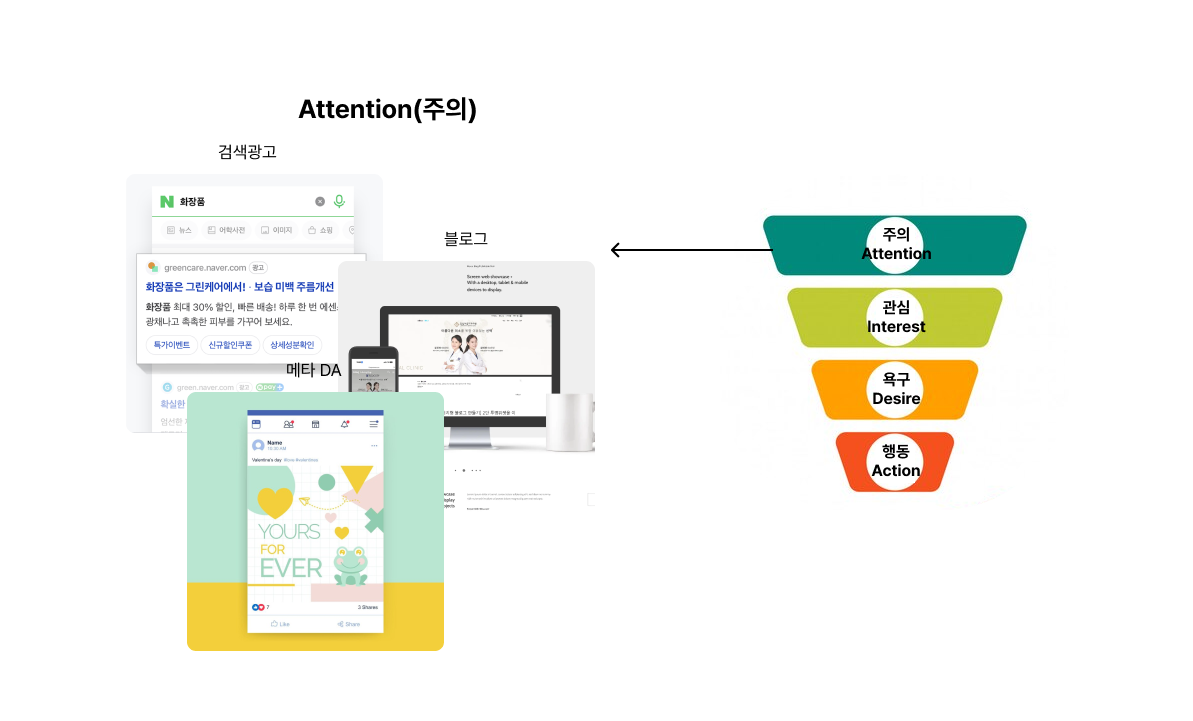
The channels mainly used include Search Ads (SA) creatives, blog content, social media, and Display Ads (DA) creatives. Recently, as media have diversified, video media such as YouTube are also used when the customer's persuasion point is expertise. In this Attention stage, you mainly measure impressions, click-through rate, and marketing cost.
Interest
After grabbing the customer's attention, this is the process of presenting the advantages and benefits they are likely to be interested in. At this stage, you can improve the funnel through the planning and refinement of the persuasion process. A representative field derived from this is the improvement of detail pages and landing pages, and in this process you should aim to persuade as many customers as possible.
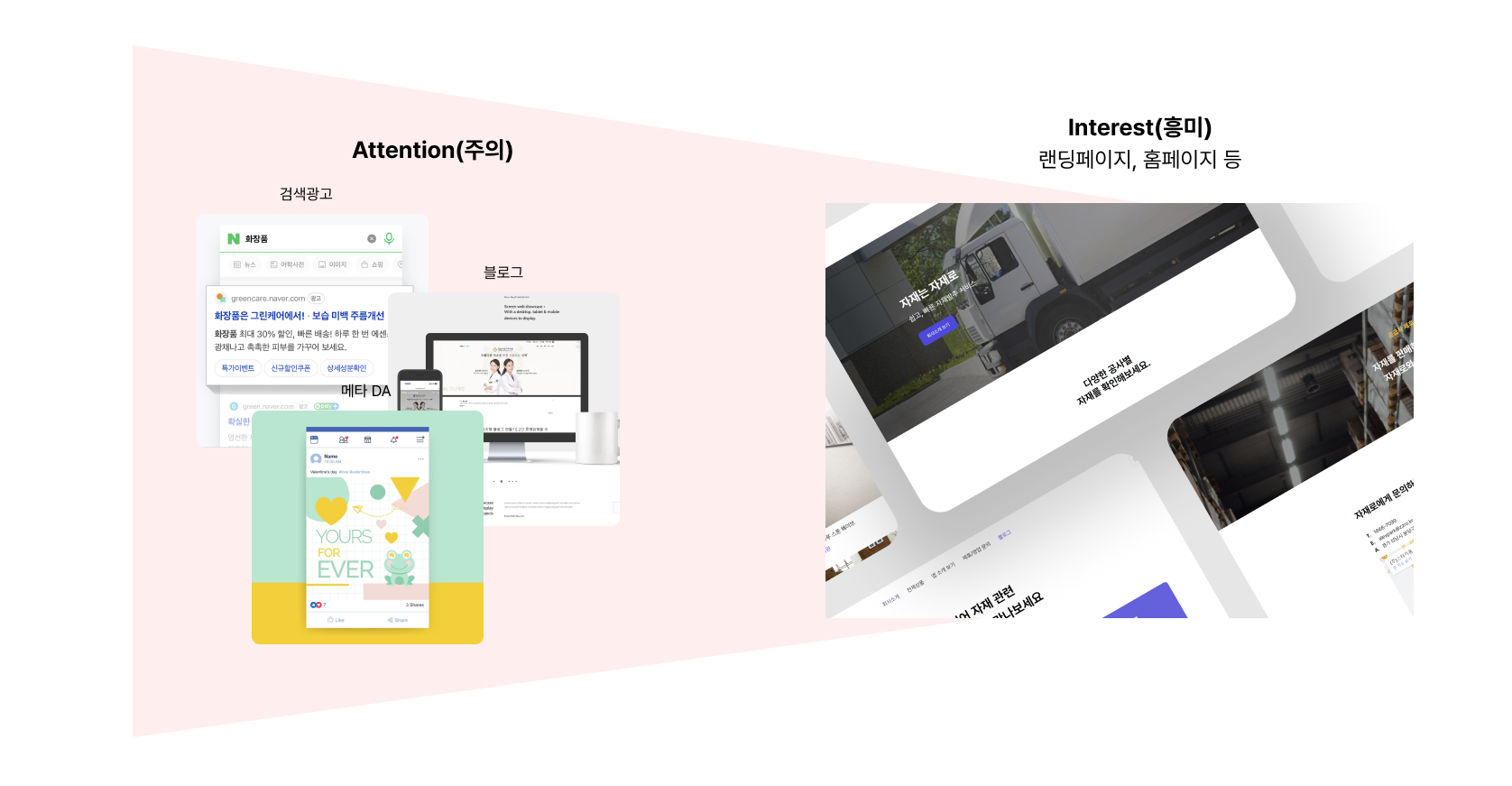
At this stage, you mainly measure dwell rate and bounce rate. The average bounce rate of a typical site is around 40%. People usually find improving this area difficult. Setting the direction for where the customer's cognition is led in the first landing area can greatly help improve the bounce rate.
Desire
This is the process of making the final pitch to customers whose interest has been captured. It often wraps up persuasion with various materials such as 00% off if you buy now and buyer reviews. This is because the value of a customer who drops off at this stage is higher than that of a customer lost at the Attention stage. The major areas derived from this field are 'promotion planning,' 'review tools,' and the like.
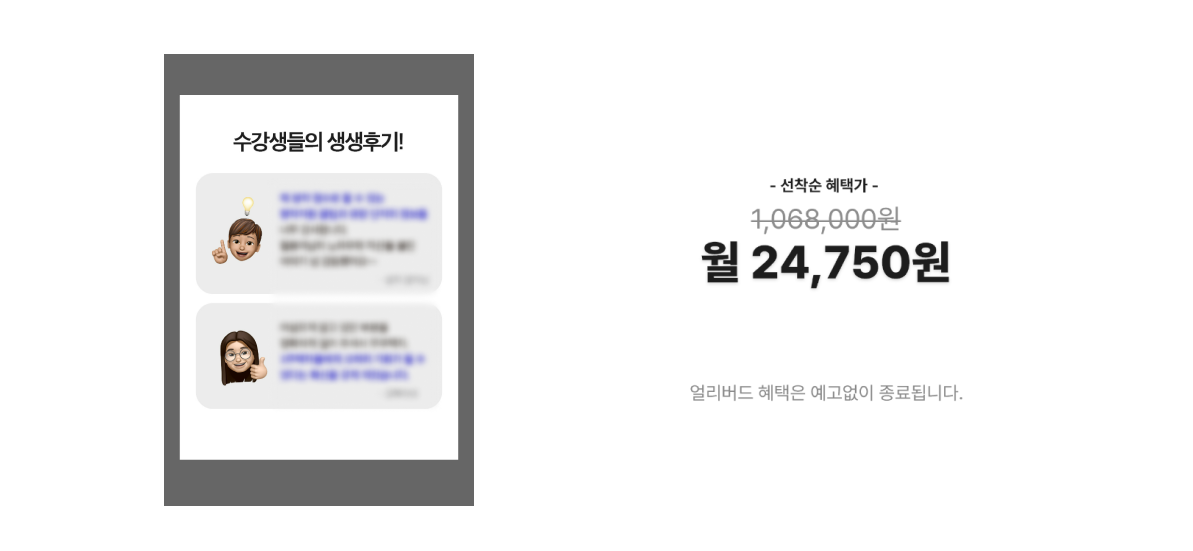
Recently, there is a trend of focusing too much on this stage, repeating benefits, reviews, and 'you'll lose out if you don't act now' expressions. Be aware that excessive repetition of hook-style messaging can backfire and instead lower customer trust.
Action
The final stage is the process of driving the actual purchase action. As essentially the last stage, what you should watch carefully in this funnel is simplifying the payment system and the shipping policy.
Since most customers have already decided to purchase, they won't drop off unless the payment system is truly terrible. However, in any funnel, the customers located at the bottom have the highest value. Because a drop-off here is a significant loss, it is important to adopt the most streamlined PG (payment gateway) provider or to build the payment structure accordingly.
This covers the AIDA marketing funnel model. Although it is a traditional model, because it appeared when the very concept of the marketing funnel was emerging, it often proves highly effective when actually applied.
Even today, lead-collection sites can see results by setting up channels based on the AIDA marketing funnel model, so it's worth keeping an eye on.
Marketing funnel: AARRR
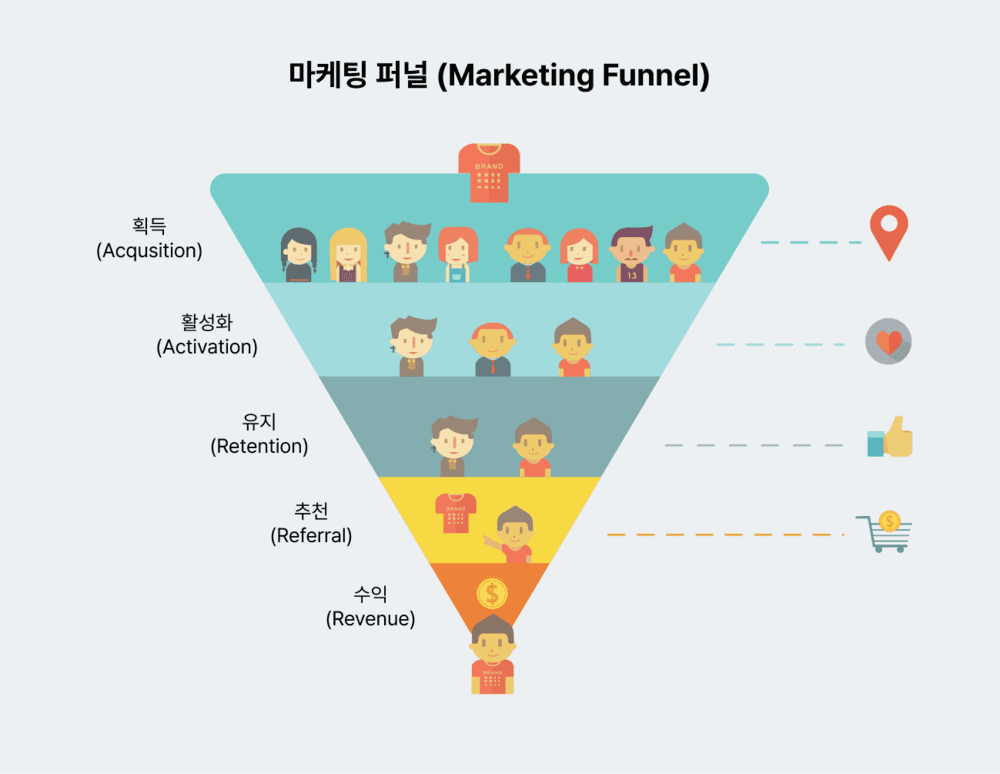
The AARRR model is a marketing funnel model that has been used a lot relatively recently. It is subdivided into a total of 5 stages: Acquisition, Activation, Retention, Referral, and Revenue.
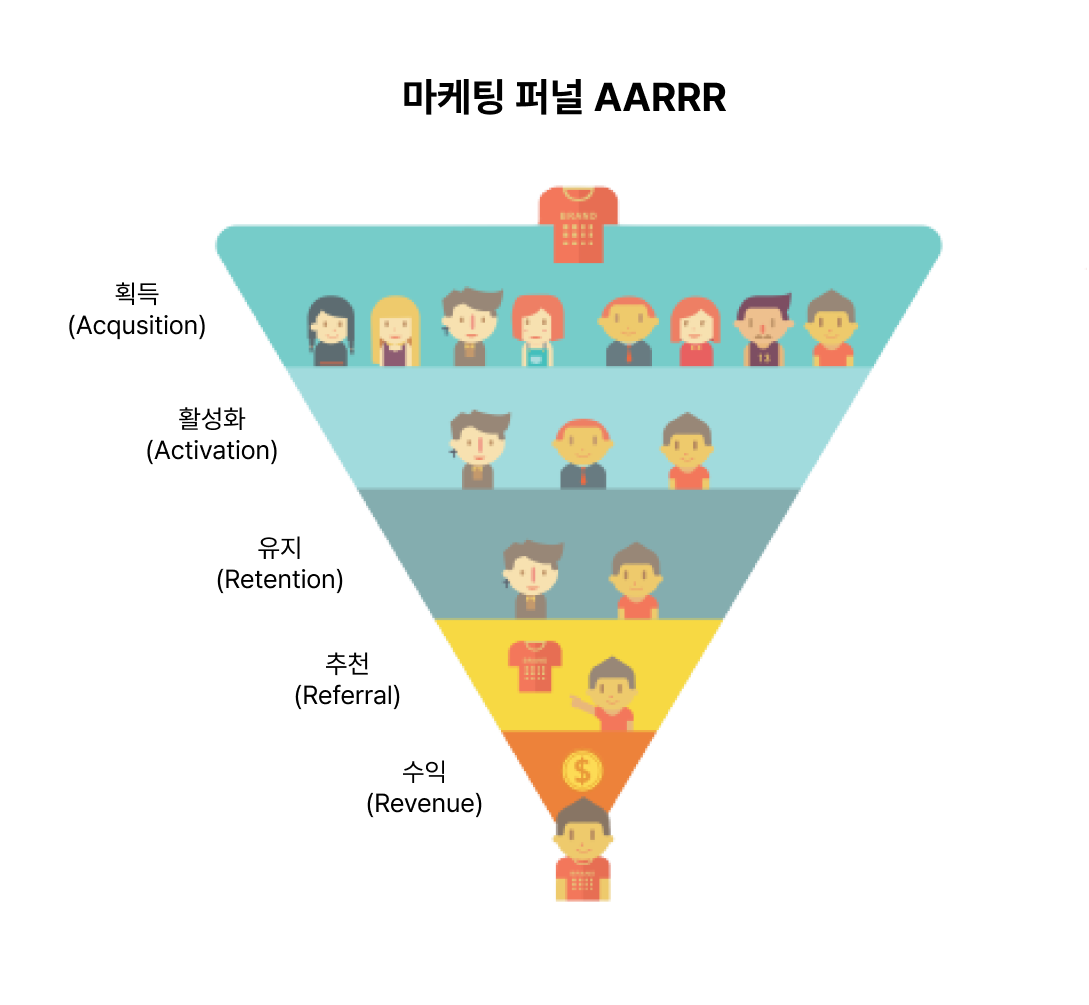
Compared to the AIDA model, which concentrates on everything from exposure to acquisition to conversion, it emphasizes customer retention and turnover. This marketing funnel is a model for lowering the rising CAC (customer acquisition cost), and it is widely used in IT industries, startups, subscription models, and retail (product-selling) services.
Acquisition
This is the stage of acquiring customers through the promotional activities of marketing channels. It plays the same role as Attention in the AIDA model, but the AARRR model differs in that it structures the funnel around new customers.
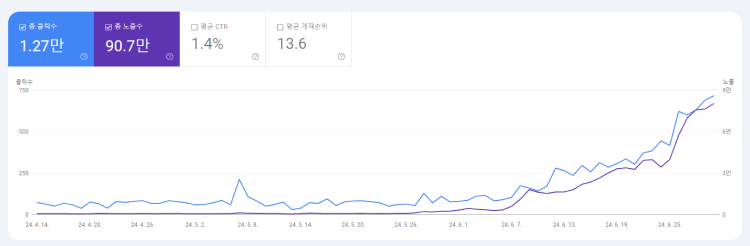
In addition to general promotional marketing channels, recently the trend is to mix various channels to acquire customers, such as search engine optimization (SEO), which can deliver both brand awareness and advertising effects at once, video reviewer virals, social media, and content marketing.
Activation
This is the process of getting customers to actually use the product or service. It may involve offering a product below cost to provide a positive first experience, or providing free resources to move into the process of collecting customer data.
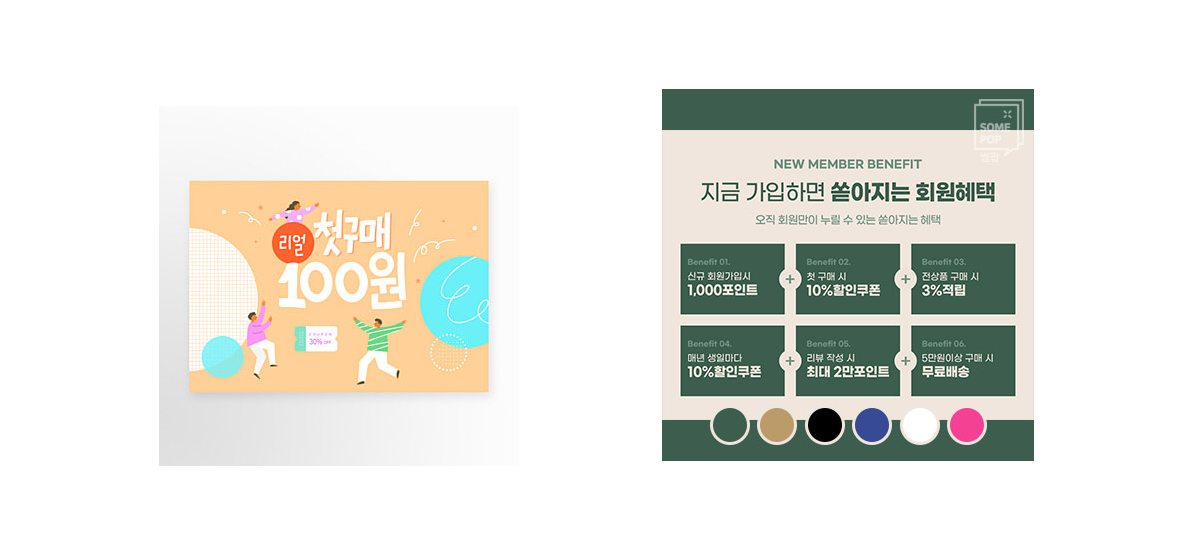
From another angle, it is also the process of leveraging customer inertia. Around us too, there are cases where someone uses a first-purchase discount coupon and, finding the experience not bad, continues to use the service.
However, at this Activation stage, a company's promotion budget is spent heavily. To secure as many customers as possible before executing promotions, you need an optimization process through improving the user experience and planning and designing the onboarding process.
Retention
Retention is the element that many companies have most desperately focused on recently. Suppliers within the market keep increasing, and accordingly, CAC (customer acquisition cost) is also steadily rising.
It has become that much more important for an acquired customer to grow close to your brand and continuously keep purchasing. It is an era where so-called regulars are sorely needed. At this stage, building CRM becomes absolutely critical. The Kakao channel is commonly used a lot.
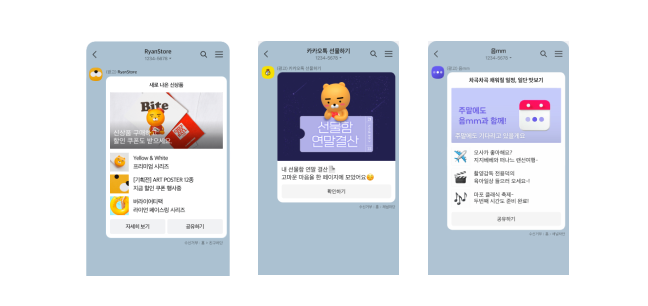
There's a reason many companies give a 3,000 won discount coupon just for adding their Kakao channel as a friend and issue coupons under the guise of notifications. If you operate a product-selling type of service (retail, distribution, etc.), it's good to look closely at this retention part.
You need strategies to continuously retain customers through actively running discount promotions, regularly updating content, incorporating customer feedback, loyalty programs, and so on.
Referral
This is the stage of getting satisfied customers to recommend the product to others. It is a strategy that uses referral reward programs, viral marketing, and the like to induce word of mouth. A representative example is Coupang's reward system (Coupang Partners). Only about 5% of companies in the market actively pursue this process, but if it stabilizes, it has the major advantage of letting you reduce the company's internal marketing resources while conducting marketing using external resources.
Revenue
The final stage is revenue generation. However, the Revenue stage in AARRR is explained not as the typical wrap-up of a purchase but as a process for increasing customer LTV (lifetime value). As a way to expand the revenue structure through continuous upselling and cross-selling strategies, it is used importantly in the product planning stage.
Marketing funnel: TOFU-MOFU-BOFU
The TOFU-MOFU-BOFU marketing funnel model is broadly divided into 3 stages. 'Top of the Funnel (TOFU)' - 'Middle of the Funnel (MOFU)' - 'Bottom of the Funnel (BOFU),' also casually called top funnel - mid funnel - bottom funnel. 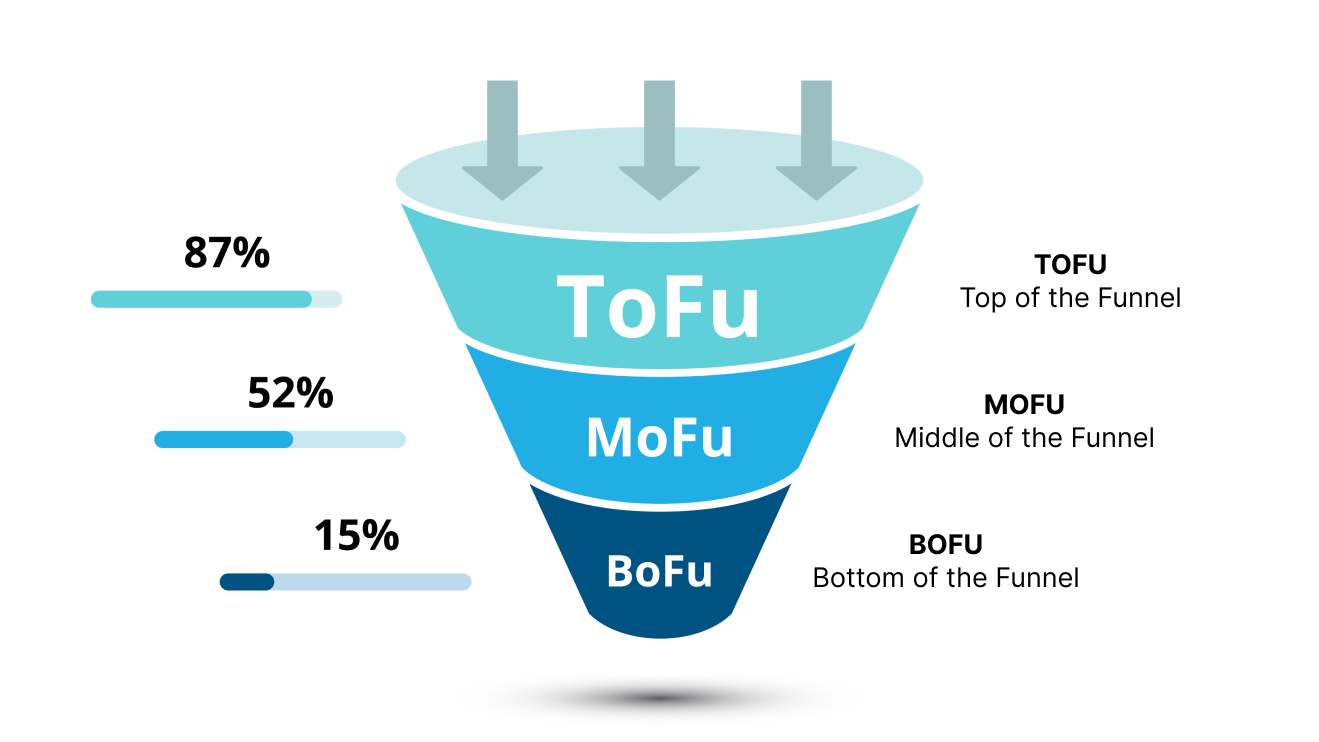
Like AARRR, a single lead (data acquisition) matters more than CRM, and it is a model mainly used in industries with many variables at each funnel.
Due to these characteristics, this model is sometimes used when building a sales funnel. Because customers with very high per-transaction purchase value, such as in finance, tax, knowledge entrepreneurship, and consulting, make it hard to pour resources into various parts as in the AARRR model, the process is condensed into 3 stages and built with focus.
TOFU (Top of the Funnel)
This stage can be expressed in one word as 'awareness.' It is the stage where customers first encounter the product or service and first learn about your service.
While other marketing funnel models stopped at acquiring customers after exposure, in this TOFU stage it is important to design the 'awareness after exposure' process in fine detail all at once using various content channels such as video content and blog posts.
Whereas the previous goal was simply ranking a post highly, now, in addition to high ranking, it has become important to design and place 'persuasive content' all at once.
Going further, in this area you may manage the conversion of a single funnel more carefully by firmly securing data through providing free guidelines, or raising dwell rate with features like viewing related content.
MOFU (Middle of the Funnel)
Some people say 'you should build a funnel even within TOFU,' to the point that crafting this process in detail is important. This stage can be summarized as onboarding the customer journey up to BOFU more carefully.

Through running open communities and online cafes, you stimulate the customer's desire to acquire information, and you may also create channels where customers can continuously dwell on your product and increase their engagement.
Because this stage is the process of building an intermediate bridge that can lead to a purchase, more careful management is needed. The recent trend is 'give and receive': providing quality information in advance and then lowering the hurdle for paid conversion afterward is a widely used approach.
Occasionally, industries that collect data set a schedule and continuously send customers email marketing, webinars, detailed product explanations, and so on.
BOFU (Bottom of the Funnel)
This is the final purchase stage. At this stage, it is important to help customers actually make the purchase decision, or to gently stimulate the purchase desire of hesitating customers. Purchases are mainly induced through free trials, discount coupons, and the like.
The TOFU-MOFU-BOFU model we've examined is one frequently seen recently. It is also the model most commonly seen in knowledge entrepreneurship, such as 'Reels/short-form (TOFU)' - 'free guide signup (TOFU)' - 'inducing cafe membership (MOFU)' - 'running the project (payment, BOFU).'
It seems simplified, but it allows various experiments, and because efficiency is managed by funnel stage, it is easy to manage, making it a model widely adopted by small businesses.
To use marketing funnels in practice
If you successfully build a marketing funnel, you can see far greater effects than simply running ads. The disappointing thing, however, is that there aren't many cases where this funnel is actually built successfully.
Many people say that while studying marketing funnel cases, looking at completed examples makes it seem understandable, but when they actually try to apply it to their own service, they can't get a feel for it. In such cases there is usually a gap between theory and practice, and examining what causes that gap and resolving it is a great help.
1) Build understanding of your service and marketing channels
This is the area corresponding to 'exposure,' located at the very top of each marketing funnel. 'Marketing channels' vary in number, field, and type, and the characteristics of the customers who respond are also very different.
Furthermore, to get exposed to customers on each channel, you have to accumulate a lot of knowledge to occupy the top of a specific slot or to rank high.
As one example, let's assume my service is one that needs to put a lot of effort into the customer's exposure and awareness stages. For such services, the purchase is often determined by the company's 'awareness,' 'expertise,' and the like. And customers are highly likely to search directly out of need.
To promote such a service, it's best to explore with SEO, a channel with a strong context orientation, as the main pillar. Alternatively, a 'blog with expertise' or 'building a polished homepage' should be the first thing that comes to mind.
The channel chosen to promote such a service should not be 'Instagram card news,' right? Yet such channel mismatch cases happen more often than you'd think. How much of a purchase decision does my service require? What factors can persuade the customer? It's best to first consider this and then design which channel is suitable.
Marketing channels worth studying
Demand-based industries (painkillers) - Search Ads (SA), blogs, expert videos (YouTube)
Product-selling industries (vitamins) - Instagram DA, shopping search, Reels (short-form)
2) Avoid decisions based on gut feeling
When you do marketing, what you ultimately come to accept the most is 'diversity.' There are diverse people in the world, the ways to persuade people are also truly diverse, and you need to go through a process of accepting this.
And a marketer doesn't sell to these people one-on-one; they need a voice and a funnel that can reach as many people as possible. The most important thing when building a funnel is to construct a 'funnel that flows like water.' In other words, you must build a channel where the customer can be led to a service purchase as naturally as possible.
For example, what happens if an influencer running a knowledge business makes a decision based on the ego of 'wouldn't it look more professional and nice to have a homepage?' You end up facing a new funnel of homepage visits and sign-ups. A Kakao chat room can actually be easier to open and customers may prefer it more.
Like this, the thought 'wouldn't this be nice?' is what you must be most careful about. At the point of doing marketing, it's best to replace it in your mind with the question 'will customers like it?' This is exactly why we say to build, when first setting up, the channel customers can flow into most easily and the channel you can test fastest.
3 key essentials for building a marketing funnel in the field
A marketing funnel building guide carries little meaning because channels differ and variables abound across industries. However, there is a core foundational process. Preparing the following 3 things in advance is a great help when building a marketing funnel.
1) Install marketing analytics tools in advance
For web, there are Google Analytics 4 (strongly recommended), Naver Analytics, and so on; for apps, there are various analytics tools from Google Analytics 4 to Amplitude and AppsFlyer.
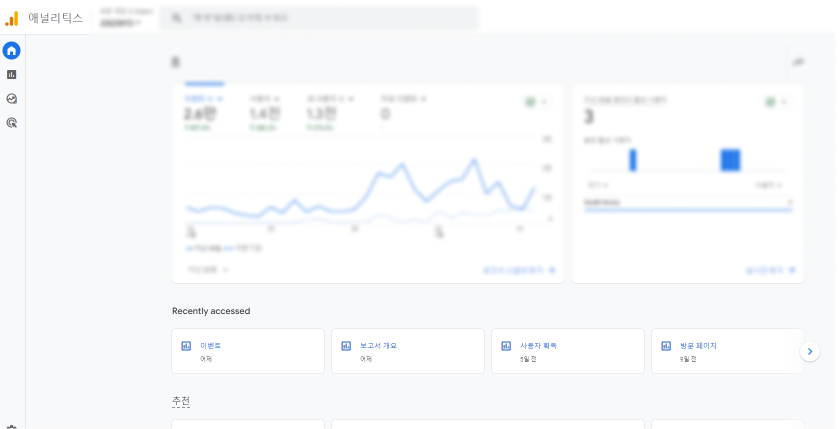
What the marketing funnel models have in common is that they track dwell rate, inquiry rate, or purchase rate after web acquisition. After installing the tag, even installing the tag just once at the 'purchase' or 'inquiry' completion point will keep tallying continuously.
If you start accumulating data after you feel the need for analysis, there's a 99% chance you're too late. Even the most important tag must be installed in advance so that you can later obtain even a single hint from the data. (Personally, I strongly recommend Google Analytics 4, an essential and free tool. Using Tag Manager, you can install and track various event tags such as purchases and inquiries.)
2) Test (study) exposure channels
Next, the channel that never goes missing in a marketing funnel is the 'exposure' channel. Once the planning stage of which channel, in what manner, and what message to throw is finished, the next is the fast-testing stage.
The test I recommend is the process of securing a certain amount of exposure audience (at least 1,000 people) at the exposure stage and then examining the inquiry rate. (To conduct such inquiry rate analysis, a data analytics tool must be installed, and you should actively use acquisition channel analysis techniques such as UTM tags.)
3) Convert into numbers
It's no exaggeration to say this is essentially the most important process in building a funnel. A marketing funnel lets you estimate the size of the funnel based on data.
To explain it based on the most traditional AIDA model, you can set up the stages [Exposure - Acquisition - Inquiry - Purchase].
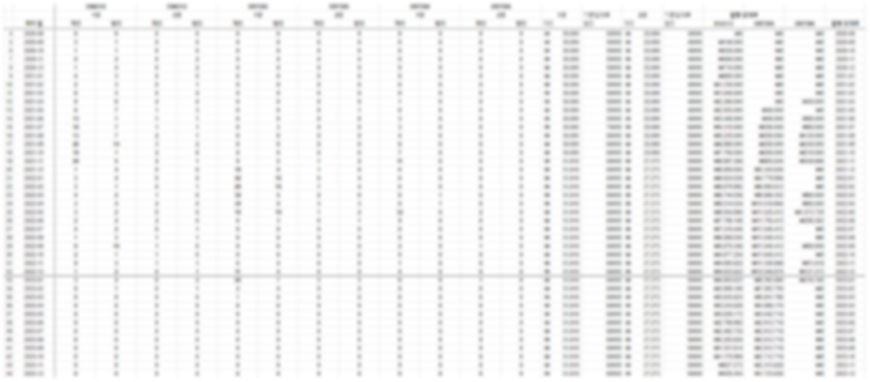
(1) Exposure collects the volume exposed on each marketing channel. It helps to tally and record figures such as Search Ads (SA) impressions and blog acquisition counts.
(2) Acquisition is collected based on the landed page just before the inquiry stage. You tally figures such as Search Ads (SA) homepage acquisition count and homepage acquisition count within blog content.
(3) Inquiry collects the number of inquiries based on the event tags where a tracking tool was installed. You tally figures such as Search Ads (SA) acquisition conversion rate and blog acquisition conversion rate, and for purchases you analyze the payment rate after inquiry. *However, tracking inquirers by acquisition channel requires separate time matching, which is not easy unless you are accumulating log data, so it's fine to look only up to the payment rate.
Building the funnel this way lets you see at a glance, month by month, where there is a problem in the funnel and which area is gaining traction, such as 'acquisition relative to cost' and 'inquiry relative to acquisition.'
Areas recommended for building a marketing funnel
Finally, there are channels and methodologies most commonly used when building a marketing funnel. I'll wrap up by introducing a few channels and tools worth treating as essential when building a funnel.
For marketing funnels, 'testing lean' is important. That is, you must test light and fast. Whether a slow-moving large enterprise, an IT industry, a solo startup, or a startup, rather than building the funnel into the existing service, it is most efficient to temporarily create a new funnel and build it out while testing quickly.
Lean testing is a process where the three cycles 'spot - act - observe' keep turning. It is the process of spotting where the likelihood is high, acting quickly, and then observing the result values. Just getting familiar with understanding and executing this cycle can deliver results 2-3 times faster than before.
1) Develop keyword analysis skills
Google Keyword Planner, Naver Search Advisor (Keyword Master, etc.), and Kakao Keyword Planner (Daum) are three you must be able to handle as essentials when doing marketing in Korea.
To occupy search real estate beyond Search Ads (SA), you'll try Naver, Korea's dominant search engine, with blogs, and Google with homepage SEO. If you analyze keywords with the mindset of trying to occupy this exposure real estate, you can do an analysis that goes 2-3 steps deeper.
For Google, it's best to directly search high-volume keywords and check the competitiveness of the exposed sites yourself. For Naver, it's best to judge based on document count relative to search volume.
2) A fast homepage testing environment
You must have a core channel where inquiries or purchases take place. There are cases of using a community such as a cafe as the landing area, but since detailed data analysis and changing it into the form you want tend to be difficult, it's best to build the analysis environment centered on a homepage as much as possible.
Recently, many homepage-building solutions that even ordinary users can use easily have come out. Among them, Imweb and WordPress are the two representatives.
(1) Imweb (recommended)
It has one of the lowest entry barriers among domestic CMS tools. The basic templates alone are sufficient for testing, but the moment you attempt custom or advanced designs, the entry barrier rises.
(2) WordPress
The tool itself has a high difficulty level. Recommended if you'll continue using SEO going forward.
3) Essential marketing exposure channels
(1) Search Ads (SA)
As the channel with the best conversion efficiency among ad channels, it's the basic of basics. However, since competition is fierce these days and CAC is high, you should approach it primarily with long-tail keywords.
It's good to have the ability to handle the 3 channels Daum, Google, and Naver simultaneously. Daum, Google, and Naver each have different customer tendencies. It's best to operate them until you can feel what the differences are.
(2) Meta DA
Meta DA, which has the best efficiency even among image ads, is the must of musts. You should practice throwing the message as lightly as possible while packing your intent into a single sentence. (Adding an image on top is BEST.)
(3) Naver Blog
If you can run a new blog for a month and generate about 200 daily visitors, you can recruit customers no matter what business you run.
(4) SEO (search engine optimization)
Its conversion efficiency is powerful because you can get the effect of Search Ads (SA) without cost. It is a high-difficulty channel that takes even a skilled expert about 1-2 months to stabilize.
+ Going further, those who can produce short-form content like Reels and Shorts may also want to add a channel.
4) Retargeting channels
This is mainly used to throw a message again at customers who were acquired to the homepage through ads. The 3 representative channels are Google, Meta, and Kakao, and it's best to install pixels and remarketing tags at the same time as building the homepage.
5) Analytics tools
Personally, GA4 alone is enough.
This covers marketing funnels in detail. Today, services that create customer flow survive, and the importance of the funnel is being highlighted even more.
Though we've covered a lot of theory, building a marketing funnel requires considerable resources and energy. In terms of time too, you have to watch and test for at least 3 to 6 months for it to stabilize.
As a result, when you look at services that successfully build marketing funnels and grow in the actual field, they are often the hard-working, action-oriented type who put effort into noticing customer flow rather than theory and who steadily work to gain insights through data.
Occasionally, startups short on marketing resources or new-business teams within large enterprises find that receiving consulting or a certain amount of agency support from a marketer who has already walked this path is a faster way to produce results.
If you liked today's content, keep 238lab in mind and reach out when you need help. From marketing to SEO, we'll help you build out the full spectrum of online marketing (full funnel)!

About the Author
Joshua: Lead SEO Consultant
- Built a zero-cost structure generating KRW 1.2 billion in annual revenue through SEO alone - Closed a KRW 700 billion deal through SEO alone - Low-cost, high-efficiency marketing specialist Former) Marketing Lead at a financial services firm Current) Runs SEO/GEO agency 238lab Track record) Led multiple SEO consulting projects, including Korea's No.1 AI community