
As times change, hospital marketing channels have diversified, and the ways patients find hospital information have grown significantly.
Online marketing is now one of the most important channels in hospital marketing. Banners and flyers used to work well, but recent advances in internet and mobile technology mean patients increasingly search for medical information and choose hospitals online.
Using online channels - social media, search engine optimization (SEO), email marketing, video marketing - to communicate a hospital's services and value has become critical. But the costs are steep. There must be priorities, so deciding which channels to choose becomes a difficult question.
So today, drawing on internal insights from 238lab's own consulting and managed-service work, we will look at which channels and strategies deliver the highest efficiency in hospital marketing.
Securing Search-Based Channels
Search-based channels are where users find information when they search. The most representative example is ranking at the top when someone searches location-based terms like "nearby dental clinic" or "dental clinic in [district]."
When consumers see a hospital ranked at the top of search results, they instinctively feel deep trust.
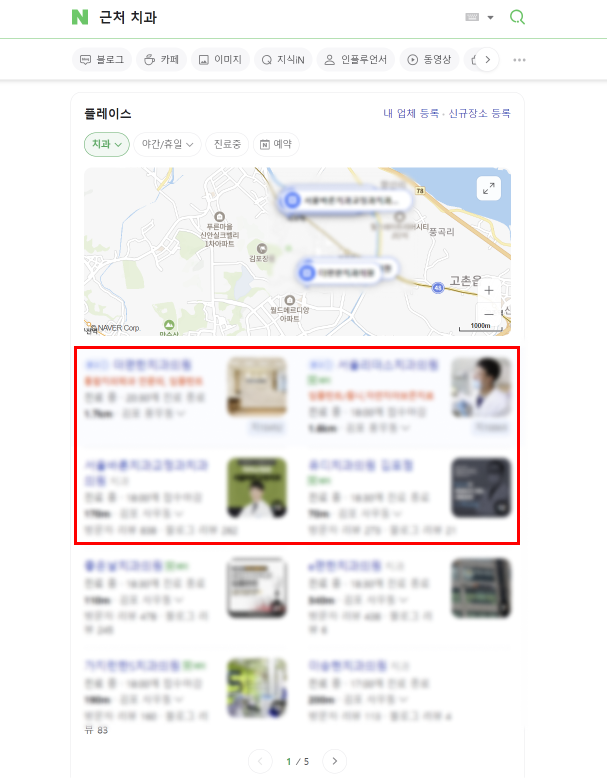
Representative search-based channels include Naver Place (Maps), Naver Blog (SEO), Google Search (SEO), Google Maps (SEO), and Kakao Map. Naver is Korea's dominant search engine, with around 58% market share, and Kakao is Korea's leading messenger and content platform.
In reality, the average traffic gap between hospitals that secure rankings on these channels and those that do not is roughly 3x or more. So we will focus on these four channels.
Naver Place
Naver Place is the map information service provided by Naver, a platform where local businesses can register and manage their business information for free. It is the map area displayed alongside business information on Naver search results pages, and it strongly influences whether users visit a business.
Recently, a substantial share of customers decide to visit offline locations through Naver Place. So to drive more results, Place optimization deserves your deepest and longest consideration.
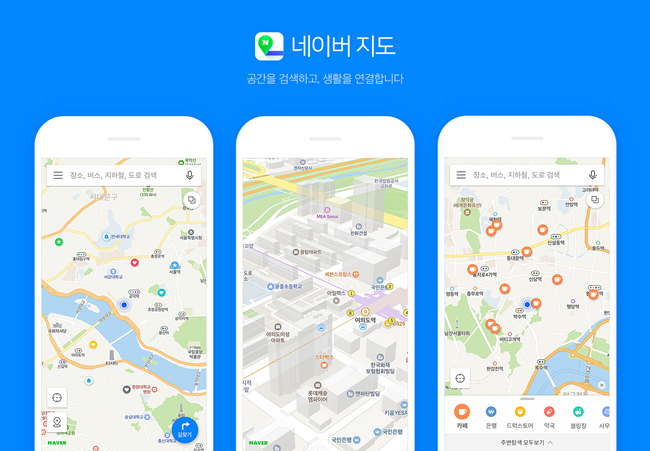
Naver Place optimization means editing and managing your Place information to meet the criteria Naver sets for top rankings. Pay close attention to the following elements, including business name and review traffic.
1) Entering Business Information
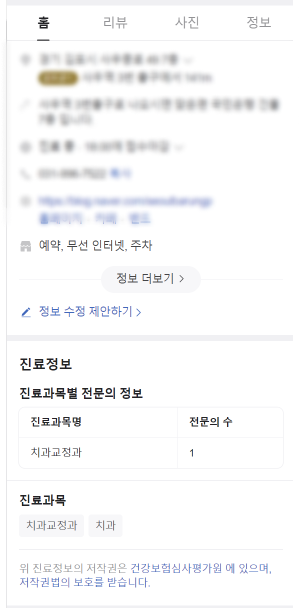
Enter business information as accurately and in as much detail as possible. Fill in every field you can: business name (identical to the name on your business registration), address, phone number, operating hours, treatment details, and medical specialties. Above all, always check for typos or errors.
2) Eye-Catching Photos and Videos
Attaching photos and videos provides richer business information.
If your interior is clean, focus on the interior; if your director or attending physician inspires trust, post photos of them smiling in their medical coat. Upload images that naturally hold the customer's attention.
3) Review Management
Everything from prompting users to leave reviews to managing those reviews with replies is an important element of Naver Place optimization. Boosting review rates through review-participation events, or building trust by replying to reviews and showing a communication-friendly stance, also matters.
4) Keyword Management
Naver Place displays the business name from your business registration. The more relevant your business information is to the keyword a user searches, the better your chances of ranking at the top. Select keywords related to your business and use them appropriately not only in the business name but also in your hospital description and introduction text.
Naver Blog

Naver Blog is a widely known flagship marketing channel, but its momentum has cooled considerably compared to before. The time required to achieve a given result has grown substantially, and competition has intensified as countless blog-management agencies have emerged.
Writing a single blog post also takes about 2-3 hours, longer than expected. On top of that, as of 2024, search-exposure restrictions on newly created blogs are increasing, so some hospitals convert an existing account's blog into a hospital blog instead.
For these reasons, the trend is toward fully outsourcing it, or letting it decline into a channel used for little more than posting hospital announcements.
Even so, Naver is Naver. Both Place and Blog are part of the Naver platform, and Blog is a channel you must run to support Place optimization.
To get real exposure results from a blog, treat "keywords" as the top priority. Spending time to carefully write a post on a specific topic is a major waste of resources if no one reads it.
These days, it serves as a channel that users browse after clicking on a Place listing to verify a hospital's credibility. It is unrealistic to target new patients from the early stages of running a blog, but it is useful for signaling to visiting patients that this is a hospital that communicates actively.
Google Search Engine Optimization (SEO)
Google search engine optimization (SEO) is a core marketing technique for ranking your homepage at the very top for specific keywords. When a customer searches terms like "[district] hospital" or "[district] [procedure]," ranking your hospital website at the top means more patients visit the site and book appointments.
Google's market share in Korea has recently climbed to about 40%, and a large share of users searching for informational content use Google. Meanwhile, SEO is a channel with clearly less competition, because little is publicly known about it and many in Korea overlook Google's importance.
For uploading specialized content - hospitals, law firms, and the like - Google SEO is an essential channel.
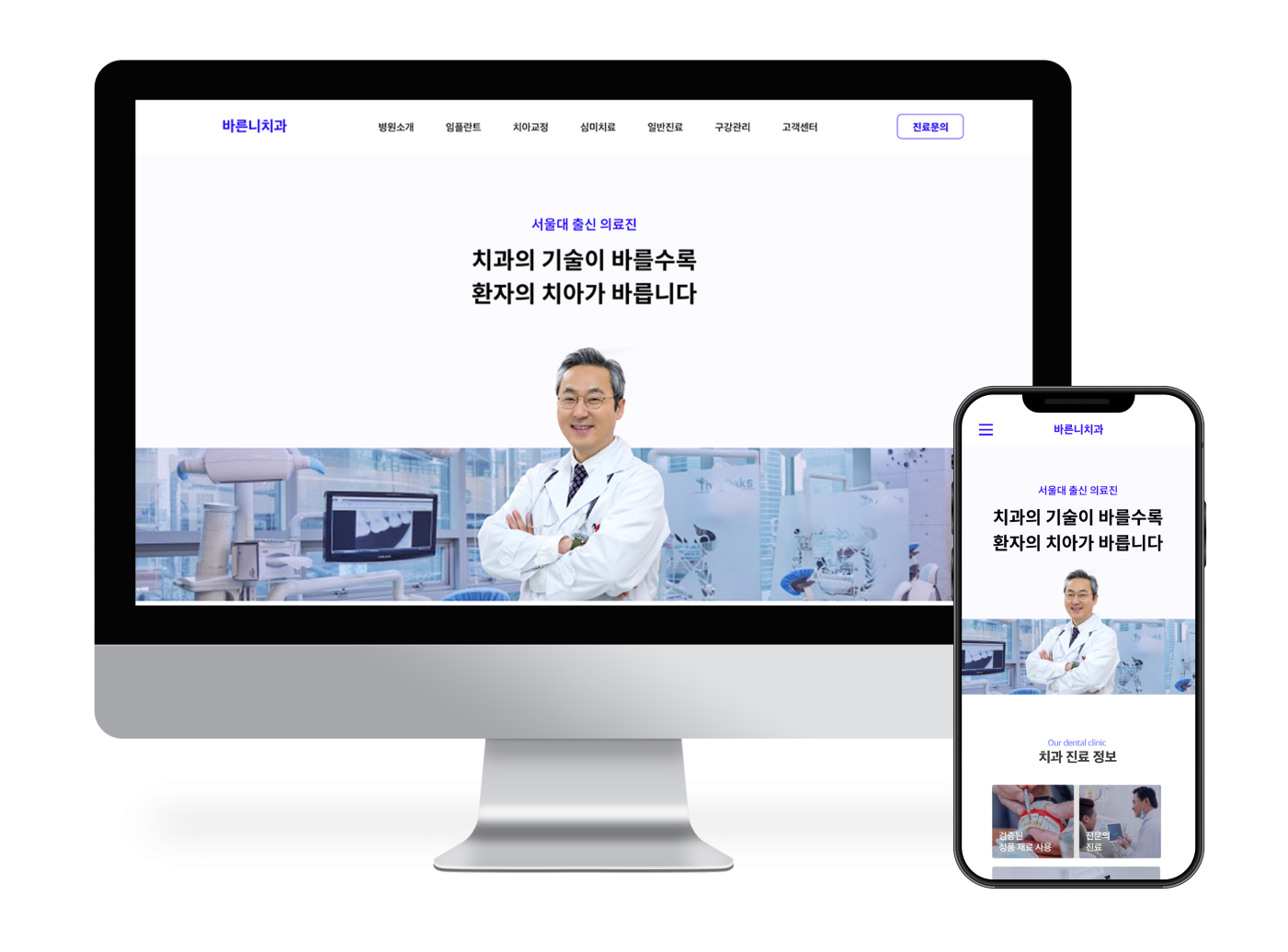
That said, SEO requires building a website, and choosing the agency that builds it is critical. You need to adjust site tags, and no one but the agency that built the site can touch them. So if that agency is even slightly uncooperative on SEO, you face a crisis where you must abandon this channel before you even start.
Four elements are key to successfully adopting Google SEO.
1) Keyword Analysis
Identify your main keywords and use them appropriately in your website content. Keywords should appear in titles, body text, and tags, and it is best to use a unique keyword for each page.
2) Content Quality
Providing high-quality content matters. Deliver the information users need clearly and concisely, and minimize technical jargon to make it easy to understand.
3) Link Building
Encourage links from other websites and blogs pointing to your hospital website. This raises your site's credibility and lifts your search engine ranking.
4) Mobile Optimization
Optimize your website for the mobile user experience. Apply mobile-friendly design, fast loading speeds, and responsive web technology.
All four of these work within the website itself, so the most efficient approach is to set them up at the time the site is built. If you want to know how to run SEO, leave an inquiry with 238lab and we will respond.
Google Maps Search (Google Business Profile)
Finally, there is the option of using Google Maps search. You can register on Google Maps through Google Business Profile. It is a surprisingly valuable channel with low competition, and since optimization methods are still not widely known, the earlier you jump in, the better.
Register with Google Business Profile so your hospital information appears in Google search results. Like Naver, this local search begins with location-based exposure, but through specific keyword optimization you can rank at the top, gain an edge, and drive patient visits.
Today we examined the channels and strategies a hospital must address to attract new patients. Hospital marketing starts with compliance with medical advertising law and demands a complex approach that also encompasses various strategies for retaining existing patients.
We hope you put today's newly covered channels to strategic use.
Next time, we will take a deep look at customer-retention strategies such as "CRM using Kakao Channel" and "review management."

About the Author
Joshua: Lead SEO Consultant
- Built a zero-cost structure generating KRW 1.2 billion in annual revenue through SEO alone - Closed a KRW 700 billion deal through SEO alone - Low-cost, high-efficiency marketing specialist Former) Marketing Lead at a financial services firm Current) Runs SEO/GEO agency 238lab Track record) Led multiple SEO consulting projects, including Korea's No.1 AI community