Email Marketing 2.0: An Era Driven by Data and Context
The global tech market is watching email, once a classic communication tool, rapidly evolve into an 'intelligent business platform' through its integration with AI. Multiple international outlets interpret this shift not as a simple feature addition, but as a complete restructuring of email marketing's ROI (return on investment) model and user experience.
"Google Gmail's sweeping AI integration" is the most symbolic example of how this massive market trend is being implemented in a live service. This column analyzes the structural shift signaled by Gmail's transformation from the macro perspective of the email marketing market's evolution.
News Briefing
As of 2026, the email marketing market is recording unprecedented efficiency through AI-powered hyper-personalization and real-time context analysis. According to industry reports, AI-based email marketing has demonstrated a 20% improvement in open rates and click-through rates up to three times higher than before.
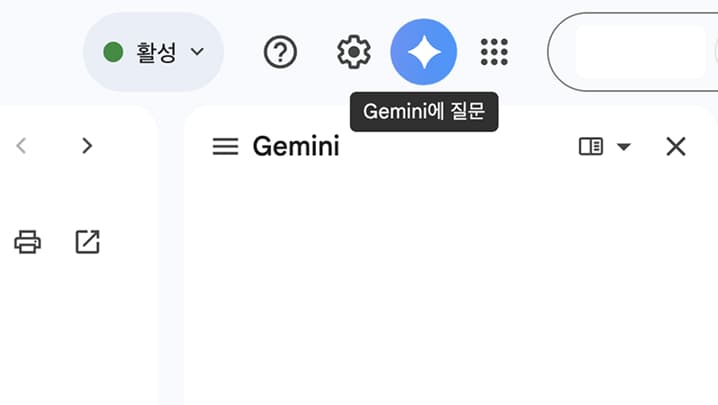
Against this backdrop, Google marked Gmail's 20th anniversary by fully adopting the Gemini AI model and announcing conversational AI Overviews and intelligent inbox features. This signals that the AI marketing trend driven by individual companies has now become the standard on the world's largest email platform.
- Note: The above summarizes only the facts commonly confirmed across multiple public reports. The analysis and outlook that follow are the author's subjective interpretation.
Key Analysis
1. The Market Shift: From 'Delivery' to 'Intelligence'
Gmail's adoption of Gemini marks the beginning of the end for the 'passive inbox' in email marketing.
-
Hyper-targeting becomes the standard: Where past email marketing was limited to simple segmentation, the current trend has reached a stage where AI analyzes user behavior data and the purchase journey in real time to generate the message they need right now.
-
Platform case - Gmail as an AI agent: Gmail's new 'AI Summaries' and 'conversational Q&A' reduce the time users spend reading email bodies directly and instead drive interaction with AI. This means a marketing message must carry 'precise context that an AI assistant can easily summarize' to be seen by users. Google's announcement formalizes this market demand at the platform level.
2. The Business Structure Shift: Maximizing ROI and GEO Strategy
The evolution of the email ecosystem demands new performance metrics and optimization strategies from marketers.
-
The source of ROI shifts: As AI matches tone and manner through sentiment analysis and drafts optimal replies, customer response costs drop while conversion rates rise, producing a structural gain.
-
Email GEO beyond search: When AI inside Gmail cites information from a specific marketing email to answer a user's question, it shows that GEO (Generative Engine Optimization), once confined to web search, has expanded into the inbox.
-
Data quality and trust: As AI's process of analyzing and recommending emails becomes more advanced, the accuracy of the data marketers provide and the brand's credibility become the key metrics determining whether AI cites them.
Structural Change Summary
| Category | Email Marketing 1.0 (Past) | Email Marketing 2.0 (Present/Future) |
|---|---|---|
| Market trend | Mass sending and manual response tracking | AI-based hyper-personalization and automation |
| Gmail's role | Message delivery and storage | Gemini-powered intelligent assistant |
| Marketing focus | Open rate and click-through optimization | AI summary inclusion and context-based citation |
| Revenue model | Probabilistic conversion based on traffic volume | Precise targeting and ROI maximization through AI |
The Era of Email Innovation: The Questions We Must Ask
The shift in market trends and Google's moves tell us that email is no longer a simple communication channel but a powerful 'data touchpoint.'
Q1. Is your email strategy data-friendly enough for AI to instantly grasp a user's purchase context?
Q2. Has your brand secured enough authority and trust for Gmail's AI assistant to summarize it as 'useful information' for users?
Q3. Are you delivering a distinctive brand experience even in an AI-driven environment by balancing technical efficiency (AI) with human emotion (Brand Voice)?
References and Original Articles
This column was written by synthesizing the reports and market analyses of the outlets below. More detailed figures and background on each issue can be found in the original reports.
- WebProNews - AI Transforms Email Marketing in 2025: Personalization and ROI Boost
- Business Today - Sundar Pichai announces Gemini era for Gmail with new AI-driven features
Author's context: This piece was written to analyze the symbolic significance and practical implications of Google Gmail's update within the broader shift in the email marketing market.
Key Takeaways
Email marketing is now moving beyond simple message delivery to become an AI-based hyper-personalization platform. The 'Gemini era' Google has brought to Gmail is a concrete example showing that this market trend has entered its final stage. As email evolves into an AI assistant, this column argues that marketers must shift away from traffic-focused strategies and instead focus on the structural change of building 'context that AI can easily cite' and maximizing ROI.

About the Author
Liv: SEO Consultant / Publisher
SEO specialist planner and designer responsible for SEO content strategy, website structure optimization, and search-engine-friendly UX/UI design. Former: UX/UI Design Team Lead Current: SEO Content Design Team Lead at 238lab